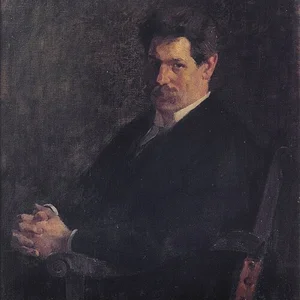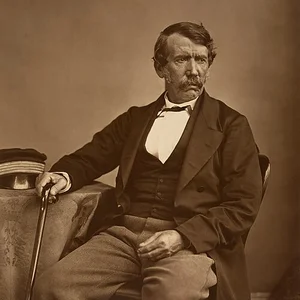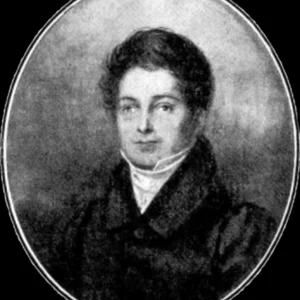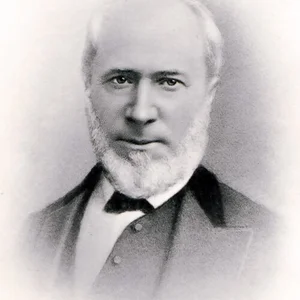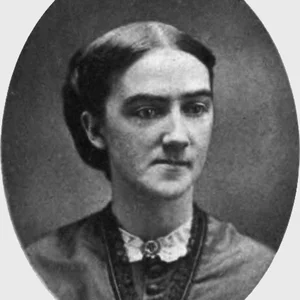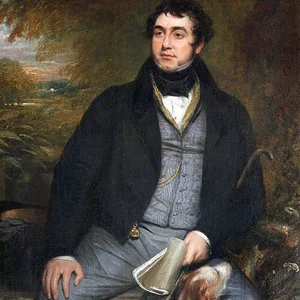

Investigator for the Society for Psychical Research (SPR) who, in 1884-1885, examined the phenomena attributed to Helena Blavatsky at the Theosophical headquarters in Adyar, India. His report concluded that they were fraud and trickery.
Frederick Hodgson(1796 — 1854)
Frederick Hodgson
royaume de Grande-Bretagne, Royaume-Uni de Grande-Bretagne et d'Irlande
5 min read
Frequently asked questions
Key Facts
- 1884: sent to India by the Society for Psychical Research to investigate the Adyar phenomena.
- 1885: concluded in his report that the manifestations attributed to Helena Blavatsky were trickery.
- His investigation helped to publicly discredit the occult claims of the Theosophical Society.
Works & Achievements
Landmark inquiry concluding that organized fraud had taken place at Adyar; one of the first major methodical reports of psychical investigation.
Handwriting analysis attributing the “supernatural” letters to Blavatsky and her close associates.
Extended investigation of an American medium, carried out with an experimental rigour hailed as a model for the SPR.
Authoritative articles and reports in the young field of psychical research.
Anecdotes
In 1884, the Society for Psychical Research, founded two years earlier in London, sent an investigator to examine the famous “phenomena” of Madame Blavatsky at the Theosophical headquarters in Adyar, near Madras, India. His mission: to determine whether the letters mysteriously falling from the ceiling were supernatural or faked.
The investigation uncovered a piece of furniture nicknamed the “Shrine,” a reliquary cabinet set against a wall and fitted with a secret sliding panel. Accomplices would slip the “letters from the Masters” in from behind, creating the illusion that they materialized out of nowhere.
The report delivered in 1885 caused a great stir: it branded Blavatsky “one of the most accomplished, ingenious, and interesting impostors in history.” This phrase, quoted across Europe, lastingly shook the fledgling Theosophical movement.
To prove the deception, the investigator compared the handwriting of the letters supposedly sent by Tibetan sages with that of Blavatsky herself and her associates. A handwriting expert concluded that they came from the same hand — that of the founder.
More than a century later, in 1986, the SPR itself published a critical reassessment of the report, judging that the investigation had been one-sided. The debate over Blavatsky's fraud remains open among historians of spiritualism.
Primary Sources
We regard her neither as the mouthpiece of hidden seers, nor as a mere vulgar adventuress; we think that she has achieved a title to permanent remembrance as one of the most accomplished, ingenious, and interesting impostors in history.
The chief and constant element in the alleged marvels was the so-called Shrine, a cupboard hung against a wall, through which letters were said to be received from the Mahatmas.
The Committee found that the evidence it had gathered conclusively established an organized system of fraud.
Key Places
Theosophical headquarters near Madras, the setting of the 1884-1885 investigation into Blavatsky's phenomena.
City where the Society for Psychical Research was based, the body that commissioned the investigation and published the report.
Major city of British India, the investigator's point of arrival and the centre of the Coulomb-Blavatsky controversy.
Intellectual cradle of the SPR, where many of its academic founders developed the methods of psychical investigation.
Typical Objects

Reliquary cabinet fixed to the wall of the "Occult Room," fitted with a secret sliding panel through which the Masters' letters were slipped in.

Missives supposedly sent by Tibetan sages, appearing as if by magic; the investigation traced them to Blavatsky's own hand.

Tools used to compare handwriting and prove that the "celestial" letters came from a human pen.

Notebook in which the investigator recorded testimonies, measurements, and descriptions of the deceptive devices observed at Adyar.

False wall and trapdoors built into the Theosophical building to move objects and messages around discreetly.
School Curriculum
Vocabulary & Tags
Key Vocabulary
Tags
Daily Life
Morning
His mornings were devoted to reading correspondence, testimonies, and missionary journals exposing fraudulent practices. He pored over depositions with the patient method of a jurist.
Afternoon
In the afternoon, he inspected premises, measured rooms and furniture, and questioned servants and witnesses in search of the slightest sign of physical trickery.
Evening
In the evenings, by the light of a kerosene lamp, he wrote up his notes and compared handwriting samples, patiently cross-referencing contradictions between accounts.
Food
Like the British in colonial India, he kept to tea, bread, and English dishes adapted to the climate, wary of the local spiced food. Tea punctuated his days of investigation.
Clothing
He wore the dark suit of the Victorian gentleman: frock coat, waistcoat, stiff collar, and hat — woollen garments ill-suited to the heat of Madras.
Housing
Lodged in colonial bungalows with shaded verandas, he lived among Indian servants, close to the Theosophical estate he was scrutinizing.
Historical Timeline
Period Vocabulary
Liens externes & ressources
Références
Œuvres
Rapport sur les phénomènes de la Société théosophique (Rapport Hodgson)
1885
Analyse des lettres des Mahatmas
1885
Enquête sur la médium Leonora Piper
1887-1898
Contributions aux Proceedings of the SPR
1885-1900