Imaginary dialogue between Aurélien and Zenobia
by Charactorium · Zenobia (240 — 275) · Politics · 5 min read
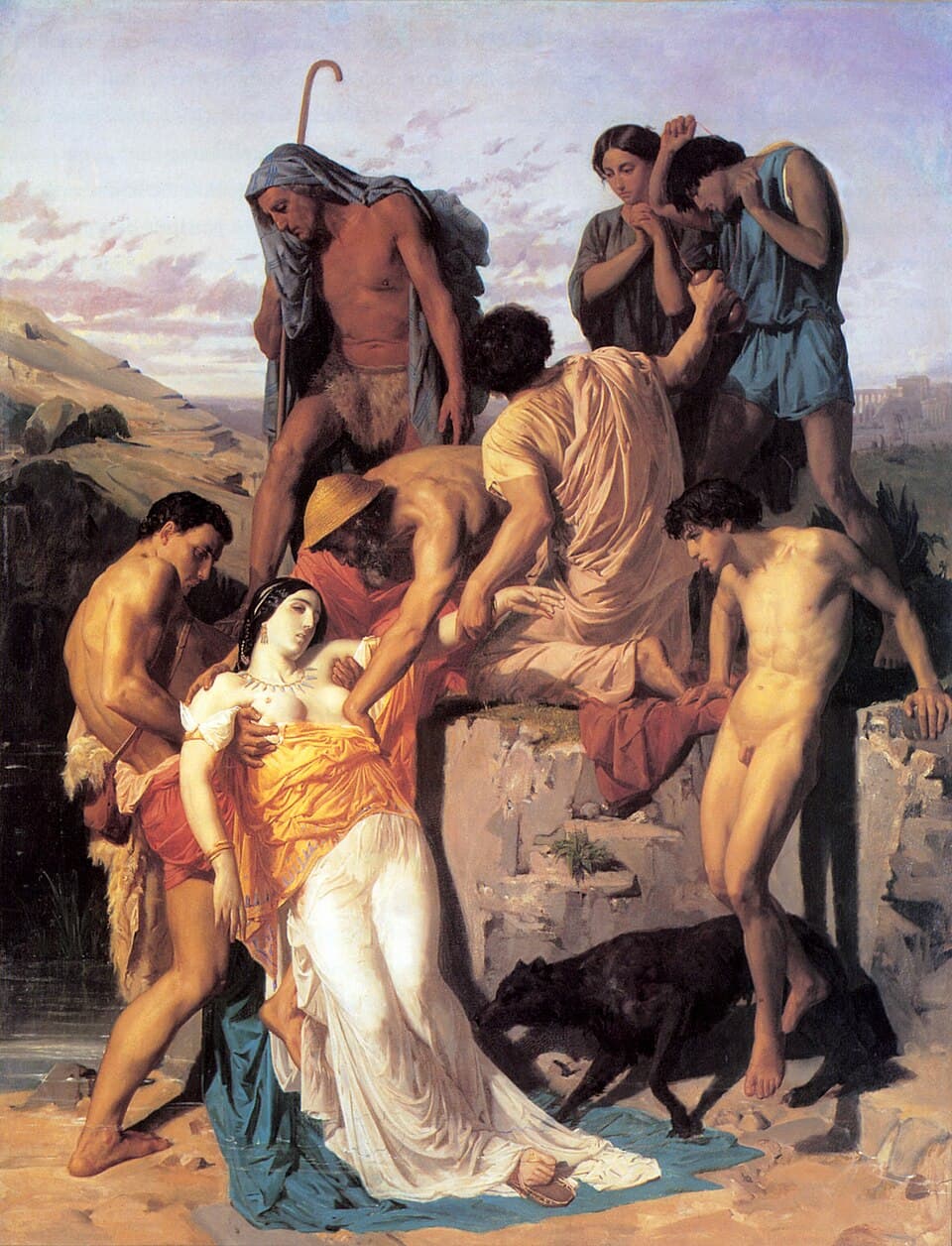
It is beneath the porticoes of a villa in Tibur, near Rome, that Emperor Aurelian meets Zenobia in this spring of the year 274, two years after the triumph in which he led her in golden chains. Light falls on the columns, a scent of dried dates still lingers from the Orient she has lost. The victor spared the queen and gave her this dwelling; he comes today, without escort, to sit opposite the woman he once feared. Between the man who reclaimed the Empire and the woman who nearly shattered it, the conversation opens like that between two adversaries who respect each other.
—Queen, when your husband Odaenathus fell in 267, you were called merely regent for a child. Why did you not remain in that shadow?
Because the shadow, Aurelian, does not nourish a kingdom. When Odaenathus was struck down, my son Vaballath was not old enough to hold a sword, let alone a frontier against your Persians. At first I governed in his name, as a mother keeps the seat warm for her son. But a seat kept without truly holding it is overturned by the ambitious. So I had coinage struck: his child's face and, little by little, my title beside his. You have seen those coins, I know — they bore Augusta. They accused me of pride. But I only refused to let Palmyra die for lack of a firm hand. A regent who truly governs ceases to be a regent.
A seat kept without truly holding it is overturned by the ambitious.
—From the desert of Palmyra to the Nile, you took Egypt and Asia Minor. Tell me: did you truly dream of equaling Rome?
You ask as a man who had to reconquer everything, and I understand your suspicion. No, I did not dream of seating my son on the Palatine throne. I wanted what Rome could no longer defend: Syria, Egypt and its granaries, the routes where the gold of the East passes. Your Empire was tearing itself apart, Aurelian — Valerian captive of the Persians, your emperors succeeding each other like the seasons. Someone had to hold the East. I took Egypt because he who holds the Nile holds the bread of the cities. They called it usurpation. I called it filling a void that your civil wars had dug. You came, you filled that void better than I: I grant you that without bitterness.
Someone had to hold the East when Rome was tearing itself apart.
—When your troops took Antioch and marched toward Thrace, did you truly believe that a caravan city could sustain such an empire?
Palmyra was not just a city, Aurelian — it was a crossroads. Everything that travels between your sea and Persia passed through my walls: silk, spices, incense. That gold I turned into horsemen and archers. Antioch, the great metropolis of the East, opened its gates to me because merchants prefer a power that protects their caravans to an Empire that abandons them. I pushed as far as Thrace, yes, perhaps too far and too fast. A desert city can conquer an empire; holding it is another trial. You taught me that lesson at Emesa, on the battlefield, better than any master could have.
A desert city can conquer an empire; holding it is another trial.
—They say you speak five languages and that philosophers dined at your table. Did this learning serve you to rule, or only to shine?
The two are not separate, Aurelian. I speak the Aramaic of my people, the Greek of the learned, the Latin of your laws, the Egyptian of my new provinces, and the Persian of my neighbors. How can you negotiate with a satrap or receive an ambassador without understanding his language? To rule the East is to rule ten peoples who do not pray to the same gods. I wanted my court to gather scholars as the roads gather goods. People are surprised that a woman studies mathematics and philosophy; I am surprised that one governs without them. An ignorant sovereign is merely a soldier with a crown.
An ignorant sovereign is merely a soldier with a crown.
—When my men entered your palace in Palmyra, they described colonnades and irrigated gardens in the middle of the desert. How does one maintain such luxury on sand?
Through water and trade, Aurelian — your soldiers saw the fruit, not the root. Palmyra lives because it is a spring in the desert and a gateway on the silk routes. My gardens, my columned halls, those purple and gold fabrics you saw me wear — all of that was paid for by caravans. The camel built my palace as much as my masons. I loved that luxury, I admit, but it had a purpose: a poor sovereign impresses neither ally nor enemy. Your legionaries plundered coffers; they did not understand they were trampling a trading post, not just a treasure.
The camel built my palace as much as my masons.
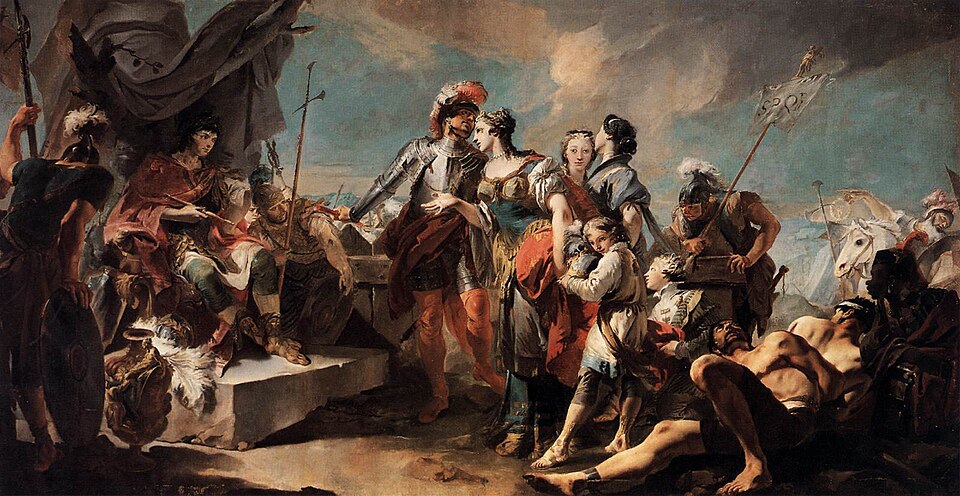
—Queen, at Emesa, in 272, you could still have negotiated with me. Why did you choose to fight, knowing my forces?
Because to negotiate was to kneel before having lost everything, and I had not yet lost everything. You remember the field of Emesa: my heavy cavalry was feared even by Persia. I believed it would break your lines. You feigned retreat, your infantry held, and my horsemen exhausted themselves on emptiness. That day I understood you were a soldier before being an emperor. To surrender without having given battle would have betrayed all those dying for Palmyra. I preferred to lose standing. You defeated me, Aurelian, but you did not find me on my knees before the final blow.
I preferred to lose standing rather than kneel before having lost everything.
—After the siege, you were led to Rome in my triumph, adorned with golden chains. Did that gold weigh more heavily on you than iron?
Gold weighs differently than iron, Aurelian — it honors while humiliating. You chained me with gold because one does not chain a servant like that: it told the people of Rome that you had defeated a queen, not a rebel. I understood that, and I almost thanked you for it. I walked through your streets under the gaze, the weight of jewels breaking my back, but I did not lower my eyes. A captive who weeps amuses the crowd; a queen who stands straight silences it. You spared me afterward, and I remember that too. To defeat a woman and let her live — few emperors would have dared.
You chained me with gold because gold honors while humiliating.
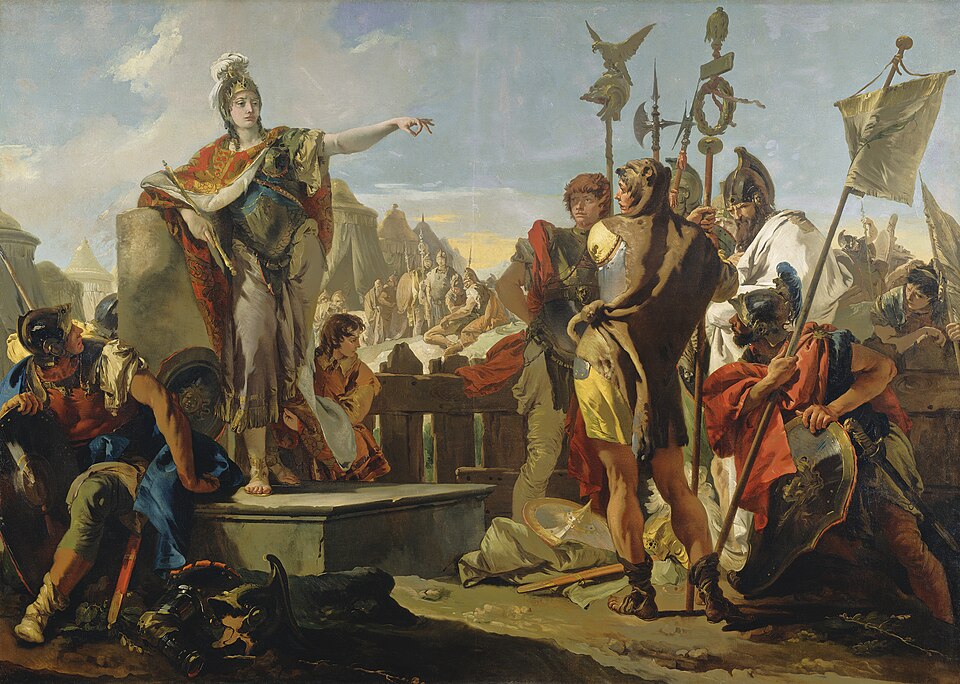
—Your son Vaballath bore the title of Caesar on your coins, then Augustus. Was it his ambition, or yours that you placed on his brow?
What mother separates the two? Vaballath is my blood; his throne was my task. At first I let your predecessor recognize his title, as one asks a suzerain's blessing. Then, when Rome offered nothing but silence, I had Augustus struck beside his name and mine near his. Was it ambition? Yes — but the ambition of a mother who does not want to bequeath fear to her child. You have no son, Aurelian, you do not know what it is to govern for two. I wanted to pass on a kingdom to him, not a trembling regency. Fate decided otherwise, and he lives — that is enough for me.
I wanted to pass on a kingdom to my son, not a trembling regency.
—Here, in this villa of Tibur that I left you, you are surrounded by Greek books. Does the fallen queen console herself by becoming a scholar again?
I do not console myself, Aurelian: I continue. The crown was taken from me, but not the mind. You gave me this dwelling and the leisure to read — know that it is the most dangerous gift a victor can give to the vanquished, for thought never surrenders. I reread the Greeks, I still argue with those who care to come, I watch your roads from this garden. The woman who spoke five languages in Palmyra still speaks them in Tibur. An empire was taken from me; what made me desire it was not. Ruling taught me about men; reading teaches me to endure them in defeat.
Thought never surrenders: it is the most dangerous gift a victor can give.
—When you received merchants and delegations in your city, did you know you were already between two fires — my legions on one side, Persia on the other?
Always, Aurelian. Palmyra lived between two beasts: your eagle in the west, the Sassanid lion in the east. All my policy was based on that balance. In the morning I received reports from my governors, in the afternoon the caravan masters and ambassadors, and each audience weighed from which side danger would blow. My husband protected Rome against Persia; I thought I could protect the East against both of you at once. That was perhaps my mistake: a trading post cannot hold two empires at bay forever. But as long as the balance lasted, Palmyra prospered. You broke it by coming — and you discovered, I think, that administering this East is no simpler for you than it was for me.
Palmyra lived between two beasts: your eagle in the west, the Sassanid lion in the east.
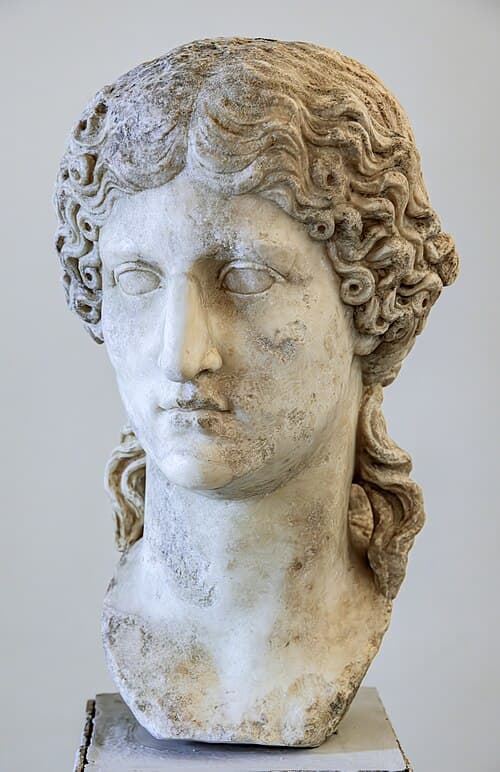
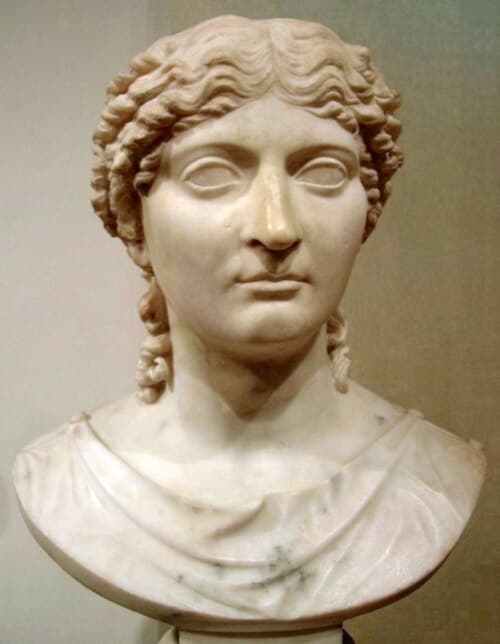
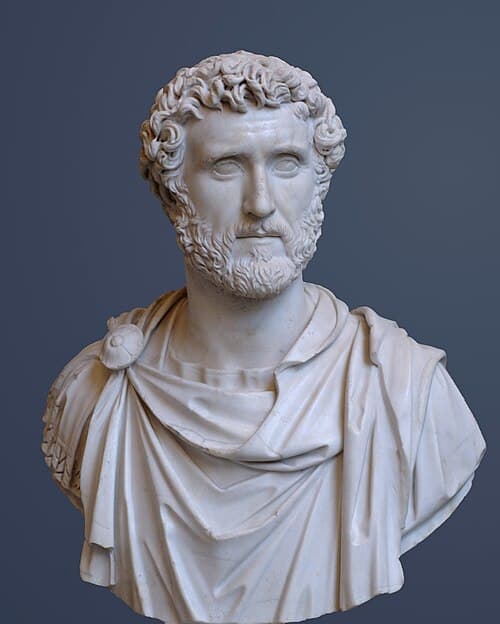
This imaginary interview was generated by artificial intelligence from sources documented in Zenobia's profile. It dramatises what the figure might have said based on what we know about them, but does not constitute attested historical testimony. For primary sources and factual documentation, refer to the full profile.