Kids interview Zenobia
by Charactorium · Zenobia (240 — 275) · Politics · 4 min read
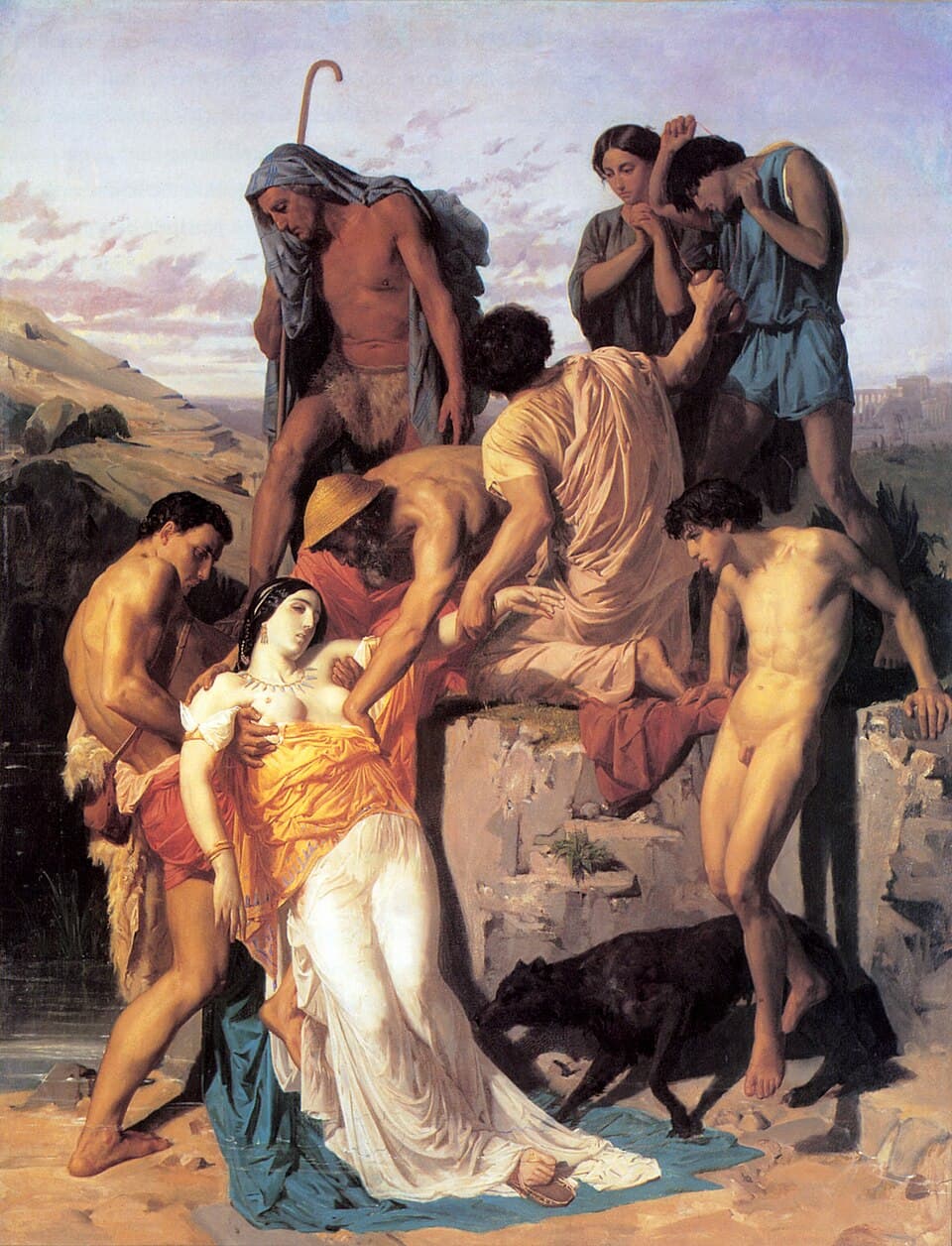
That morning, two twelve-year-old visitors pushed open the heavy door of a columned hall in Palmyra. A queen with a diadem awaited them, a patient smile on her face. She motioned them to approach, happy that children had come to listen to her.
—How did you become queen? Were you a king's daughter?
No, my child, I was not born on a throne. Everything changed when my husband Odaenathus died, in 267. Our son was far too young to rule. Imagine a large house suddenly without a father: someone must hold the keys. That someone was me. I took the reins of Palmyra in my boy's name. They called it being regent: you govern while waiting for the child to grow up. Many thought a woman would let everything go. I tightened my grip on those reins. And I never let them go.
They thought I was fragile because I was a woman. I held the reins.
—Is it true you minted coins with your son's face?
Yes, and it was quite clever, you'll see. My son was called Vaballath. I had coins struck with his name and portrait on them. On the metal, they even wrote Roman titles, Augustus and Caesar, like the great emperors. Do you know why? When people pass a coin from hand to hand at the market, they see that name everywhere. It's a way of saying, without shouting: 'Here, we are in charge.' A small bronze coin travels farther than a messenger. It was my way of showing that Palmyra no longer obeyed anyone.
A coin travels farther than a messenger.
—What was your city Palmyra like? What was around it?
Imagine sand as far as the eye can see, and in the middle, a city shining with its white columns. Palmyra lived off the desert, that's the secret. Camel caravans crossed it, loaded with silk, spices, and perfumes. Those merchants were called caravaneers: they led the beasts along the long roads between the East and Rome. Each caravan that passed left us a little wealth. It was this trade money that paid for my soldiers and my walls. Without the desert and its roads, I would never have had an army. A city of sand, but rich as a treasure.
Palmyra was a city of sand, rich as a treasure.
—They say you spoke many languages, is that true? How many?
At least five, my child! Aramaic, which we spoke at home, Greek, the Latin of the Romans, Egyptian, and Persian. Imagine receiving a merchant from very far away, and being able to answer him in his own language, with no one between you. He immediately feels more at ease. In my time, few women learned to read; I also loved numbers and the questions of philosophers, those people who seek why the world is made this way. Knowledge, you see, is a silent weapon. It makes no noise, but it opens all doors.
Knowledge is a silent weapon that opens all doors.
—Did you invite scholars to your home? What for?
Yes, I liked my court to be full of intelligent people. I brought in philosophers, poets, and masters from all cities. We discussed, wrote, and read together. In my palace, scribes traced words on parchments in Greek and Aramaic, those large sheets that were carefully rolled up. You know, a queen is not measured only by her soldiers. A city whose thoughts are admired shines as far as an army. I wanted them to say of Palmyra: there, they are strong, but also learned. That was my pride, as much as my victories.
A city that is admired shines as far as an army.
—How did you manage to conquer countries so far away?
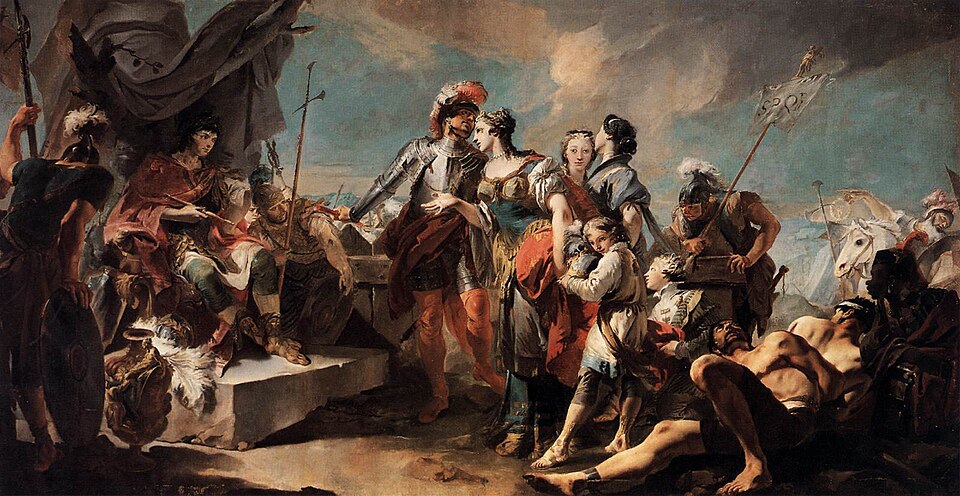
Step by step, my child, as one advances in the desert. From 270, my armies set out south and west. We took Egypt, the land of the great river, the Nile, which fed entire cities with its wheat. Then we went up to Asia Minor, far to the north. I also held Antioch, one of the greatest cities of the East. Imagine an empire stretching from the burning desert to distant coasts. All in just a few years. Rome watched this with worry: a desert queen was growing in its shadow.
Step by step, as one advances in the desert, I built an empire.
—Why did you want Egypt? What was so good about it?
Egypt was the granary of the world, you see. The Nile overflowed every year and left a black soil so rich that wheat was harvested in abundance. Whoever holds that wheat holds the stomachs of many people. By taking Egypt around 270, I gained the fields, but also the ports from which ships set sail. My state became richer, therefore stronger. Imagine a kitchen where you control everything that comes in: no one eats without you. That was Egypt for Palmyra. A key piece. And it was also for it that Rome finally got really angry.
Whoever holds the wheat holds the stomachs of many people.
—And the emperor of Rome, what did he do when he learned of your conquests?
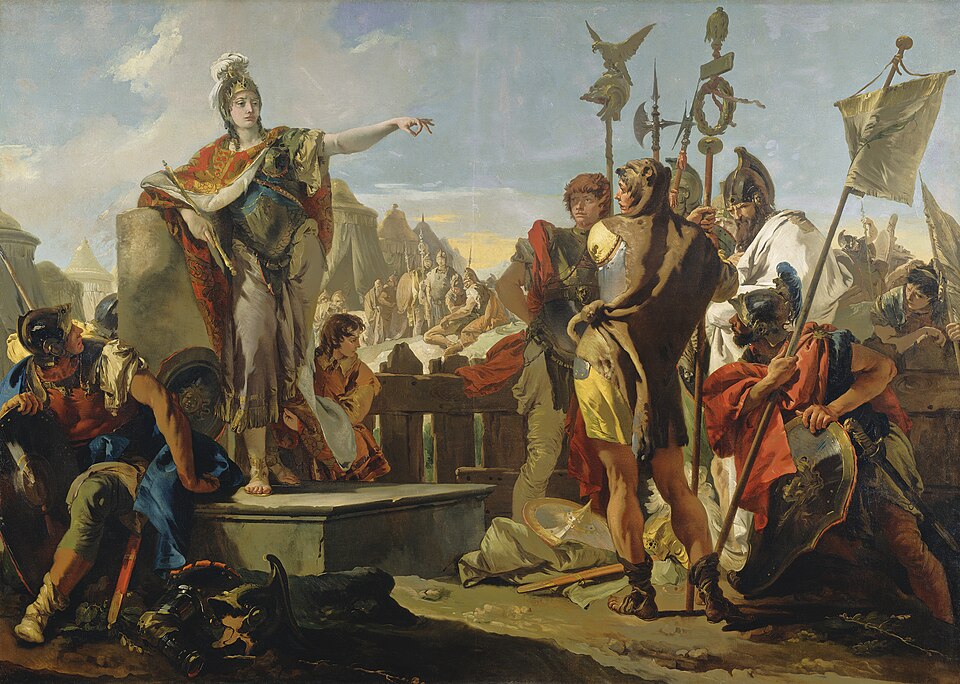
He set out, my child. That emperor was called Aurelian, a hard man, a true soldier. He wanted to piece his empire back together, and I was the piece that resisted. In 272, our armies clashed near Emesa, a nearby city. Imagine two waves of men and horses crashing against each other in the dust. That day, the Roman wave was the strongest. I lost. Aurelian then marched to Palmyra. I already knew, deep down, that the desert would not protect me forever against all the power of Rome.
I was the piece of empire that refused to be put back together.
—What happened to you afterwards, when you lost?
I was captured, and that is a hard thing to tell. Aurelian took me all the way to Rome, far from my desert. There, during his great victory celebration, they paraded me through the streets. They say my chains were made of gold: a strange honor, reserved for enemies most feared. Imagine walking before an entire crowd, defeated, but with your head held high. I did not cry, I did not beg. They had taken my empire, but not my dignity. If you remember one thing about me, remember this: you can lose a battle without losing your honor.
You can lose a battle without losing your honor.
—If you are remembered today, what would you like us to remember?
What a beautiful question, my child. I would like them to remember that a woman, from a city of sand, dared to stand up to the greatest empire in the world. Not out of whim, but for my son and my people. I governed, conquered, learned five languages, protected scholars. And the day I lost everything, I remained upright. You see, you don't always get to choose to win. But you always choose how you stand. When you one day read the name Zenobia, tell yourself that a desert queen refused to lower her eyes. That is my true treasure.
You don't choose to win, but you choose how you stand.
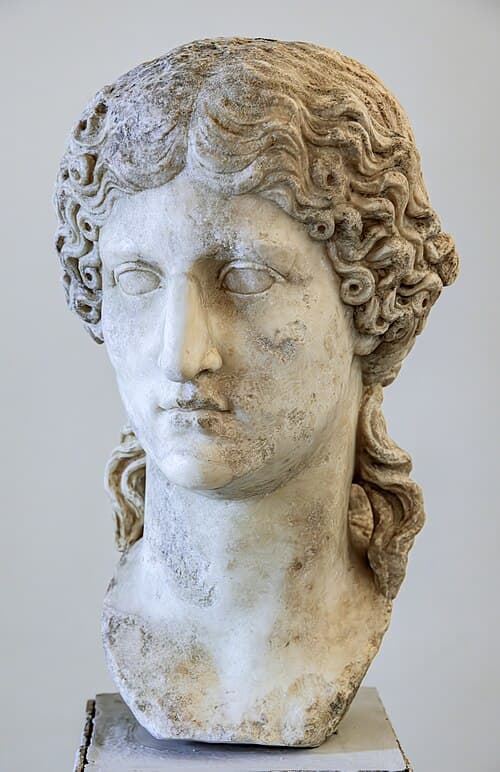
This imaginary interview was generated by artificial intelligence from sources documented in Zenobia's profile. It dramatises what the figure might have said based on what we know about them, but does not constitute attested historical testimony. For primary sources and factual documentation, refer to the full profile.