 flip
flipSunday Sweet Potato Pie
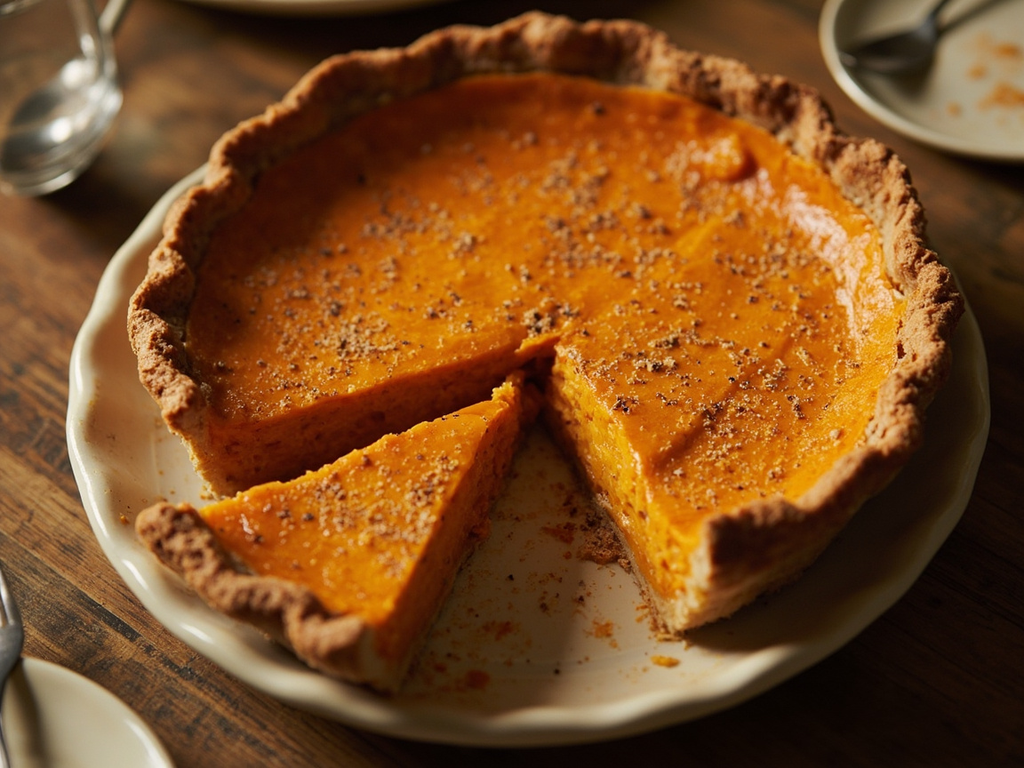
Sunday Sweet Potato Pie
Why this dish? Randolph was an orator of almost biblical dignity, nicknamed by some the 'Saint Paul of the movement.' In Black Southern culture, sweet potato pie crowns the Sunday meal after church and large gatherings—exactly the kind of communal table from which the marches and mobilizations he led up to the 1963 March on Washington were born.
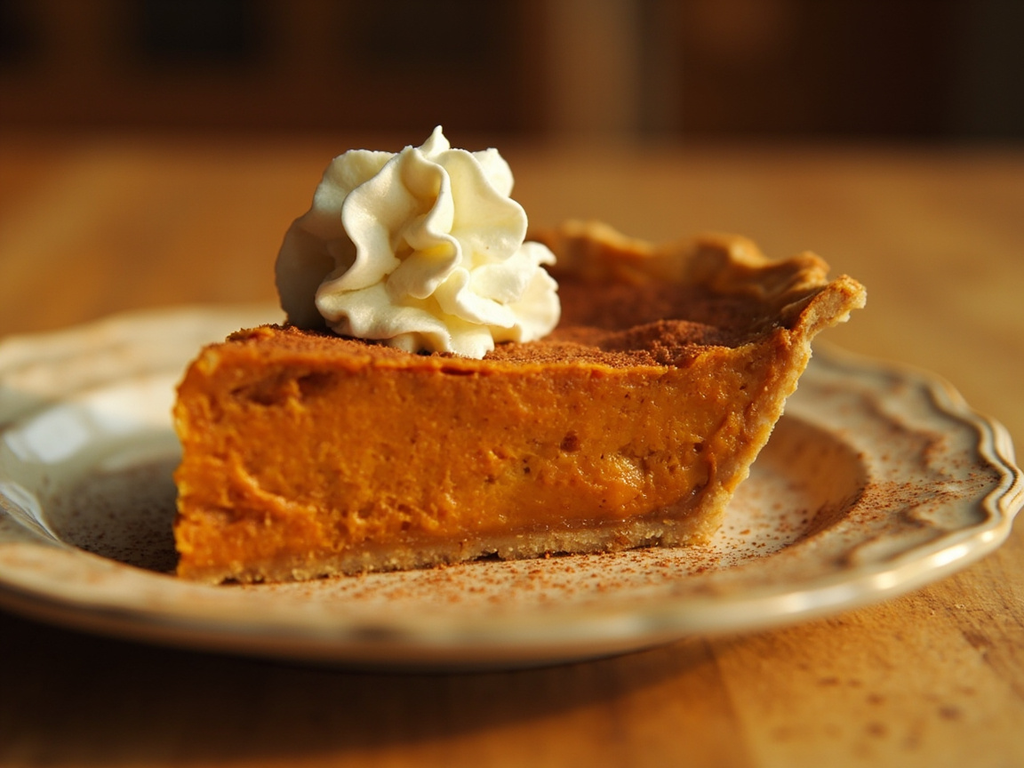
A creamy sweet potato pie, spiced with cinnamon and nutmeg, lighter and more aromatic than pumpkin pie. The quintessential holiday dessert of African American tables.
Here is the dessert we reserved for the Lord's Day, when the whole community gathered after service. We baked sweet potatoes in the embers until they turned to sugar, mashed them with a little butter, nutmeg, and cinnamon, and entrusted the pie to the oven while the voices of hymns still rose. Never mistake it for the pumpkin pie of other tables: ours is finer, more fragrant, and carries within it all the warmth of a gathered people. It was at those tables, believe me, that many a common resolve was forged.
- •Sweet potatoes — a few (sweet base)
- •Butter — a good knob (richness)
- •Sugar (or molasses) — by feel (sweetness)
- •Eggs — two (binder)
- •Milk — a glass (creaminess)
- •Cinnamon, nutmeg — a pinch each (aroma)
- •Pie crust — one bottom (support)
Sunday Sweet Potato Pie
A creamy sweet potato pie, spiced with cinnamon and nutmeg, lighter and more aromatic than pumpkin pie. The quintessential holiday dessert of African American tables.
Why this dish? Randolph was an orator of almost biblical dignity, nicknamed by some the 'Saint Paul of the movement.' In Black Southern culture, sweet potato pie crowns the Sunday meal after church and large gatherings—exactly the kind of communal table from which the marches and mobilizations he led up to the 1963 March on Washington were born.
Here is the dessert we reserved for the Lord's Day, when the whole community gathered after service. We baked sweet potatoes in the embers until they turned to sugar, mashed them with a little butter, nutmeg, and cinnamon, and entrusted the pie to the oven while the voices of hymns still rose. Never mistake it for the pumpkin pie of other tables: ours is finer, more fragrant, and carries within it all the warmth of a gathered people. It was at those tables, believe me, that many a common resolve was forged.
Ingredients (period version)
- Sweet potatoes — a few (sweet base)
- Butter — a good knob (richness)
- Sugar (or molasses) — by feel (sweetness)
- Eggs — two (binder)
- Milk — a glass (creaminess)
- Cinnamon, nutmeg — a pinch each (aroma)
- Pie crust — one bottom (support)
Ingredients
- Sweet potatoes — 600 g (raw weight) (sweet base)
- Melted butter — 60 g (richness)
- Brown sugar — 150 g (sweetness)
- Eggs — 2 (binder)
- Evaporated milk (or whole milk) — 180 ml (creaminess)
- Cinnamon + nutmeg + pinch of salt — 1 tsp + ½ tsp (aroma)
- Pie crust — 1 pie shell (support)
Method
- Cook sweet potatoes (baked or boiled) until very tender, then peel and mash to a smooth puree.
- Whisk warm puree with melted butter and sugar.
- Beat in eggs one at a time, then milk, cinnamon, nutmeg, and salt.
- Line a pie dish with crust and pour in filling.
- Bake at 175°C for 50–55 minutes: center should be set but still slightly jiggly.
- Cool completely before serving, ideally at room temperature.
How it was made : Sweet potatoes, grown throughout the South, replaced the African yam that enslaved ancestors could not find. The pie was baked in the community oven on Sundays; its spiced cinnamon-nutmeg filling clearly distinguishes it from the English-derived pumpkin pie.
The contemporary twist : A thin layer of unsweetened vanilla whipped cream and a sprinkle of crushed toasted pecans on top, in homage to Southern nuts.
Sources : Adrian Miller, Soul Food: The Surprising Story of an American Cuisine (2013) · Toni Tipton-Martin, The Jemima Code: Two Centuries of African American Cookbooks (2015)
A. Philip Randolph · Charactorium