 flip
flipБауырсақ (Baursak)
Бауырсақ (Baursak)
Why this dish? Baursak are the ubiquitous fried bread on every Kazakh dastarkhan, from the humblest to the most lavish. In Abai's house in Zhidebay, as in the yurts of his summer camps near Semipalatinsk, no meal began without the golden mountain of baursak placed at the center of the tablecloth. It is also the first food offered at a birth, wedding or funeral — the great passages of life that Abai pondered in his Book of Words.
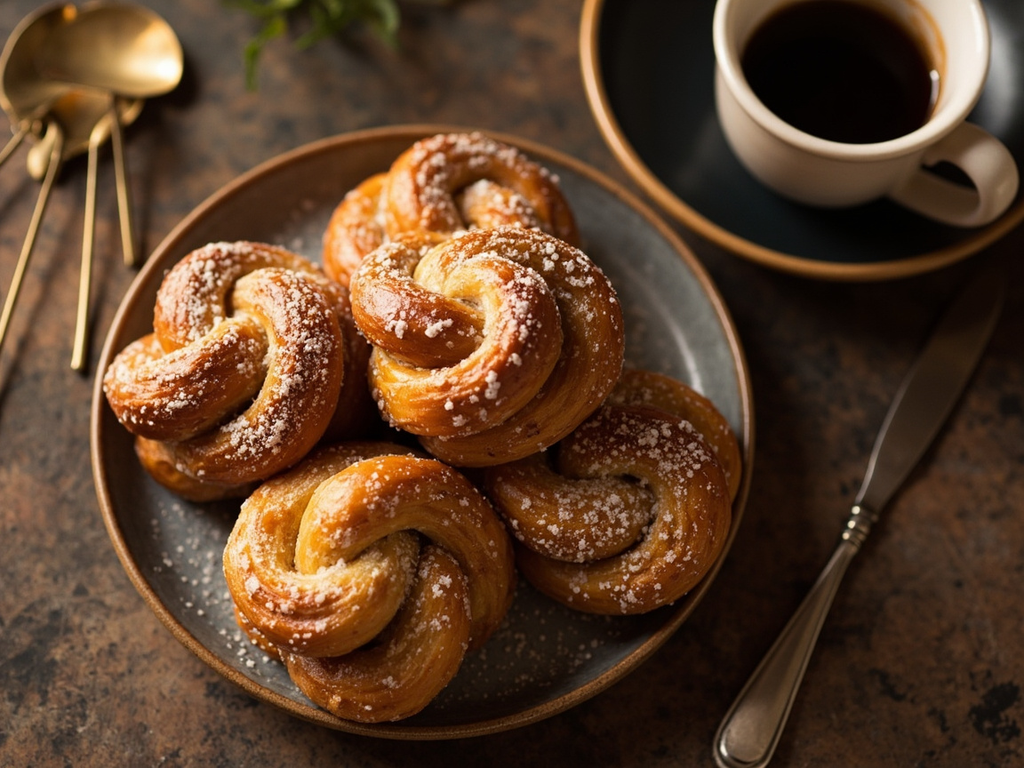
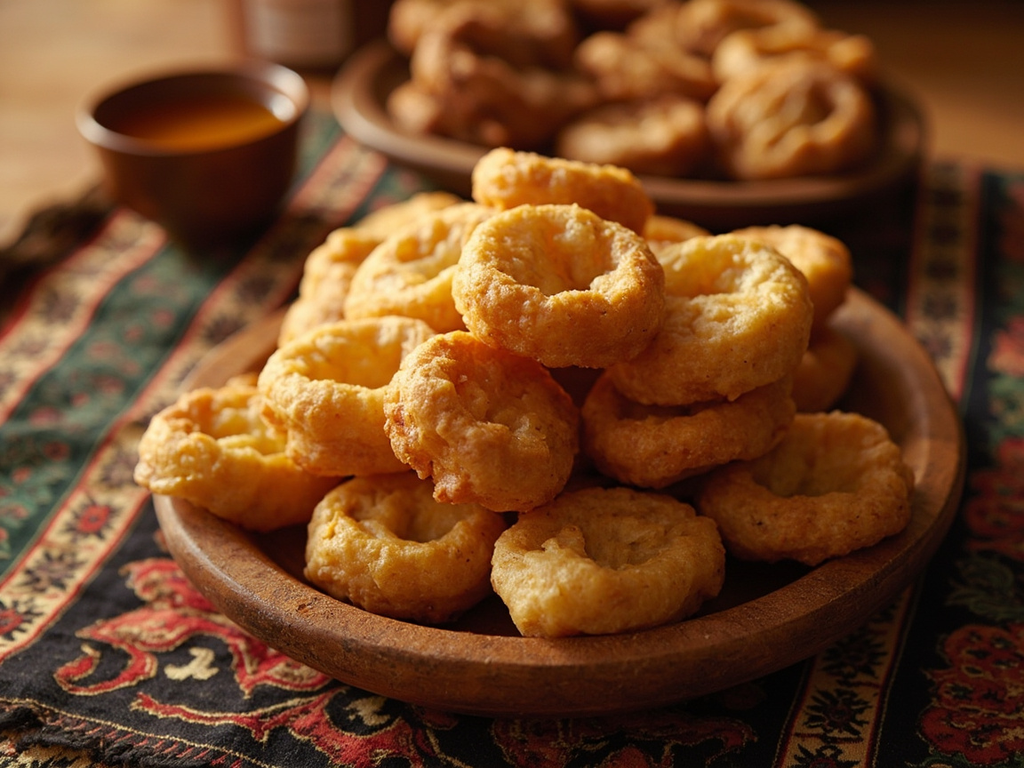
Small leavened dough fritters fried in fat, golden and fluffy, slightly sweet. Served in a pyramid at the center of the dastarkhan, they accompany tea, honey, thick cream (kaymak) or meat broth.
There is no dastarkhan without baursak — just as there is no word without a listener. My grandmother Zere said that a well-puffed baursak carries the blessing of the hearth. The dough must be soft, almost alive under the fingers, and the oil hot enough for the fritter to swell as soon as it touches it. We pile them up like a mountain in the center of the cloth, and each serves themselves, from youngest to oldest. That is our bread — it is not cut with a knife, it is shared by hand.
- •Wheat flour — a large bowl (Dough base)
- •Warm cow or mare's milk — half a bowl (Liquid)
- •Melted sheep tail fat (kuyryk-may) — a good ladle (Frying and dough)
- •Natural sourdough (or spontaneous fermentation yeast) — a piece (Leavening)
- •Salt — a pinch (Flavor)
- •Sugar (optional) — a small handful (Light sweetness)
Бауырсақ (Baursak)
Small leavened dough fritters fried in fat, golden and fluffy, slightly sweet. Served in a pyramid at the center of the dastarkhan, they accompany tea, honey, thick cream (kaymak) or meat broth.
Why this dish? Baursak are the ubiquitous fried bread on every Kazakh dastarkhan, from the humblest to the most lavish. In Abai's house in Zhidebay, as in the yurts of his summer camps near Semipalatinsk, no meal began without the golden mountain of baursak placed at the center of the tablecloth. It is also the first food offered at a birth, wedding or funeral — the great passages of life that Abai pondered in his Book of Words.
There is no dastarkhan without baursak — just as there is no word without a listener. My grandmother Zere said that a well-puffed baursak carries the blessing of the hearth. The dough must be soft, almost alive under the fingers, and the oil hot enough for the fritter to swell as soon as it touches it. We pile them up like a mountain in the center of the cloth, and each serves themselves, from youngest to oldest. That is our bread — it is not cut with a knife, it is shared by hand.
Ingredients (period version)
- Wheat flour — a large bowl (Dough base)
- Warm cow or mare's milk — half a bowl (Liquid)
- Melted sheep tail fat (kuyryk-may) — a good ladle (Frying and dough)
- Natural sourdough (or spontaneous fermentation yeast) — a piece (Leavening)
- Salt — a pinch (Flavor)
- Sugar (optional) — a small handful (Light sweetness)
Ingredients
- Flour — 500 g (Dough base)
- Warm milk — 200 ml (Liquid)
- Melted butter — 50 g (Fat in dough)
- Dry yeast — 7 g (1 packet) (Leavening)
- Sugar — 2 tbsp (Sweetness)
- Salt — 1 tsp (Flavor)
- Egg — 1 (Binder)
- Frying oil (sunflower or neutral vegetable) — 1 liter (Frying)
Method
- Dissolve the yeast and sugar in warm milk (35°C). Let foam for 10 minutes.
- In a bowl, mix flour and salt. Make a well, pour in the milk-yeast mixture, beaten egg and melted butter.
- Knead for 8-10 minutes until a soft, smooth and slightly sticky dough forms. Cover with a damp cloth and let rise for 1.5 hours in a warm place, until doubled in volume.
- Deflate the dough. On a floured surface, roll out to 1.5 cm thickness. Cut into diamonds or squares 4-5 cm (or form small balls).
- Heat oil to 170-175°C in a deep pan or fryer. Fry baursak in small batches of 5-6 pieces, 2-3 minutes per side, until well puffed and golden.
- Drain on paper towels. Serve warm in a pyramid, with honey, jam or thick fresh cream.
How it was made : Baursak were fried in sheep tail fat, which gave a characteristic flavor and a crispier crust than vegetable oil. They were prepared in large quantities for celebrations (toi), funerals (as) and visits. They kept for several days, barely hardening thanks to the fat. The diamond shape is the most traditional; round balls are a more recent variation. Sometimes the first baursak was thrown into the fire as an offering to ancestral spirits.
The contemporary twist : Serve baursak still warm with a drizzle of mountain honey and a pinch of fleur de sel, arranged in a turned wooden bowl — a miniature dastarkhan.
Sources : Алтынбеков М., Қазақтың дәстүрлі тағамдары (Traditional Kazakh Dishes), Almaty, 2007 · Kenжебаева Ш., Ас мәзірі: қазақ халқының ұлттық тағамдары (Kazakh National Menu), Almaty, 2012
Abai Kunanbaev · Charactorium