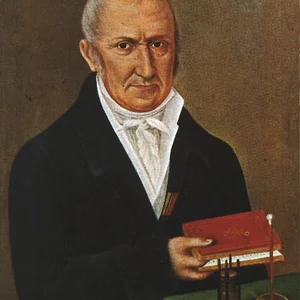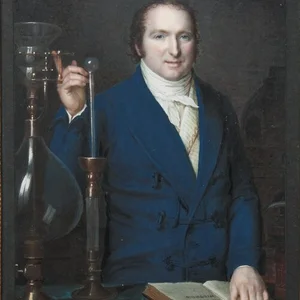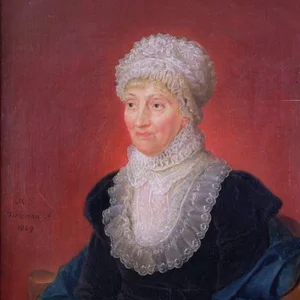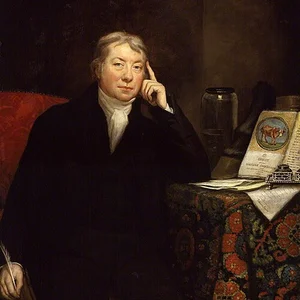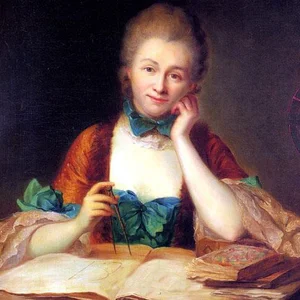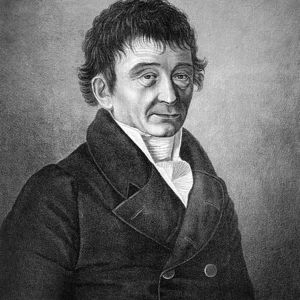

A French writer and scholar of the 17th–18th century, Fontenelle popularized science for the general public. Known for his Conversations on the Plurality of Worlds and his role as perpetual secretary of the Académie des sciences, he embodies the spirit of the Enlightenment.
Fontenelle(1657 — 1757)
Fontenelle
royaume de France
6 min read
Frequently asked questions
Famous Quotes
« I want you to love the sciences and find them more entertaining than comedies.»
« Incredulity is the foundation of true faith.»
Key Facts
- Publication of Conversations on the Plurality of Worlds in 1686, a landmark work of popular science writing
- Perpetual Secretary of the Académie des sciences in Paris from 1697 to 1740
- Promotion of Copernicus's heliocentric theory to the educated public of the 17th century
- Author of historical eulogies for deceased academicians, shaping the genre of academic discourse
- Engagement with Enlightenment ideals: rationalism, critique of religious dogmatism, confidence in reason
Works & Achievements
A masterpiece of scientific popularization in which Fontenelle explains the Copernican system through elegant dialogues with a marchioness. The work was enormously successful and was translated throughout Europe.
A rationalist essay inspired by a work by the Dutchman Van Dale, in which Fontenelle dismantles the superstitions surrounding ancient oracles by applying critical method.
A major text in the Quarrel of the Ancients and the Moderns, in which Fontenelle defends the idea of progress and argues that the Moderns can surpass the Ancients through the accumulation of knowledge.
A series of biographical and scientific notices written by Fontenelle as perpetual secretary of the Académie des sciences. These eulogies form a unique panorama of European science of the era.
An essay in which Fontenelle analyzes the birth of myths and beliefs as products of human ignorance, foreshadowing the anthropology of the Enlightenment.
An ambitious work in which Fontenelle attempts to provide a mathematical foundation for infinitesimal calculus, attesting to his commitment to the exact sciences.
Anecdotes
Fontenelle is famous for his exceptional longevity: he lived nearly one hundred years, from 1657 to 1757, spanning the reign of Louis XIV and a large part of that of Louis XV. At his death, he was just one month short of reaching his hundredth birthday.
It is said that one day, a lady asked him the difference between herself and a clock. Fontenelle replied gallantly: "Madam, a clock marks the hours, and you, you make them forgotten." This witticism illustrates the worldly and witty character of the man, greatly appreciated in Parisian salons.
Fontenelle was the nephew of the great playwright Pierre Corneille through his mother. He thus grew up in a stimulating literary environment, which profoundly influenced his vocation as a writer and popularizer of knowledge.
When asked the secret of his longevity, Fontenelle often replied with humor that he had never chased after women or honors, and that he ate strawberries. He also attributed his good health to his moderation in all things and to his calm temperament.
Fontenelle held the position of permanent secretary of the Académie royale des sciences for forty-two years, from 1697 to 1740. There he wrote the obituary tributes of numerous scholars, thereby helping to bring their work to the attention of the educated general public.
Primary Sources
I want to tell you that all of philosophy is founded on just two things: on having a curious mind and poor eyesight; for if your eyes were better than they are, you would easily see whether the stars are suns.
Let us make sure of the fact before troubling ourselves about the cause. It is true that this method is very slow for most people, who naturally run to the cause and skip over the truth of the fact.
The whole question of the pre-eminence between the Ancients and the Moderns, once properly understood, comes down to knowing whether the trees that once grew in our countryside were larger than those of today.
Newton left behind a great legacy of glory, and on this subject a kind of dispute arose between the English and the Germans, not unlike the one in which seven cities of Greece competed over the birthplace of Homer.
Key Places
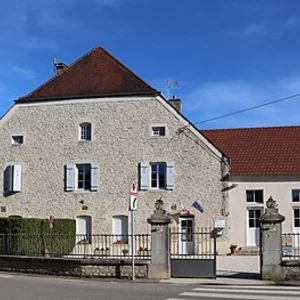
Fontenelle's birthplace, where he grew up in the circle of his uncle Pierre Corneille and received his early education from the Jesuits.
Institution where Fontenelle served as perpetual secretary for 42 years, writing eulogies of scholars and reports on scientific discoveries.
Social venues where Fontenelle shone through his wit and disseminated scientific ideas to a cultivated audience, most notably the salon of Madame de Lambert.
Seat of the Académie française, where Fontenelle was elected in 1691, and the meeting place of its academicians.
Neighbourhood where Fontenelle resided for much of his Parisian life, in close proximity to academic institutions and salons.
Typical Objects

Sky observation instrument that Fontenelle evokes in his Conversations to explain the plurality of worlds to the general public.

Fontenelle's everyday writing tools, with which he composed hundreds of academic eulogies and popular science works.

Scholar's cabinet object representing the constellations, a symbol of Fontenelle's passion for astronomy and cosmology.

Official volumes in which Fontenelle recorded the work and discoveries of scholars in his role as perpetual secretary.

Small elegant object widely used in 18th-century salons, which Fontenelle, a man of the world, readily carried with him.

Accessory of Parisian social life, used in the salons that Fontenelle frequented assiduously.
School Curriculum
Vocabulary & Tags
Key Vocabulary
Daily Life
Morning
Fontenelle rose late, like many men of letters of his time. He had a frugal breakfast, often a broth or hot chocolate, then devoted his mornings to reading scientific memoirs and drafting his academic eulogies.
Afternoon
In the afternoon, Fontenelle frequently attended sessions at the Académie des sciences or the Académie française. He also spent time corresponding with European scholars and receiving visitors in his study.
Evening
In the evening, Fontenelle was a regular presence in Parisian salons, notably that of Madame de Lambert and later Madame de Tencin. He shone there with his witticisms and spread the latest scientific discoveries in an accessible and elegant manner.
Food
Fontenelle ate with great moderation, which he considered a secret to longevity. He was particularly fond of strawberries and asparagus, and drank little wine. His simple and temperate diet was remarked upon by his contemporaries.
Clothing
Fontenelle wore the characteristic dress of an 18th-century gentleman: a justaucorps of silk or fine cloth, embroidered waistcoat, breeches, silk stockings, and a powdered wig. His attire was neat but without excessive ostentation, reflecting his standing as an academician.
Housing
Fontenelle spent most of his life in Paris, in comfortable apartments in the central districts. His lodgings contained a study lined with books, manuscripts, and scientific instruments, reflecting his dual literary and scholarly vocation.
Historical Timeline
Period Vocabulary
Visual Style
Style visuel inspiré de la Régence et du début du règne de Louis XV, mêlant élégance des salons dorés, instruments scientifiques et lumière tamisée de chandelles.
Sound Ambience
Ambiance feutrée d'un salon parisien du début du XVIIIe siècle, entre conversations savantes, musique de clavecin et bruissements d'étoffes précieuses.
Liens externes & ressources
Références
Œuvres
Entretiens sur la pluralité des mondes
1686
Histoire des oracles
1687
Digression sur les Anciens et les Modernes
1688
Éloges des académiciens
1708-1740
De l'origine des fables
1724
Éléments de la géométrie de l'infini
1727