 flip
flipLean potage with herbs and bread
Lean potage with herbs and bread
Why this dish? A Benedictine monk at Saint-Wandrille and then Jumièges, Prévost shared the frugal fare of abbeys on lean days: a potage of herbs from the cloister garden, thickened with stale bread, without meat or animal fat. This is the humblest and most everyday dish of his life as a churchman.
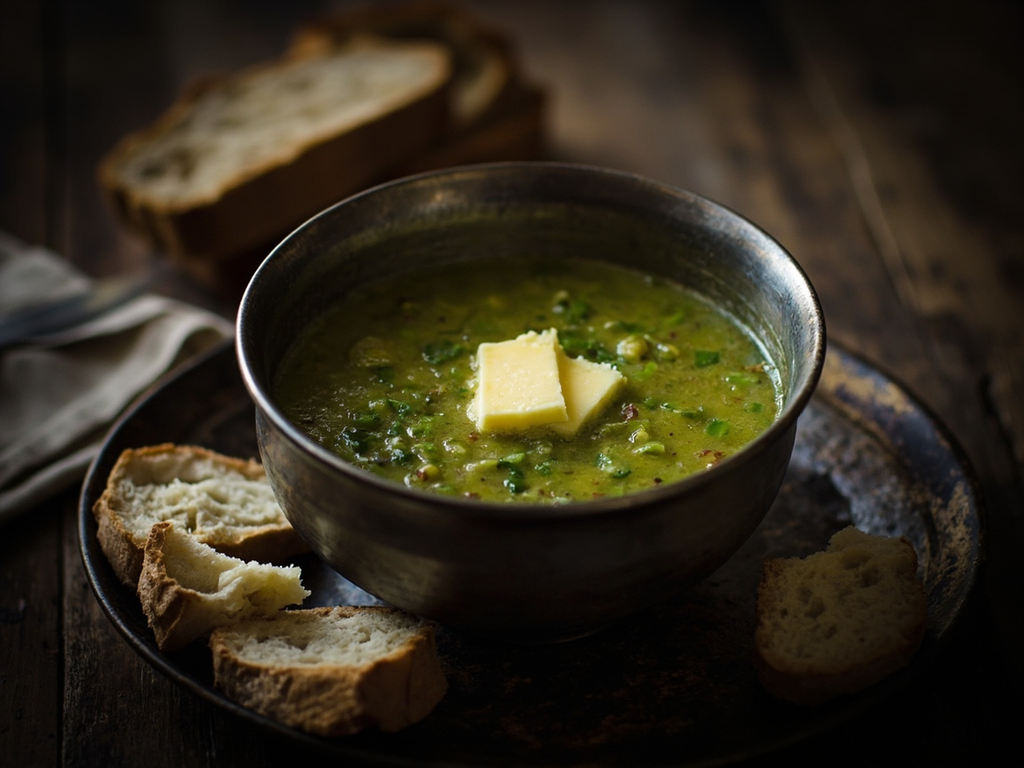
A gentle, comforting soup of leeks, sorrel, and garden herbs, bound with bread and butter, as it was eaten in the refectory on days of abstinence. Simple, green, nourishing.
Sir, do not be misled by the apparent poverty of this potage: on lean days, the refectory granted us only the herbs from the cloister and yesterday's bread, and yet I have taken more pleasure in it than in many a feast. One sweats the leek in butter, unhurriedly, then tosses in the freshly picked sorrel and chervil, and binds it all with softened crusts. A tip, I confide to you: salt only at the end, and keep the sorrel for the last moment, so that it retains its green sharpness and delicate sourness.
- •Garden leeks — a bunch (mild base)
- •Sorrel and chervil — a handful of each (acidity and freshness)
- •Stale bread — several crusts (thickener)
- •Fresh butter — a good knob (allowed lean fat)
- •Salt — to taste (seasoning)
- •Spring water — as needed (liquid)
Lean potage with herbs and bread
A gentle, comforting soup of leeks, sorrel, and garden herbs, bound with bread and butter, as it was eaten in the refectory on days of abstinence. Simple, green, nourishing.
Why this dish? A Benedictine monk at Saint-Wandrille and then Jumièges, Prévost shared the frugal fare of abbeys on lean days: a potage of herbs from the cloister garden, thickened with stale bread, without meat or animal fat. This is the humblest and most everyday dish of his life as a churchman.
Sir, do not be misled by the apparent poverty of this potage: on lean days, the refectory granted us only the herbs from the cloister and yesterday's bread, and yet I have taken more pleasure in it than in many a feast. One sweats the leek in butter, unhurriedly, then tosses in the freshly picked sorrel and chervil, and binds it all with softened crusts. A tip, I confide to you: salt only at the end, and keep the sorrel for the last moment, so that it retains its green sharpness and delicate sourness.
Ingredients (period version)
- Garden leeks — a bunch (mild base)
- Sorrel and chervil — a handful of each (acidity and freshness)
- Stale bread — several crusts (thickener)
- Fresh butter — a good knob (allowed lean fat)
- Salt — to taste (seasoning)
- Spring water — as needed (liquid)
Ingredients
- Leeks — 3 large, sliced (mild base)
- Fresh sorrel — 2 handfuls (acidity)
- Chervil (or flat-leaf parsley) — 1 small bunch (freshness)
- Stale country bread — 150 g (thickener)
- Butter — 50 g (fat)
- Water or vegetable broth — 1.2 L (liquid)
- Salt — to taste (seasoning)
Method
- Melt the butter over low heat and sweat the sliced leeks for about ten minutes, without browning.
- Add the water or broth, crumble in the stale bread, and let simmer for 20 minutes.
- Blend (or mash with a fork for a rustic texture) until the potage is thickened.
- Off the heat, add the chopped sorrel and chervil; stir for 1 minute until the sorrel wilts.
- Salt at the end of cooking and serve hot, with a drizzle of butter.
How it was made : In abbeys, potage systematically incorporated stale bread to avoid waste. Butter, tolerated on lean days in many orders (sometimes by dispensation, the famous 'butter letter'), replaced the forbidden lard. Sorrel provided acidity, in the absence of common citrus.
The contemporary twist : Serve in a warm verrine with a soft-poached egg on top: the runny yolk recalls the allowance of eggs on lean days.
Abbé Prévost · Charactorium