 flip
flipBarley maza and cheese, camp flatbread
Barley maza and cheese, camp flatbread
Why this dish? Far from lavish banquets, the army camped before Troy lived for ten years on maza, the barley flatbread or porridge, the basis of Greek diet. Achilles, prince of Phthia accustomed to meat, nevertheless shares this daily bread of warriors between assaults.
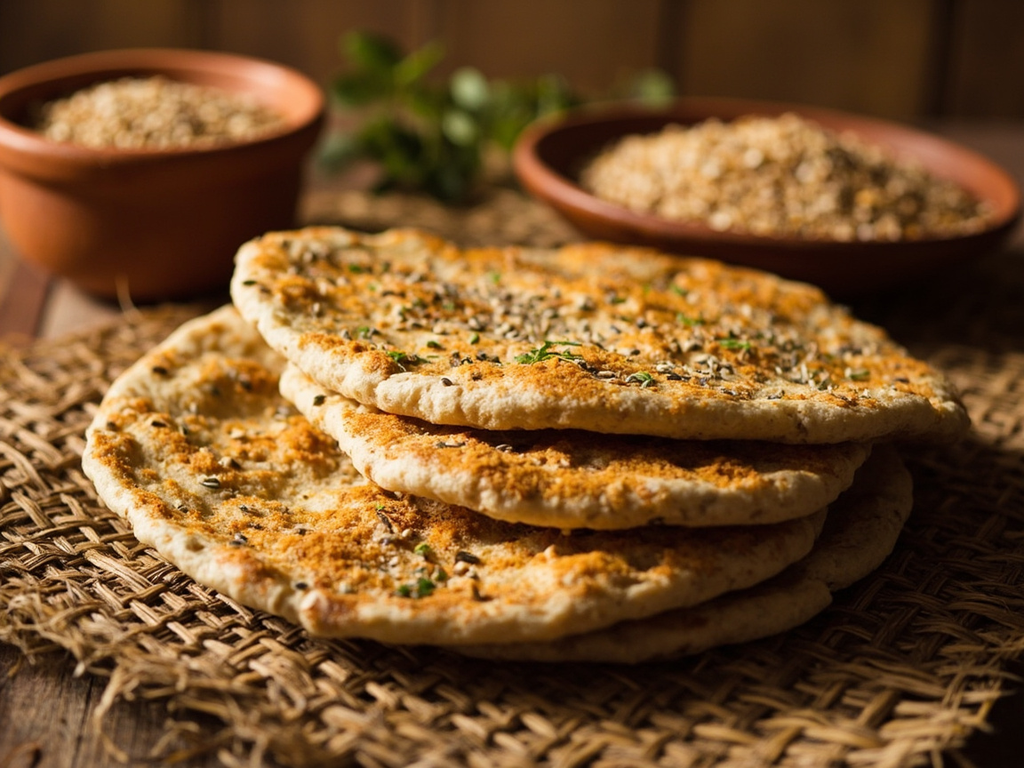
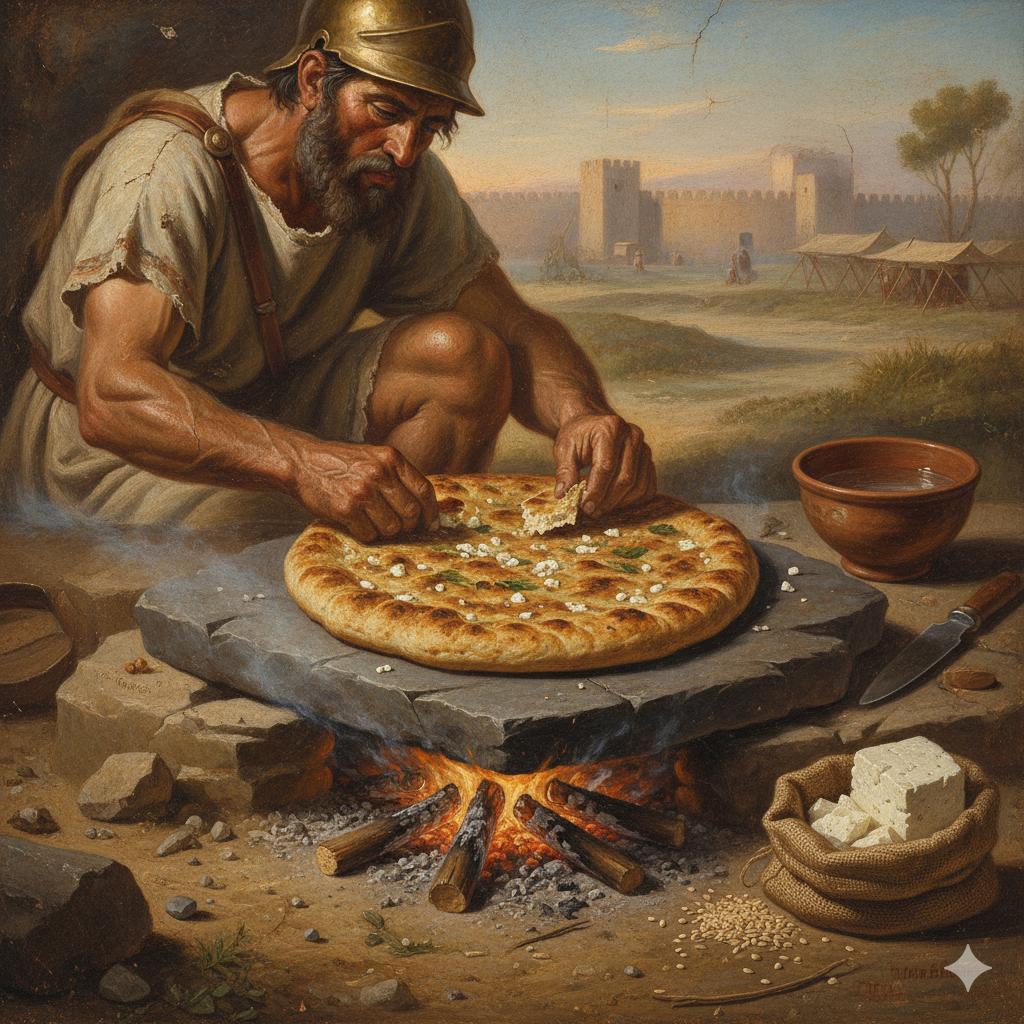
Flat barley cake kneaded with water, sometimes enriched with crumbled sheep's cheese, baked on a hot stone. The everyday food, nourishing and portable, that sustained the soldiers of the Achaean camp.
Do not think the hero lives only on fat flesh, friend. Ten years beneath the walls of Troy, it is barley that is ground and kneaded, and the flatbread baked on the hot stone by the sounding shore. I crumble the cheese of my Phthian ewes into it, for a warrior who has not eaten has no arm for the spear. Break it with me: it is the simple bread that sustains both anger and courage.
- •Toasted barley flour — two handfuls (grain base)
- •Water — as needed (binder)
- •Sheep's cheese — a piece, crumbled (enrichment)
- •Salt — a pinch (seasoning)
Barley maza and cheese, camp flatbread
Flat barley cake kneaded with water, sometimes enriched with crumbled sheep's cheese, baked on a hot stone. The everyday food, nourishing and portable, that sustained the soldiers of the Achaean camp.
Why this dish? Far from lavish banquets, the army camped before Troy lived for ten years on maza, the barley flatbread or porridge, the basis of Greek diet. Achilles, prince of Phthia accustomed to meat, nevertheless shares this daily bread of warriors between assaults.
Do not think the hero lives only on fat flesh, friend. Ten years beneath the walls of Troy, it is barley that is ground and kneaded, and the flatbread baked on the hot stone by the sounding shore. I crumble the cheese of my Phthian ewes into it, for a warrior who has not eaten has no arm for the spear. Break it with me: it is the simple bread that sustains both anger and courage.
Ingredients (period version)
- Toasted barley flour — two handfuls (grain base)
- Water — as needed (binder)
- Sheep's cheese — a piece, crumbled (enrichment)
- Salt — a pinch (seasoning)
Ingredients
- Barley flour — 200 g (flatbread base)
- Warm water — about 120 ml (binder)
- Feta or sheep's cheese — 80 g, crumbled (savory garnish)
- Olive oil — 1 tbsp (cooking)
- Salt — 1 pinch (seasoning)
- Honey — drizzle, optional (sweet variation)
Method
- Mix barley flour, salt, and warm water into a soft, non-sticky dough.
- Fold in the crumbled cheese and form flat cakes about 1 cm thick.
- Heat a pizza stone, cast iron pan, or griddle with or without a little oil.
- Cook each flatbread for 3-4 minutes per side, until golden and marked.
- Serve warm, plain alongside meat, or with a drizzle of honey for a sweet version.
How it was made : Maza (ground barley, sometimes simply moistened without cooking) was the ordinary bread of the Greeks, more common than wheat bread reserved for the wealthy. In camp, barley kept well and was quick to prepare. Sheep's or goat's cheese, mentioned by Homer, made it a complete meal.
The contemporary twist : Cut the flatbread into wedges and serve as a mezze appetizer with a drizzle of olive oil and oregano, like a taste of the ancient Mediterranean.
Sources : Homer, Iliad and Odyssey (mentions of bread and cheese) · A. Dalby, Siren Feasts: A History of Food and Gastronomy in Greece
Achilles · Charactorium