 flip
flipLentil and Herb Purée of the Pure Ones
Lentil and Herb Purée of the Pure Ones
Why this dish? Abaddon is the angel of the Abyss's pit, and the apocalyptic texts of his time arise in circles like the Qumran community, on the shore of the Dead Sea, where the final battle was awaited. These 'pure ones' shared a sober common meal: bread and legume pottage. Here is the daily food of the world that copied his visions.
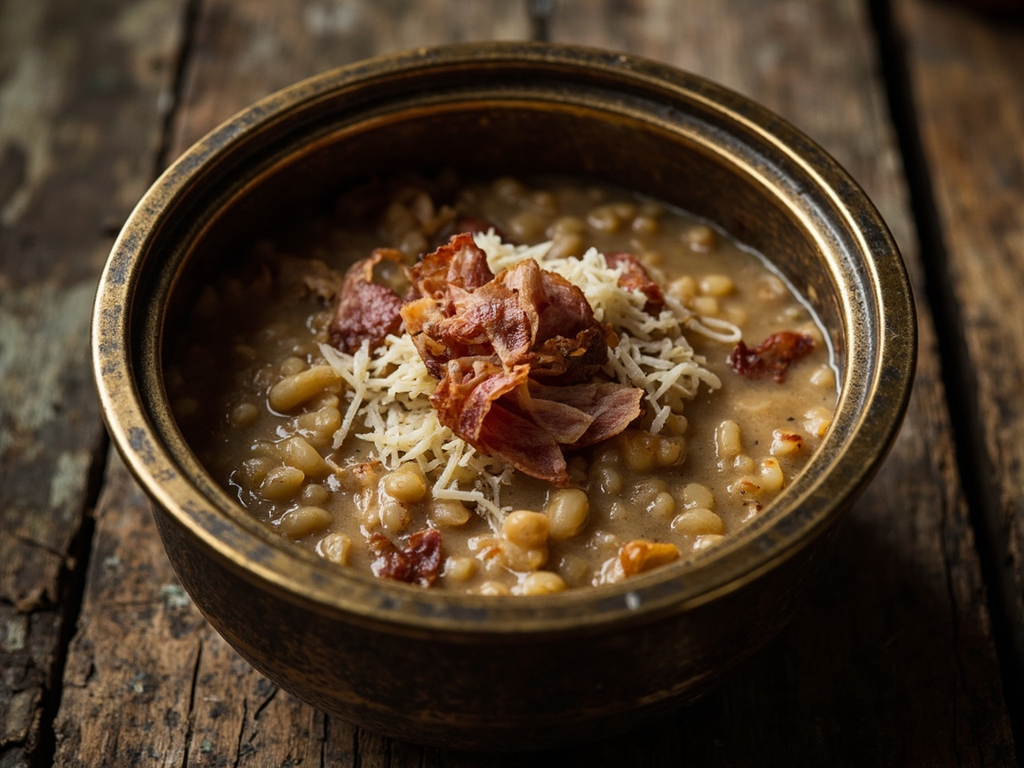
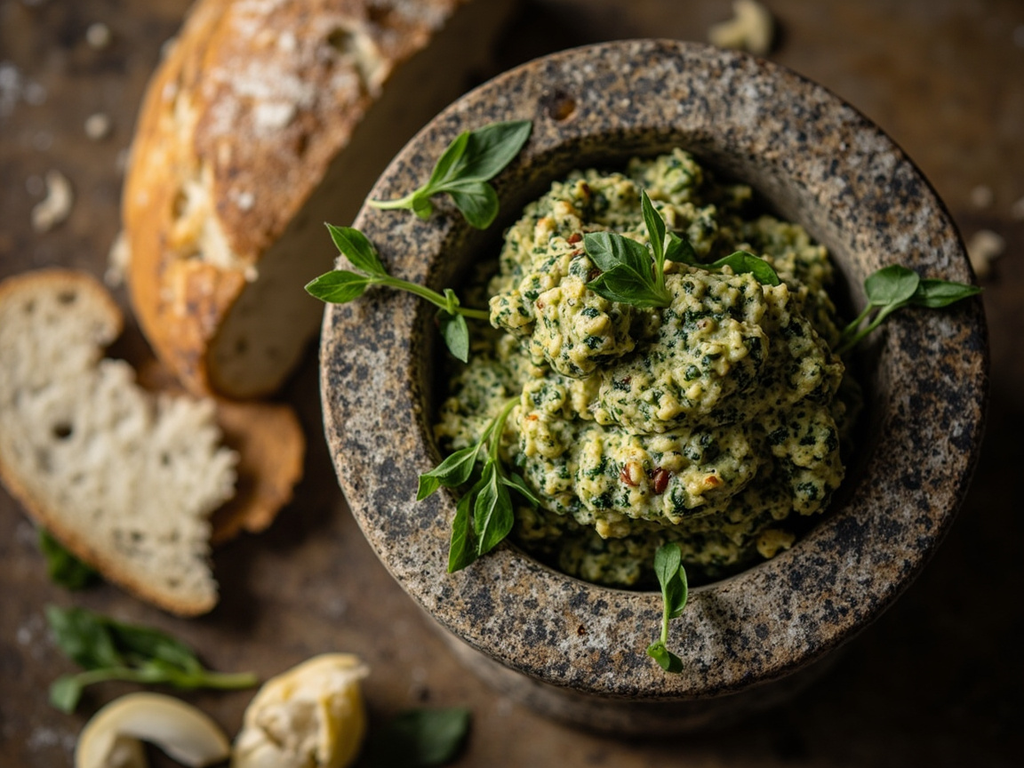
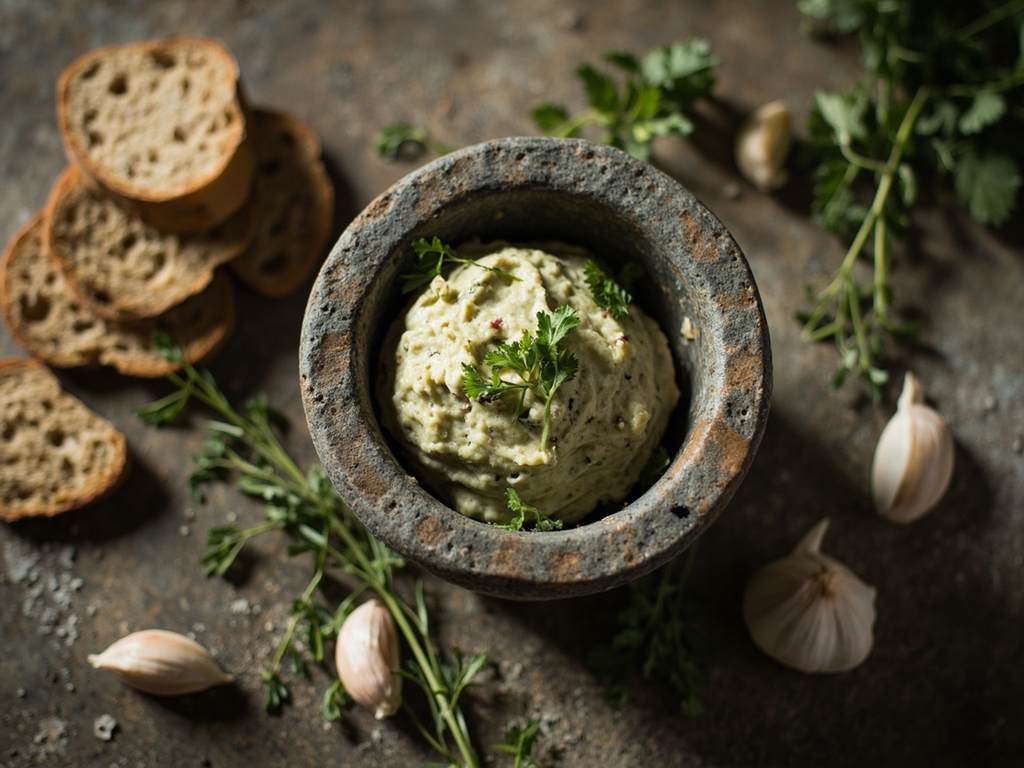
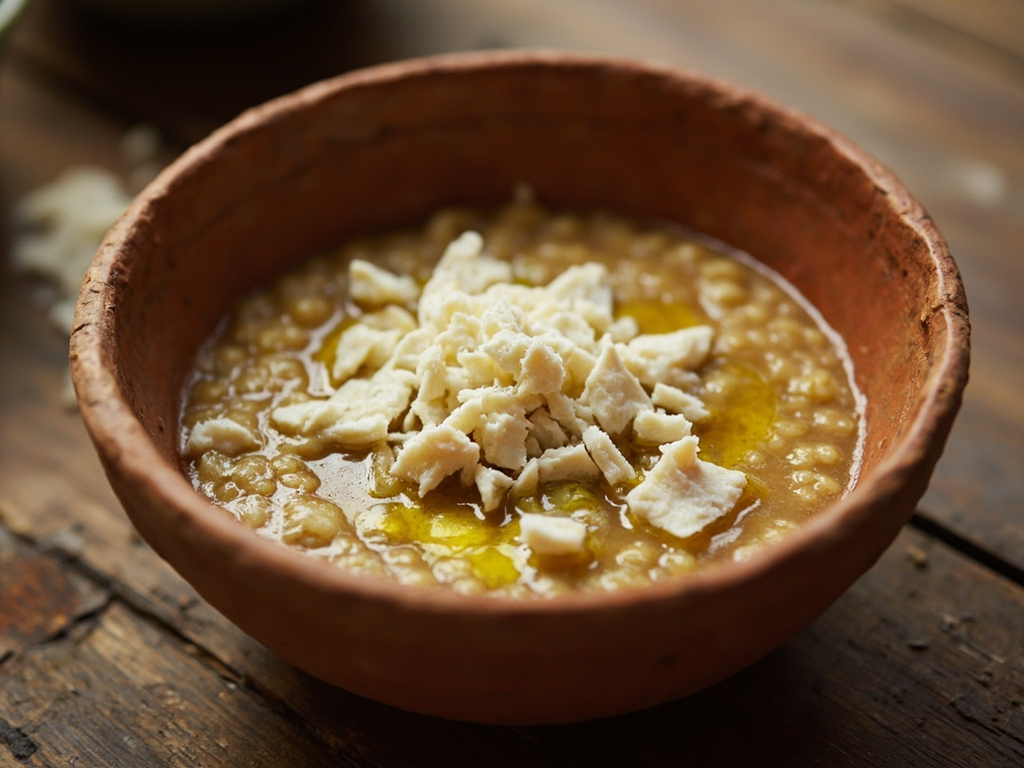
A thick purée of lentils simmered in olive oil, scented with coriander, cumin, and fresh herbs, moistened with a little vinegar. It is eaten by dipping bread into it, at the shared table of desert communities.
Do you think the men who recorded my visions feasted? No. By the bitter sea, the pure ones sat in silence, and the priest blessed the bread before any touched it. Their bowl? Lentils long cooked in oil, seasoned with garden herbs and a drop of vinegar. Simple as waiting, dense as patience. They ate little, but they ate together, watching for the day I would be unleashed. Dip your bread, and be silent: this is how one eats while awaiting the end.
- •Lentils — a good measure (base)
- •Olive oil — generous (body and richness)
- •Onion — one (aromatic base)
- •Coriander and cumin — a pinch each (spices)
- •Fresh herbs (coriander, mint) — a bunch (freshness)
- •Wine vinegar — a dash (acidity)
- •Salt — to taste (seasoning)
Lentil and Herb Purée of the Pure Ones
A thick purée of lentils simmered in olive oil, scented with coriander, cumin, and fresh herbs, moistened with a little vinegar. It is eaten by dipping bread into it, at the shared table of desert communities.
Why this dish? Abaddon is the angel of the Abyss's pit, and the apocalyptic texts of his time arise in circles like the Qumran community, on the shore of the Dead Sea, where the final battle was awaited. These 'pure ones' shared a sober common meal: bread and legume pottage. Here is the daily food of the world that copied his visions.
Do you think the men who recorded my visions feasted? No. By the bitter sea, the pure ones sat in silence, and the priest blessed the bread before any touched it. Their bowl? Lentils long cooked in oil, seasoned with garden herbs and a drop of vinegar. Simple as waiting, dense as patience. They ate little, but they ate together, watching for the day I would be unleashed. Dip your bread, and be silent: this is how one eats while awaiting the end.
Ingredients (period version)
- Lentils — a good measure (base)
- Olive oil — generous (body and richness)
- Onion — one (aromatic base)
- Coriander and cumin — a pinch each (spices)
- Fresh herbs (coriander, mint) — a bunch (freshness)
- Wine vinegar — a dash (acidity)
- Salt — to taste (seasoning)
Ingredients
- Green or brown lentils — 250 g (base)
- Olive oil — 5 tbsp (body)
- Onion — 1, sliced (aromatic base)
- Ground cumin — 1 tsp (spice)
- Ground coriander — 1 tsp (spice)
- Fresh coriander and mint — 1 small bunch (freshness)
- Wine vinegar — 1 tbsp (acidity)
- Salt — to taste (seasoning)
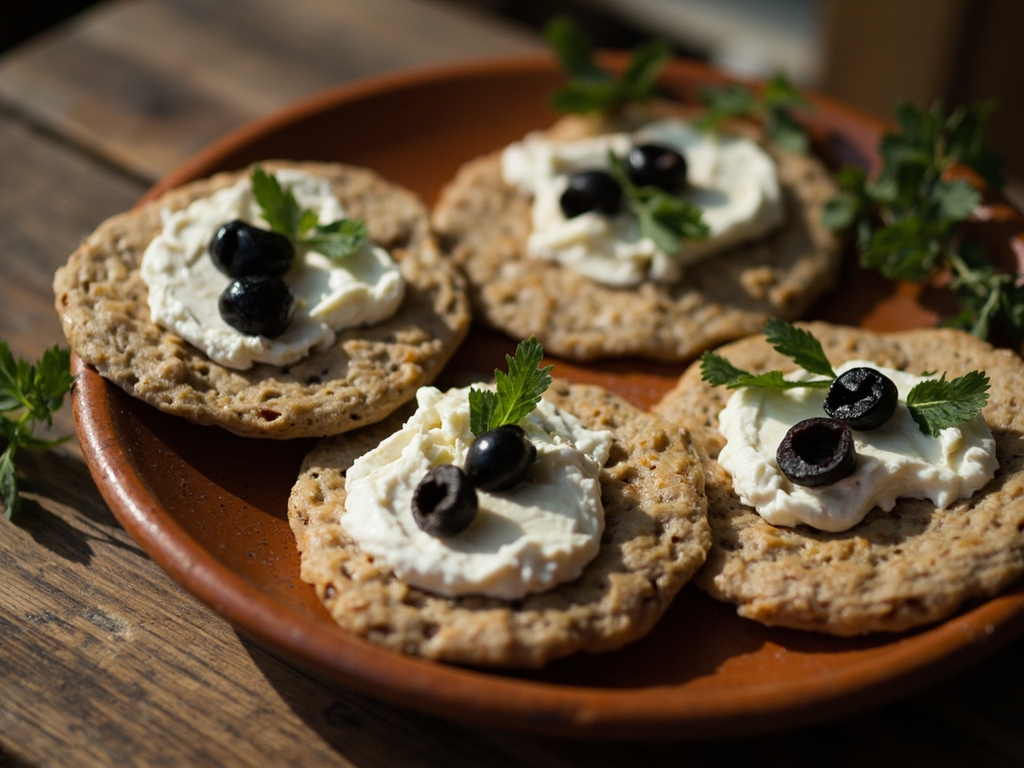
- Flatbread (barley or wheat) — separate (support)
Method
- Sweat the sliced onion in olive oil until golden.
- Add ground cumin and coriander, let perfume for 30 seconds.
- Add rinsed lentils and cover with water; simmer 30-40 minutes until they break down.
- Roughly mash with a fork to a thick purée; season with salt.
- Off heat, add vinegar and chopped fresh herbs.
- Serve warm, drizzled with olive oil, with bread for dipping.
How it was made : Lentils and other legumes formed the protein base of modest tables in Judea and the Mediterranean basin. The Qumran community practiced a common meal preceded by a blessing of bread and wine, in great ritual sobriety. Legumes were cooked long in earthen pots over the fire, with olive oil ever-present.
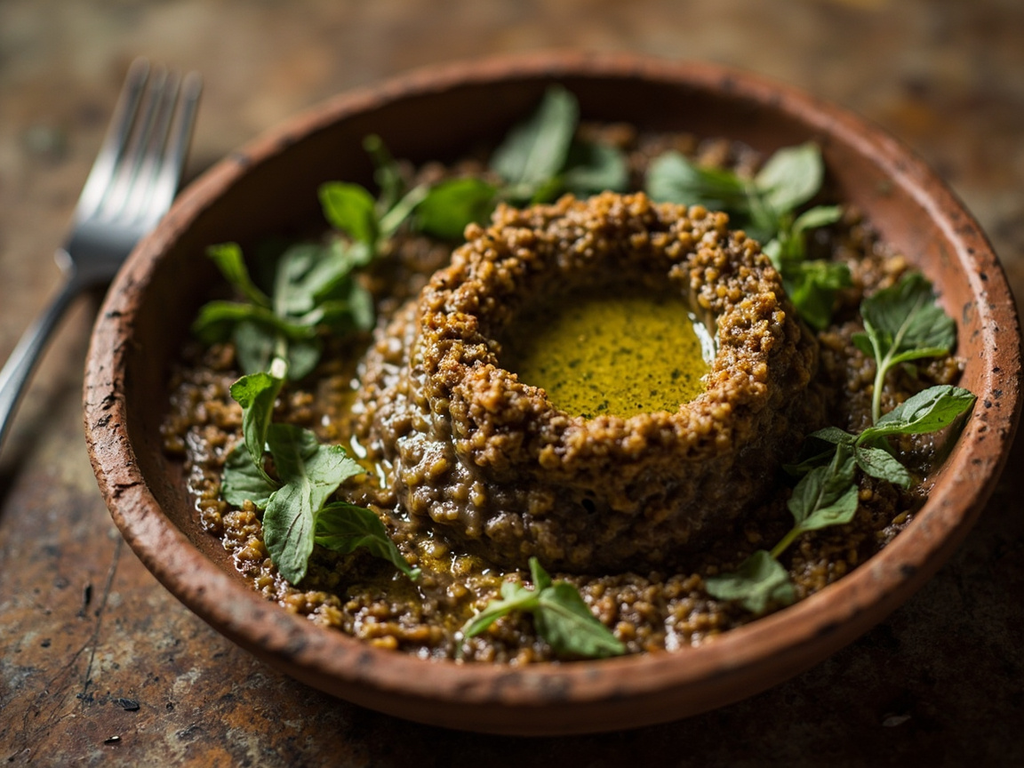
The contemporary twist : Present the purée in a smooth dome with a central well filled with green olive oil and a little toasted cumin — the 'Pit of the Abyss' made edible.
Sources : Community Rule of Qumran (1QS) — common meal and blessing · Flavius Josephus, The Jewish War II (Essene way of life)
Abaddon · Charactorium