 flip
flipMelitoutta for the Passage
Melitoutta for the Passage
Why this dish? A honey cake, the melitoutta, was slipped into the hand of the dead to appease the dog Cerberus at the threshold of the Underworld — the same threshold guarded by the mist of Achlys. During the perideipnon, the meal after the funeral, the living also shared it to celebrate the memory of the deceased.
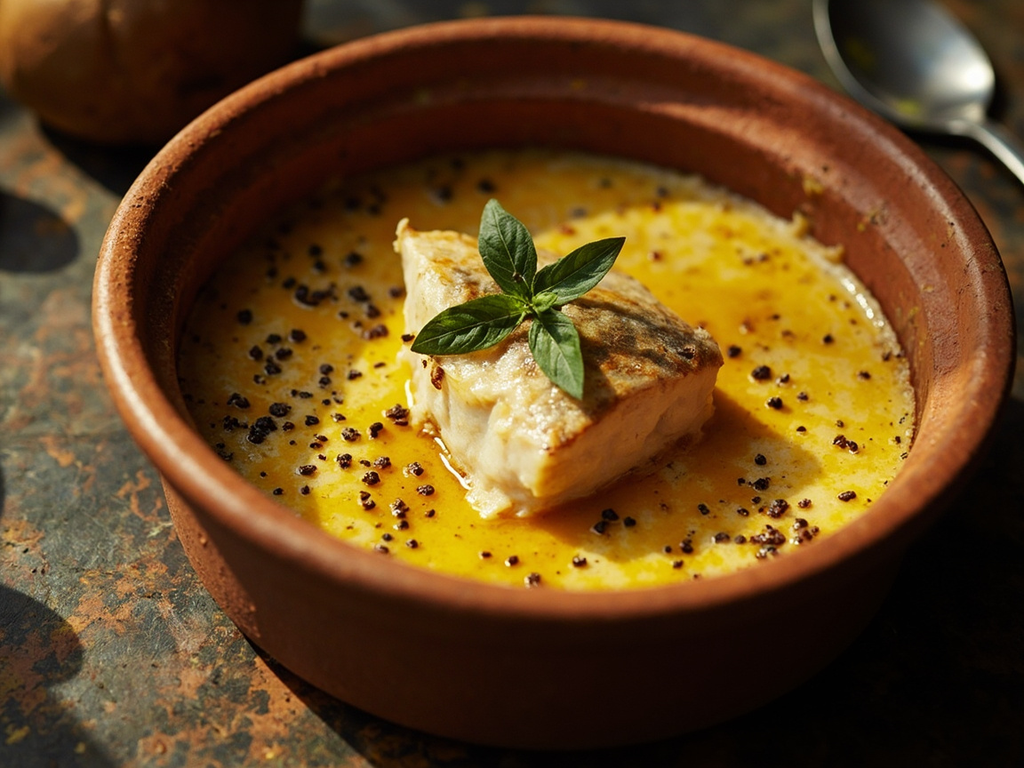
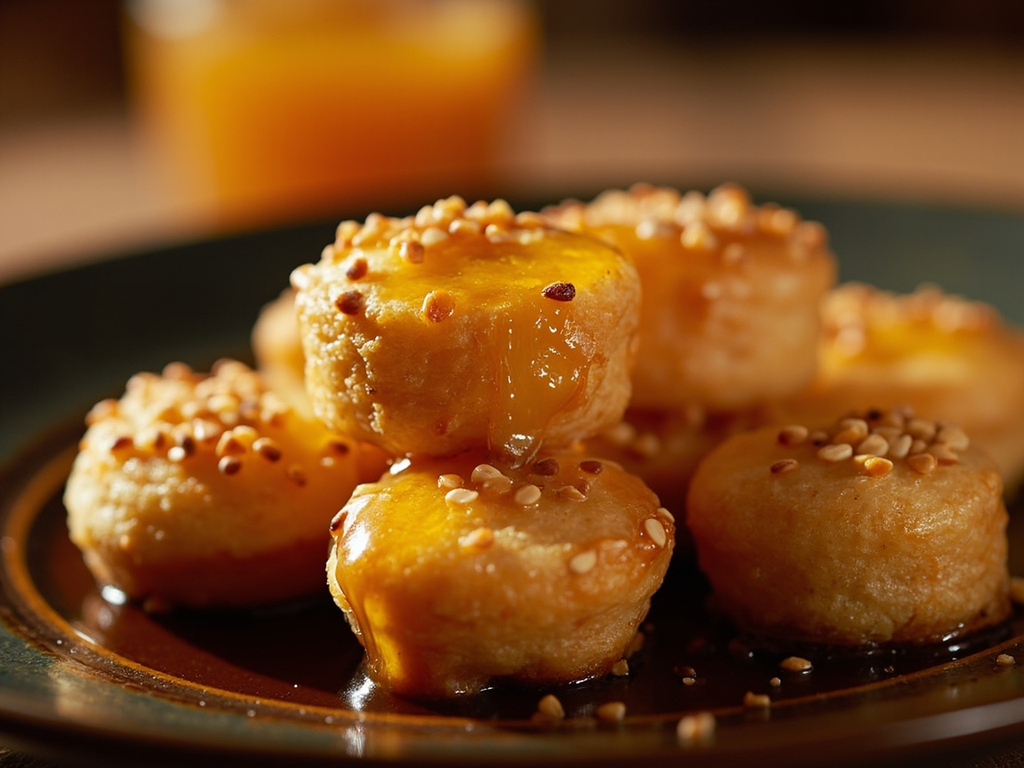
A small cake of fine wheat flour, kneaded with water and oil, browned then long soaked in warm honey perfumed with sesame. Tender, sticky, sweet to the core.
Do you fear the great three-mouthed dog that guards my sunless house? Here is what the wise did: in the hand of their dead they placed a cake kneaded from fine wheat flour and drowned in honey. The hound, greedy, feasts on it and lets the shade pass. Soak your cake well in warm honey, mortal, until it is heavy and glistening — for a poorly fed Cerberus is a Cerberus that bites. And on the evening of the funeral, eat some yourself: sugar consoles those who remain as much as it lulls those who guard.
- •Fine wheat flour (fleur de froment) — two handfuls (base of the cake)
- •Honey — abundant (soaking, funeral sweetness)
- •Olive oil — a drizzle (softness of the dough)
- •Sesame seeds — a pinch (flavor and crunch)
- •Water — as needed (binder for the dough)
Melitoutta for the Passage
A small cake of fine wheat flour, kneaded with water and oil, browned then long soaked in warm honey perfumed with sesame. Tender, sticky, sweet to the core.
Why this dish? A honey cake, the melitoutta, was slipped into the hand of the dead to appease the dog Cerberus at the threshold of the Underworld — the same threshold guarded by the mist of Achlys. During the perideipnon, the meal after the funeral, the living also shared it to celebrate the memory of the deceased.
Do you fear the great three-mouthed dog that guards my sunless house? Here is what the wise did: in the hand of their dead they placed a cake kneaded from fine wheat flour and drowned in honey. The hound, greedy, feasts on it and lets the shade pass. Soak your cake well in warm honey, mortal, until it is heavy and glistening — for a poorly fed Cerberus is a Cerberus that bites. And on the evening of the funeral, eat some yourself: sugar consoles those who remain as much as it lulls those who guard.
Ingredients (period version)
- Fine wheat flour (fleur de froment) — two handfuls (base of the cake)
- Honey — abundant (soaking, funeral sweetness)
- Olive oil — a drizzle (softness of the dough)
- Sesame seeds — a pinch (flavor and crunch)
- Water — as needed (binder for the dough)
Ingredients
- All-purpose flour (T45) — 200 g (base)
- Liquid honey — 150 g (soaking syrup)
- Mild olive oil — 3 tbsp (softness)
- Sesame seeds — 2 tbsp (garnish)
- Warm water — 80 ml approx. (binder)
- Pinch of salt — 1 (balance)
Method
- Mix flour, salt, oil and warm water to form a soft dough; let rest 20 minutes.
- Shape into small flat cakes, prick with a fork.
- Bake at 190°C for 15-18 minutes until golden.
- Heat honey over low heat; dip the warm cakes in for a few minutes to soak.
- Drain, sprinkle with toasted sesame seeds and let cool.
How it was made : The melitoutta (honey cake for Cerberus) is mentioned by Greek comedians and scholiasts; they were placed in tombs. Their kinship with soaked honey cakes of the Mediterranean basin (from ancient melitoutta to loukoumades) shows a continuity of honey pastry over three thousand years.
The contemporary twist : Stacked in a pyramid drizzled with warm honey and golden sesame, under the name 'Cerberus Bites' — a hint of orange blossom water for a festive scent.
Sources : Scholia to Aristophanes, Lysistrata (mention of melitoutta) · A. Dalby, Food in the Ancient World from A to Z
Achlys · Charactorium