 flip
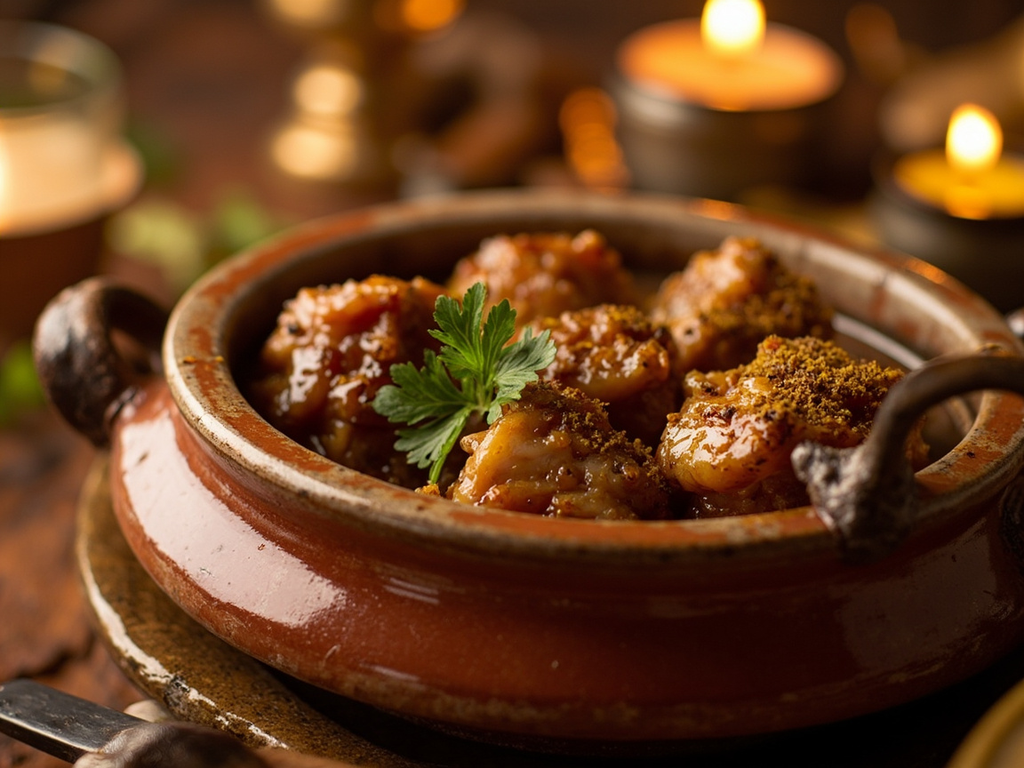
flipFish patina with garum and honey
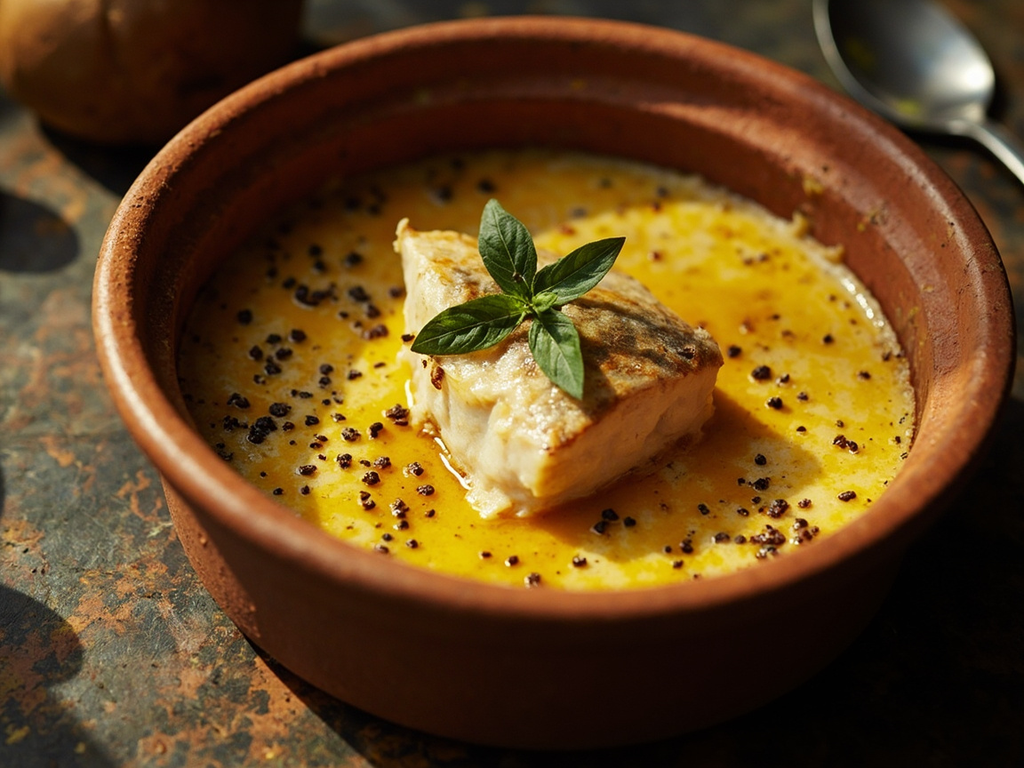
Fish patina with garum and honey
Why this dish? Agrippina hosted guests at Antioch, capital of the province of Syria, while Germanicus held command in the East. Mediterranean fish, seasoned with garum, appeared on the aristocratic tables of those provincial banquets where status was maintained.
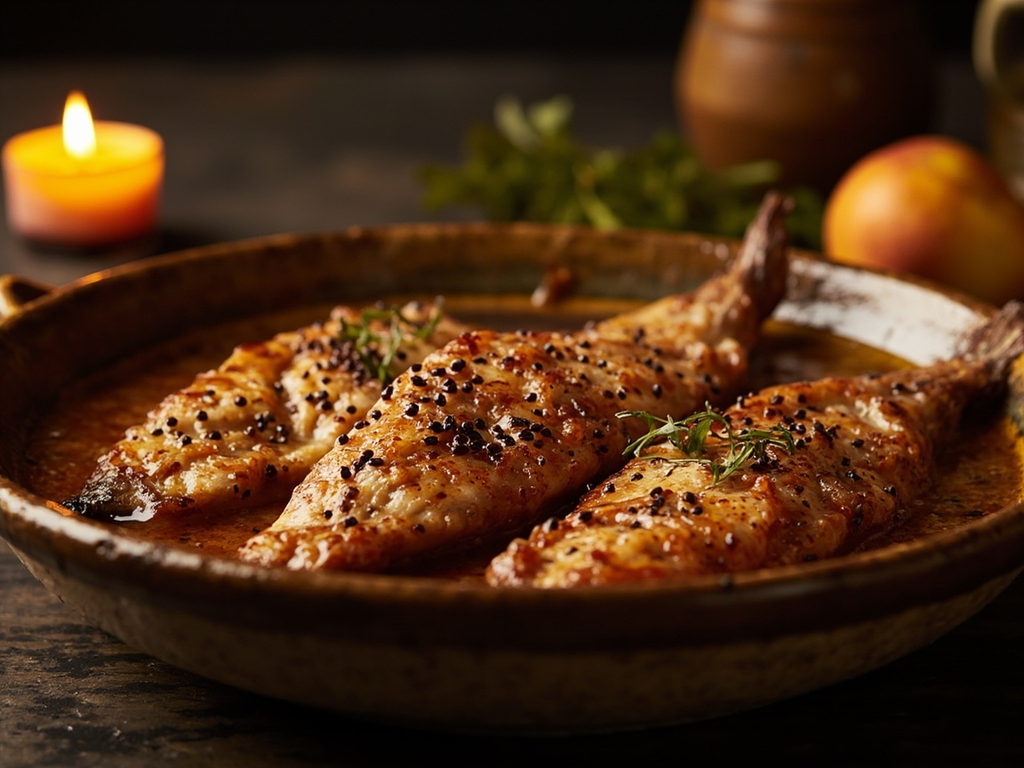
A savory fish custard bound with eggs, flavored with garum and sweetened with a touch of honey, gently baked until set. An elegant reception dish, both soft and flavorful.
I am Agrippina, granddaughter of the divine Augustus, and they say I am sober at table—true, I loathe excess. But when a distinguished guest sits down, I have this patina served: my cook beats the eggs with the fish, pours the garum with a measured hand, and adds honey only thinking of my grandfather, who loved the salty to wed the sweet. Taste, and you will know why Rome leans toward the East.
- •Sea fish (sea bass, gilt-head bream) — a fine piece (base)
- •Eggs — a few (binder)
- •Garum — a drizzle (umami seasoning)
- •Honey — a spoonful (sweet roundness)
- •White wine cut with water — a little (moisture)
- •Pepper, lovage — to taste (spices)
- •Olive oil — a drizzle (fat)
Fish patina with garum and honey
A savory fish custard bound with eggs, flavored with garum and sweetened with a touch of honey, gently baked until set. An elegant reception dish, both soft and flavorful.
Why this dish? Agrippina hosted guests at Antioch, capital of the province of Syria, while Germanicus held command in the East. Mediterranean fish, seasoned with garum, appeared on the aristocratic tables of those provincial banquets where status was maintained.
I am Agrippina, granddaughter of the divine Augustus, and they say I am sober at table—true, I loathe excess. But when a distinguished guest sits down, I have this patina served: my cook beats the eggs with the fish, pours the garum with a measured hand, and adds honey only thinking of my grandfather, who loved the salty to wed the sweet. Taste, and you will know why Rome leans toward the East.
Ingredients (period version)
- Sea fish (sea bass, gilt-head bream) — a fine piece (base)
- Eggs — a few (binder)
- Garum — a drizzle (umami seasoning)
- Honey — a spoonful (sweet roundness)
- White wine cut with water — a little (moisture)
- Pepper, lovage — to taste (spices)
- Olive oil — a drizzle (fat)
Ingredients
- Gilt-head bream or sea bass fillets — 400 g (base)
- Eggs — 4 (binder)
- Fish sauce (nuoc-mâm, if garum unavailable) — 2 tsp (umami seasoning)
- Liquid honey — 1 tsp (sweet roundness)
- Dry white wine — 5 cl (moisture)
- Black pepper, ground — 1/2 tsp (spice)
- Lovage or chopped celery leaves — 1 tbsp (herb)
- Olive oil — 2 tbsp (fat)
Method
- Briefly poach the fish fillets in simmering water, then flake them, removing any bones.
- Beat the eggs with the wine, fish sauce, honey, pepper, and lovage.
- Mix the flaked fish into the egg mixture, add the olive oil.
- Pour into an oiled dish and bake in a water bath at a low oven (150°C) for 30–35 minutes, until the custard is set but still jiggly.
- Let it cool slightly before serving, cut into portions.
How it was made : Apicius (De re coquinaria) is full of patinae, egg-bound preparations. Garum was ubiquitous, and the combination of salty fermented fish sauce with honey is typically Roman. They were cooked in a water bath in terracotta molds near the hearth.
The contemporary twist : Serve the patina warm in a small glass jar, topped with a burst of lemon zest and a sprinkle of lovage, like a spoonful of Empire.
Sources : Apicius, De re coquinaria, book IV (patinae)
Agrippina the Elder · Charactorium