 flip
flipOysters with peppered garum and honey
Oysters with peppered garum and honey
Why this dish? Sources describe Agrippina's table covered with oysters, absolute markers of imperial luxury. The oysters from Lake Lucrin, near Baiae — where she owned a villa and where she nearly drowned on Nero's orders — were the most renowned in the Empire.
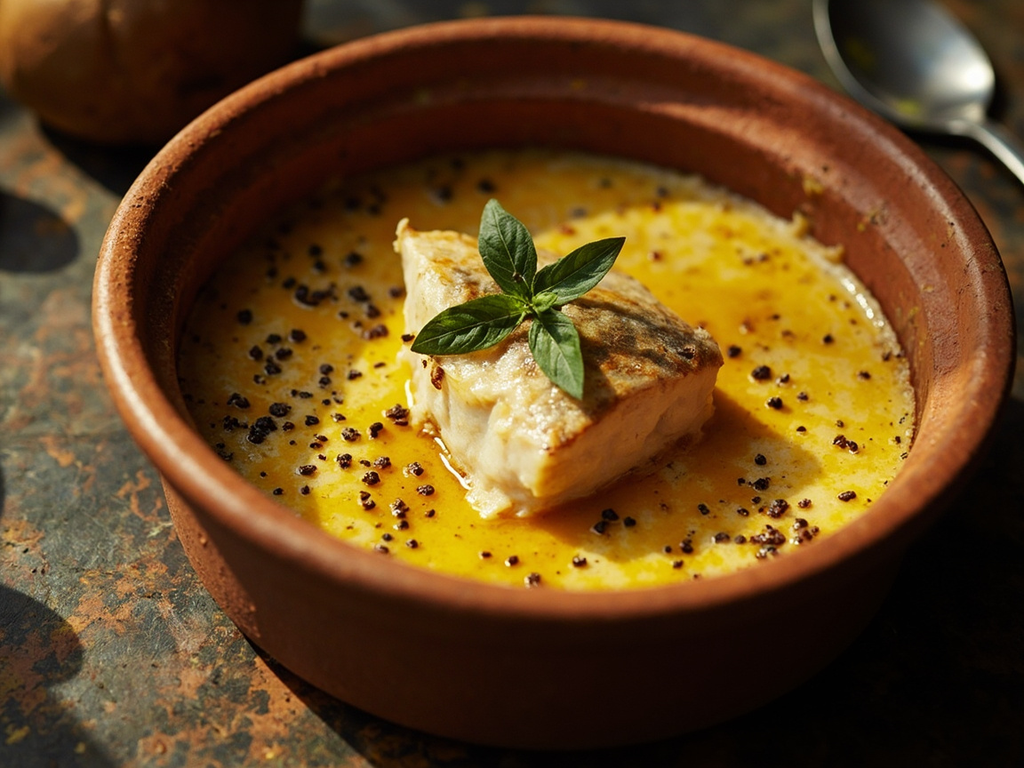
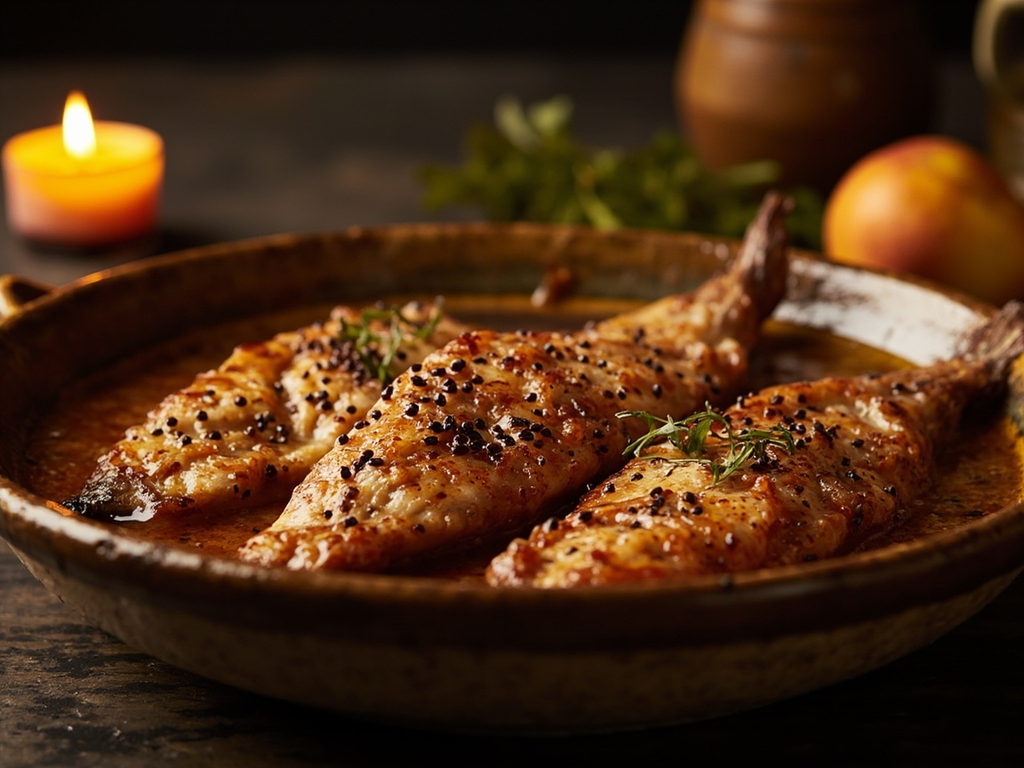
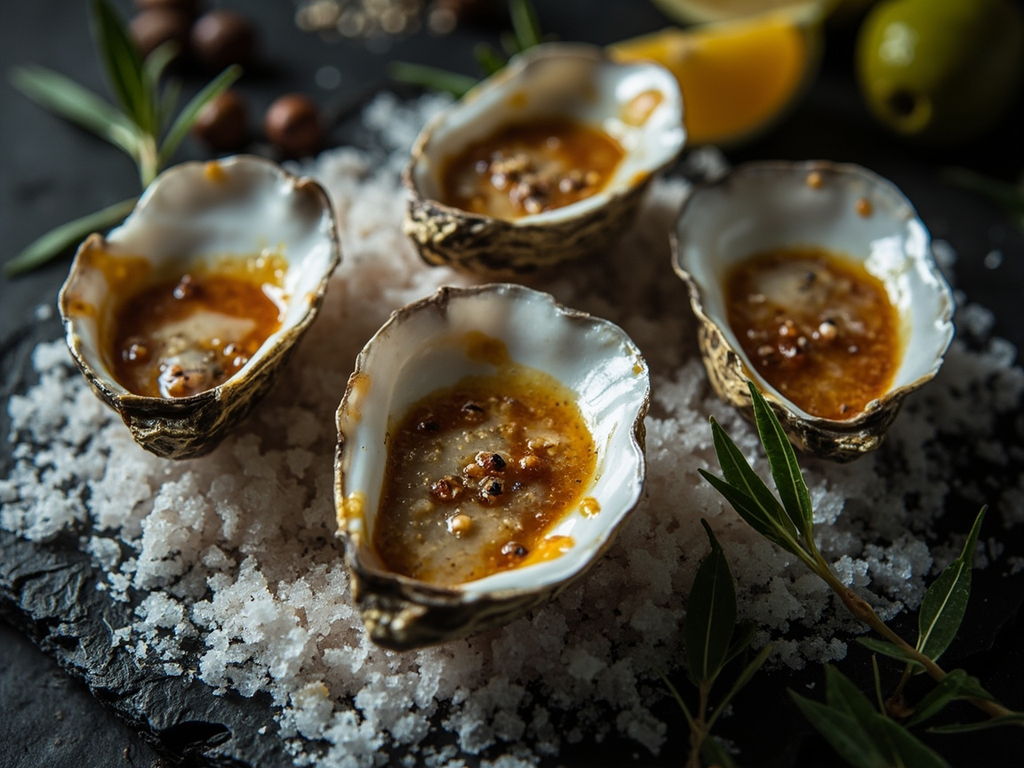
Fresh oysters topped with a cold sauce where salty garum meets honey, pepper, and a hint of vinegar. A briny, sweet-savory, and sharp marriage, typical of the Roman taste that loved to blur the lines between salty and sweet.
Come closer and see what is served at the table of a daughter of Germanicus. These oysters come from Lucrin, near my villas at Baiae — nowhere else are they so plump. My slaves douse them with garum of the finest brine, a drizzle of honey, and pepper brought from the East at great expense. Taste without fear: at my table, I decide who eats, and who eats no more. Let your tongue finally know what those who govern Rome taste.
- •Lucrine oysters — a dozen (briny base)
- •Garum — a few drops (umami condiment)
- •Honey — a drizzle (sweet roundness)
- •Ground long pepper — a pinch (signature spice)
- •Wine vinegar — a dash (acidity)
Oysters with peppered garum and honey
Fresh oysters topped with a cold sauce where salty garum meets honey, pepper, and a hint of vinegar. A briny, sweet-savory, and sharp marriage, typical of the Roman taste that loved to blur the lines between salty and sweet.
Why this dish? Sources describe Agrippina's table covered with oysters, absolute markers of imperial luxury. The oysters from Lake Lucrin, near Baiae — where she owned a villa and where she nearly drowned on Nero's orders — were the most renowned in the Empire.
Come closer and see what is served at the table of a daughter of Germanicus. These oysters come from Lucrin, near my villas at Baiae — nowhere else are they so plump. My slaves douse them with garum of the finest brine, a drizzle of honey, and pepper brought from the East at great expense. Taste without fear: at my table, I decide who eats, and who eats no more. Let your tongue finally know what those who govern Rome taste.
Ingredients (period version)
- Lucrine oysters — a dozen (briny base)
- Garum — a few drops (umami condiment)
- Honey — a drizzle (sweet roundness)
- Ground long pepper — a pinch (signature spice)
- Wine vinegar — a dash (acidity)
Ingredients
- Cup or flat oysters — 12 (briny base)
- Fish sauce (nuoc-mam, substitute for garum) — 1 tsp (umami condiment)
- Liquid honey — 1 tsp (sweet roundness)
- Freshly ground black pepper — 1 pinch (spice)
- Red wine vinegar — 1 tsp (acidity)
Method
- Carefully open the oysters, keeping their liquor in the shell.
- Mix the fish sauce, honey, vinegar, and pepper in a small bowl until the honey dissolves.
- Place half a spoonful of sauce on each oyster.
- Serve immediately, well chilled, on a bed of crushed ice or coarse salt.
How it was made : The Romans were crazy about oysters and had developed true oyster farming in Lake Lucrin as early as the 1st century BC. Apicius recommends preserving and seasoning them with garum. The sweet-savory combination (honey + brine) is a constant in ancient Roman cuisine, far from our modern separation.
The contemporary twist : Served on a slate with a veil of purple — a nod to Agrippina's imperial veil — and a shard of ice.
Sources : Apicius, De re coquinaria, book IX (Thalassa / seafood) · Pliny the Elder, Natural History, IX (on Lucrine oysters)
Agrippina the Younger · Charactorium