 flip
flipBarley Flatbread by the Sweat of Your Brow
Barley Flatbread by the Sweat of Your Brow
Why this dish? Driven from the garden, man hears the words: "By the sweat of your face you shall eat bread" (Genesis 3:19). The plow is among his tools: Adam becomes the one who works the land. Barley, the most rustic and poorest grain, is the first bread of laboring humanity.
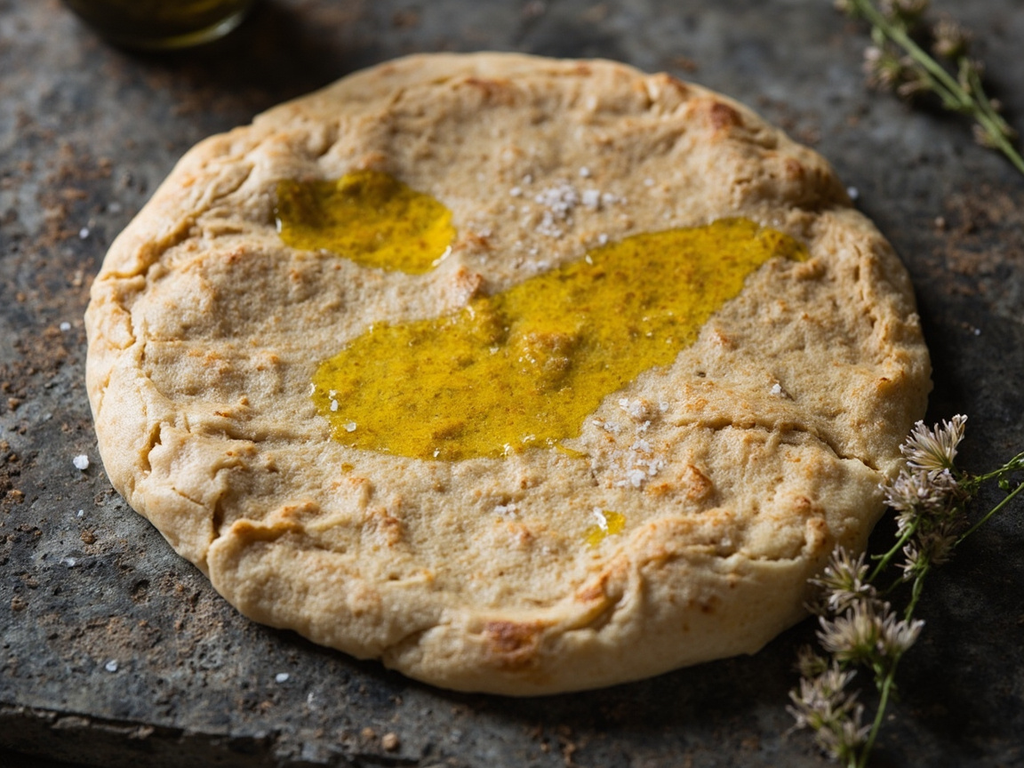
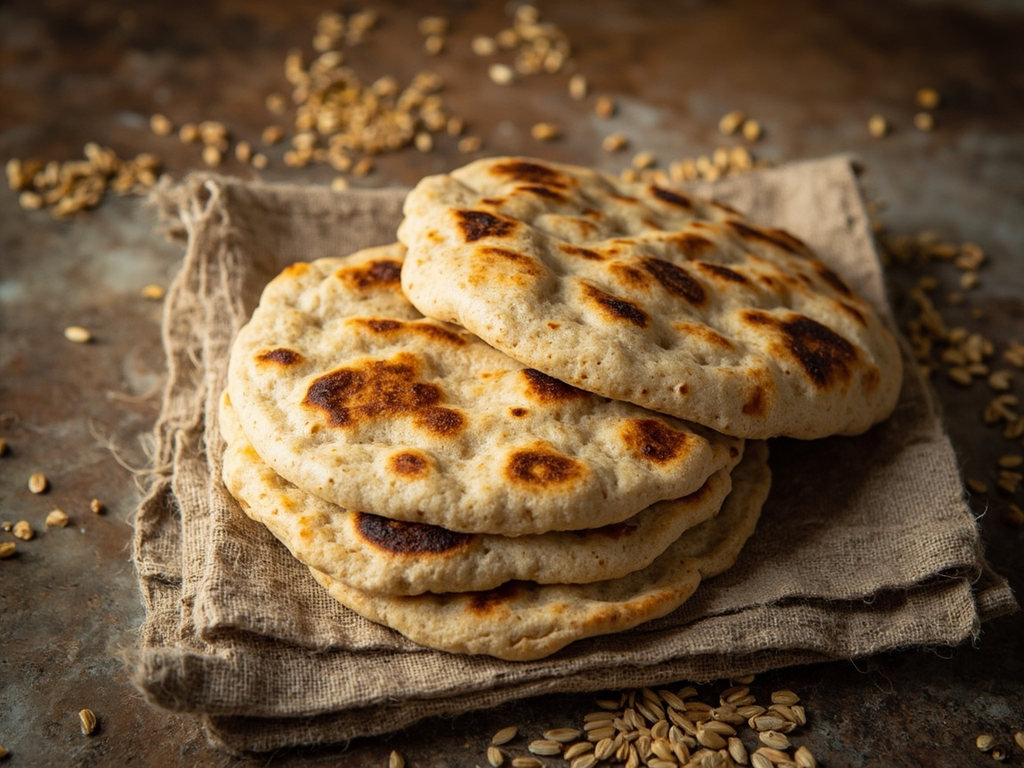
A flat, dense barley cake, baked on a hot stone or griddle. Rustic, slightly earthy, it is the everyday bread, broken by hand to dip into dairy and wrap around figs.
Remember this, you who read me: before the fall, the earth gave us everything without effort. Then came the day when I had to earn my bread by bending my back, and dust clung to my brow. I crushed barley between two stones until it became flour, kneaded it with water and a little salt, and baked it on the hot stone of the hearth. Believe me, no fruit of the garden ever tasted as good as that first flatbread born of my own hands.
- •Stone-ground barley flour — enough to fill two cupped hands (base of the dough)
- •Spring water — as needed to bind (hydration)
- •Sea salt — a pinch between three fingers (seasoning)
- •Olive oil — a drizzle (softness and cooking)
Barley Flatbread by the Sweat of Your Brow
A flat, dense barley cake, baked on a hot stone or griddle. Rustic, slightly earthy, it is the everyday bread, broken by hand to dip into dairy and wrap around figs.
Why this dish? Driven from the garden, man hears the words: "By the sweat of your face you shall eat bread" (Genesis 3:19). The plow is among his tools: Adam becomes the one who works the land. Barley, the most rustic and poorest grain, is the first bread of laboring humanity.
Remember this, you who read me: before the fall, the earth gave us everything without effort. Then came the day when I had to earn my bread by bending my back, and dust clung to my brow. I crushed barley between two stones until it became flour, kneaded it with water and a little salt, and baked it on the hot stone of the hearth. Believe me, no fruit of the garden ever tasted as good as that first flatbread born of my own hands.
Ingredients (period version)
- Stone-ground barley flour — enough to fill two cupped hands (base of the dough)
- Spring water — as needed to bind (hydration)
- Sea salt — a pinch between three fingers (seasoning)
- Olive oil — a drizzle (softness and cooking)
Ingredients
- Barley flour — 250 g (base of the dough)
- Wheat flour (T80) — 50 g (gives structure to the barley dough)
- Warm water — 160 to 180 ml (hydration)
- Fine salt — 1 teaspoon (seasoning)
- Olive oil — 2 tablespoons (softness and cooking)
Method
- Mix the flours and salt in a bowl.
- Add the oil, then the warm water little by little while kneading, until a soft, non-sticky dough forms.
- Cover with a cloth and let rest for 20 to 30 minutes.
- Divide into egg-sized balls and flatten by hand or with a rolling pin into 5 mm thick rounds.
- Cook on a very hot skillet or griddle, without fat, 2 to 3 minutes per side, until golden spots appear.
- Wrap immediately in a cloth to keep soft.
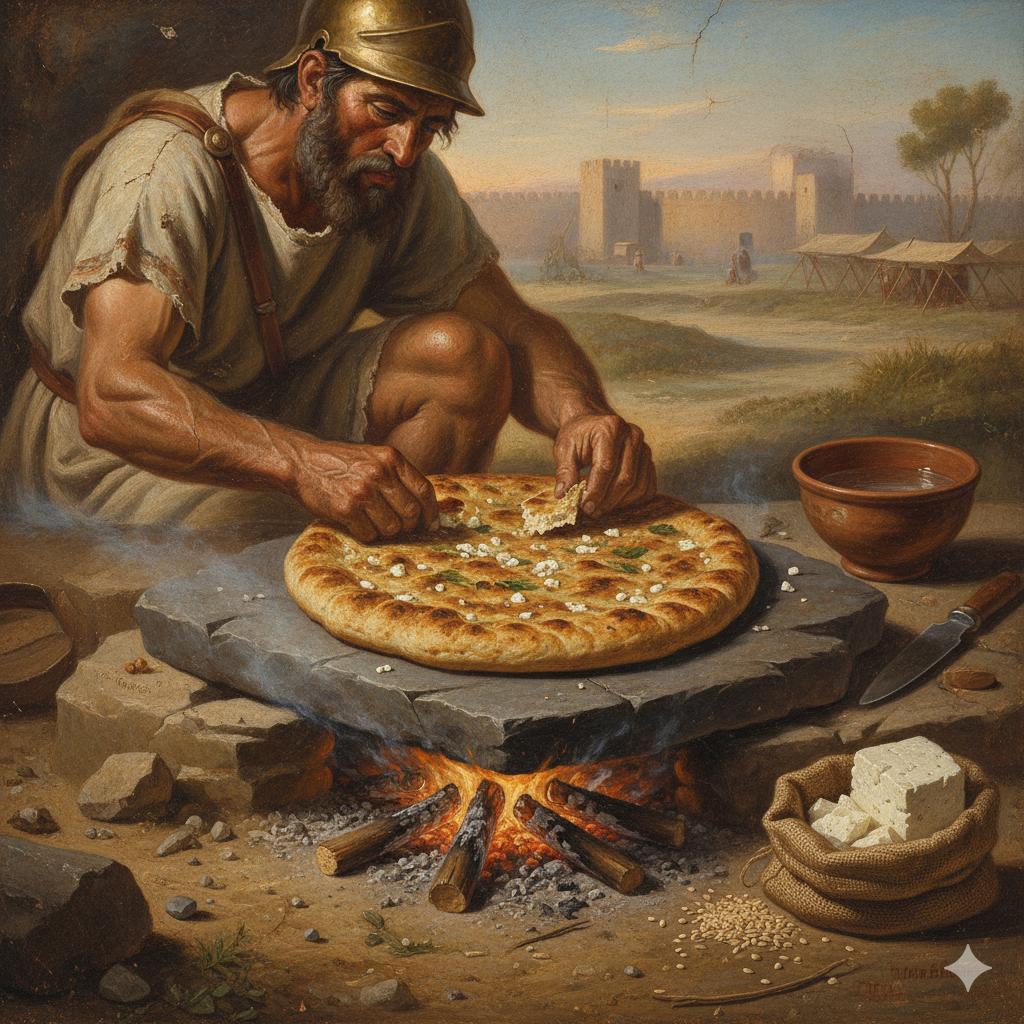
How it was made : Barley was the grain of the poor and everyday use throughout the ancient Near East; it was ground on a stone mill and baked without an oven, on a flat stone placed over embers (the tabun). Leavened bread existed, but unleavened flatbread, faster, remained the daily gesture.
The contemporary twist : Sprinkle with a little nigella (black seeds) before cooking: a peppery-toasted aroma reminiscent of Levantine markets, and a nod to the "ketzah" of the prophets.
Sources : Genesis 3:19 · Nathan MacDonald, What Did the Ancient Israelites Eat? (2008)
Adam and Eve · Charactorium