 flip
flipPuls Castrensis, the Legionary's Barley Porridge
Puls Castrensis, the Legionary's Barley Porridge
Why this dish? Aetius spent his life under canvas, from the Rhine to the Catalaunian Plains. The "last of the Romans" ate the same puls as his men in camp: it was in sharing the common pot that a Roman general won the loyalty of his legions and federates.
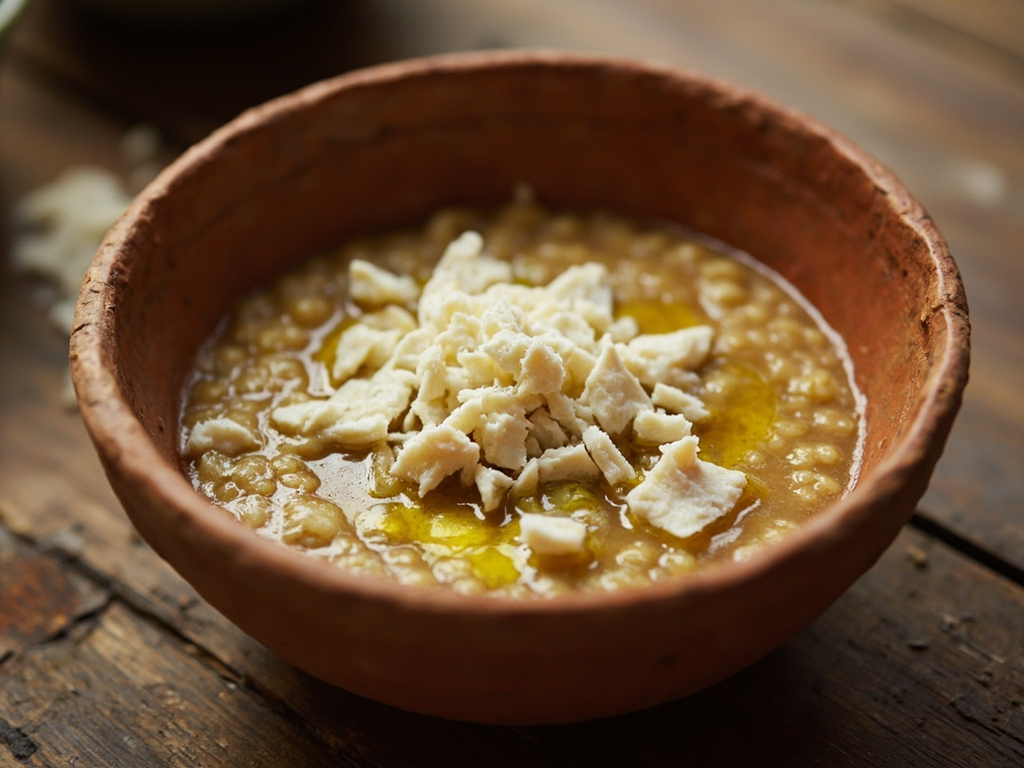
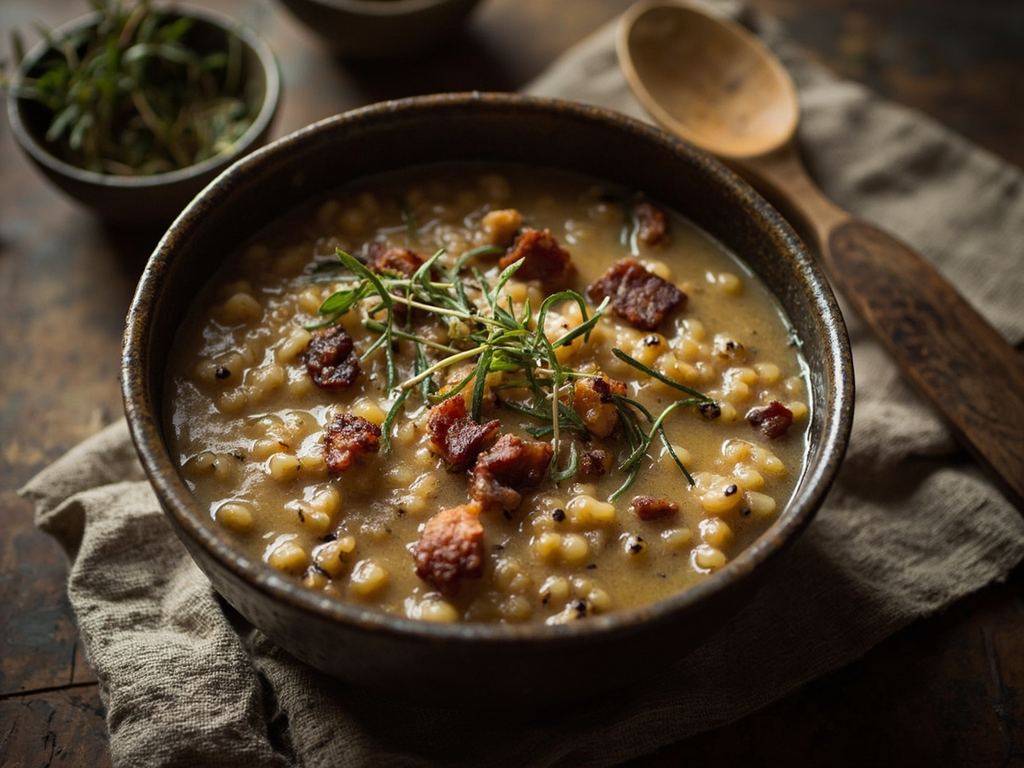
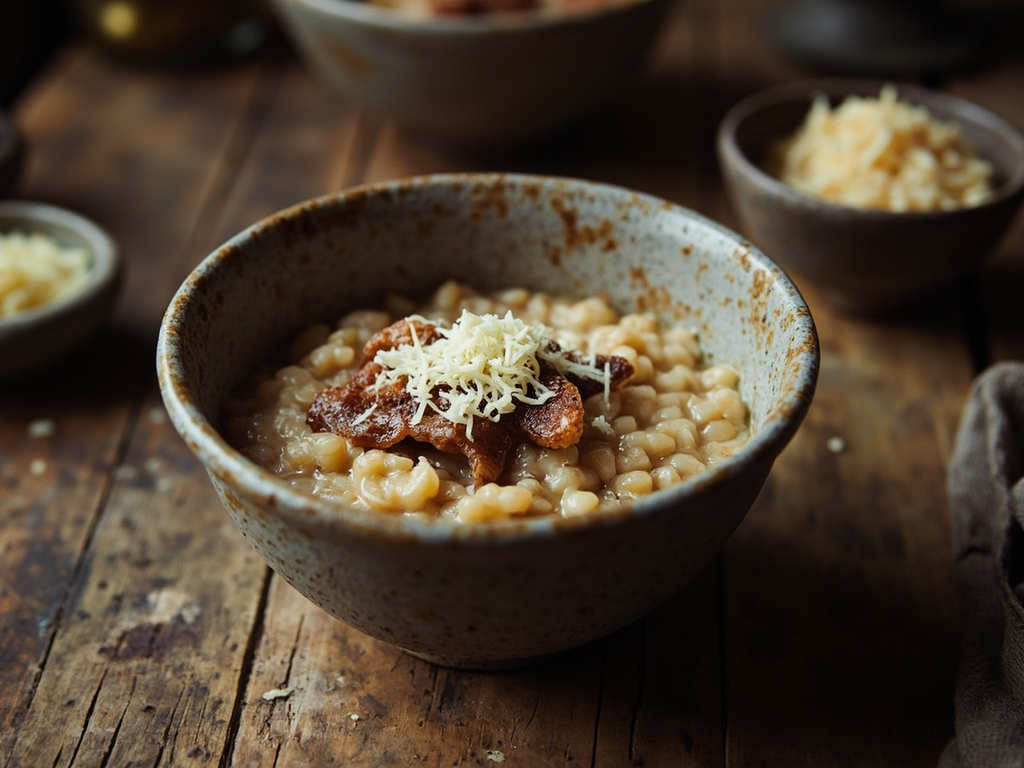
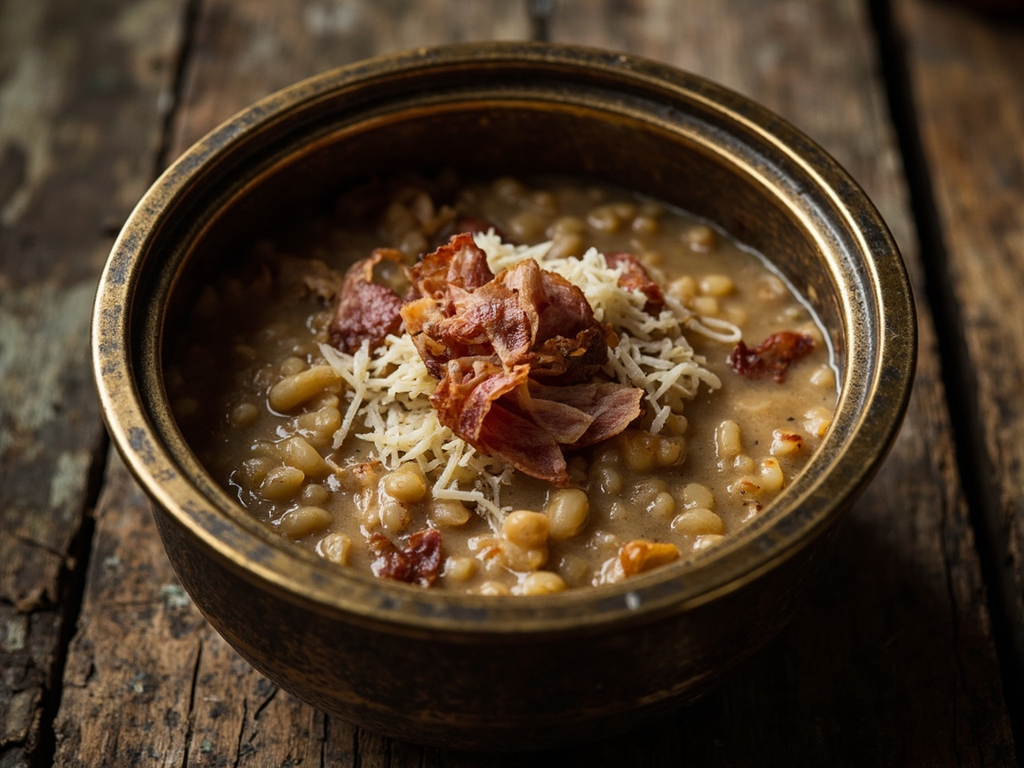
Cereal porridge was the foundation of Roman diet long before bread. In camp, cracked wheat or barley was boiled in water, enhanced with bacon, a little cheese, and a dash of garum. Nourishing, cheap, it filled the stomach before marching or battle.
Believe me, soldier: he who wants to hold a line at the Catalaunian Plains must first fill his belly. We threw cracked barley into the common cauldron, added bacon from the bottom of the sack and a few drops of garum to wake the taste. I ate the same bowl as my men, squatting near the fire — that's how you command Romans and Visigoths alike. A warm porridge, and you look Attila straight in the eye.
- •Hulled barley or cracked wheat (far) — two handfuls per man (nourishing base)
- •Spring water — enough to cover generously (cooking)
- •Salt pork — one piece (fat and flavor)
- •Garum — a dash (umami seasoning)
- •Hard sheep's cheese — one shaving, grated (savory binder)
Puls Castrensis, the Legionary's Barley Porridge
Cereal porridge was the foundation of Roman diet long before bread. In camp, cracked wheat or barley was boiled in water, enhanced with bacon, a little cheese, and a dash of garum. Nourishing, cheap, it filled the stomach before marching or battle.
Why this dish? Aetius spent his life under canvas, from the Rhine to the Catalaunian Plains. The "last of the Romans" ate the same puls as his men in camp: it was in sharing the common pot that a Roman general won the loyalty of his legions and federates.
Believe me, soldier: he who wants to hold a line at the Catalaunian Plains must first fill his belly. We threw cracked barley into the common cauldron, added bacon from the bottom of the sack and a few drops of garum to wake the taste. I ate the same bowl as my men, squatting near the fire — that's how you command Romans and Visigoths alike. A warm porridge, and you look Attila straight in the eye.
Ingredients (period version)
- Hulled barley or cracked wheat (far) — two handfuls per man (nourishing base)
- Spring water — enough to cover generously (cooking)
- Salt pork — one piece (fat and flavor)
- Garum — a dash (umami seasoning)
- Hard sheep's cheese — one shaving, grated (savory binder)
Ingredients
- Pearl barley (or small spelt) — 150 g (base)
- Water or broth — 600 ml (cooking)
- Smoked lardons (or pancetta) — 80 g (savory fat)
- Fish sauce (nuoc-mâm, substitute for garum) — 1 teaspoon (umami)
- Grated pecorino — 30 g (binder)
- Olive oil — a drizzle (finishing)
Method
- Rinse the pearl barley in cold water.
- Dry-fry the lardons in a pot until golden.
- Add the barley, stir for one minute, then pour in the water or broth.
- Cook over low heat for 35–40 minutes, stirring, until thick and creamy; add more water if needed.
- Off the heat, stir in the pecorino and fish sauce. Taste before adding salt (garum is already salty).
- Serve hot, drizzled with olive oil.
How it was made : Before becoming a bread-eating people, Romans were nicknamed pultiphagi, "porridge-eaters." Puls was cooked in a bronze cauldron over the campfire; each contubernium (group of eight soldiers sharing a tent) had its improvised miller and pot. Barley was sometimes a punishment food for erring soldiers, but remained the daily fuel of armies.
The contemporary twist : Served as a barley risotto, topped with pecorino shavings and a sprinkle of herbs: the "legionary's polenta" becomes a comforting winter dish.
Sources : Pliny the Elder, Natural History, XVIII · Cato, De Agricultura (recipes for puls)
Aetius · Charactorium