 flip
flipMaza with Asphodel
Maza with Asphodel
Why this dish? The asphodel is the flower of the meadows where the dead wander in Homer, and its root was long the food of the humblest. Linked to maza, the ordinary barley cake of the Greeks, this bitter dish evokes the grey abode of Achlys, neither feast nor famine — the dull subsistence of the afterlife.
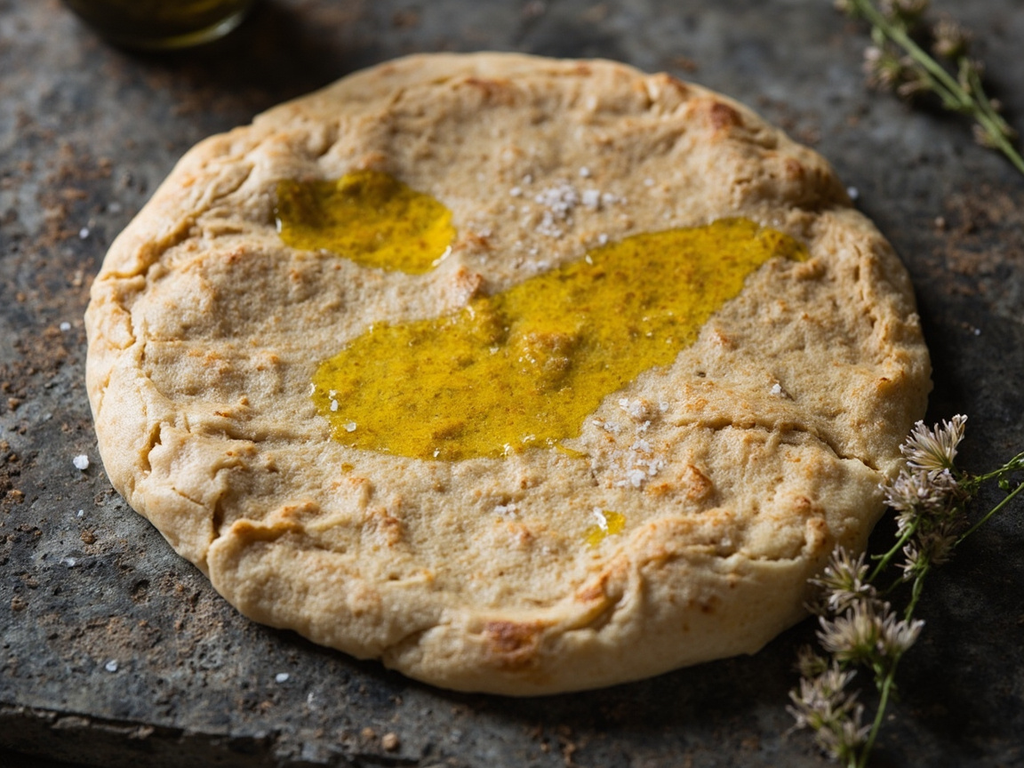
A cake kneaded from toasted barley flour, oil and water, mixed with boiled and mashed asphodel root. Dense, slightly bitter, sprinkled with salt: the simplest food of the Greek world.
Do you think my meadows are fields of sweet flowers? Look closer: the asphodel grows pale and its root is bitter under the tooth. It is what your poor ate, boiled twice to remove the gall, then kneaded with barley flour — not baked in an oven, simply worked and eaten raw, like everyday maza. Salt it with a grain, mortal, and remember: in my house, one does not feast, one subsists. Bitterness too is food.
- •Toasted barley flour (alphita) — two handfuls (base of the maza)
- •Boiled asphodel root — one part (bitter garnish of the poor)
- •Olive oil — a drizzle (binder)
- •Salt — a pinch (seasoning)
- •Water — as needed (kneading)
Maza with Asphodel
A cake kneaded from toasted barley flour, oil and water, mixed with boiled and mashed asphodel root. Dense, slightly bitter, sprinkled with salt: the simplest food of the Greek world.
Why this dish? The asphodel is the flower of the meadows where the dead wander in Homer, and its root was long the food of the humblest. Linked to maza, the ordinary barley cake of the Greeks, this bitter dish evokes the grey abode of Achlys, neither feast nor famine — the dull subsistence of the afterlife.
Do you think my meadows are fields of sweet flowers? Look closer: the asphodel grows pale and its root is bitter under the tooth. It is what your poor ate, boiled twice to remove the gall, then kneaded with barley flour — not baked in an oven, simply worked and eaten raw, like everyday maza. Salt it with a grain, mortal, and remember: in my house, one does not feast, one subsists. Bitterness too is food.
Ingredients (period version)
- Toasted barley flour (alphita) — two handfuls (base of the maza)
- Boiled asphodel root — one part (bitter garnish of the poor)
- Olive oil — a drizzle (binder)
- Salt — a pinch (seasoning)
- Water — as needed (kneading)
Ingredients
- Barley flour (or hulled barley ground, lightly toasted in a pan) — 200 g (base)
- Boiled and mashed chicory root (accessible substitute for asphodel, same bitterness) — 100 g (bitterness)
- Extra virgin olive oil — 2 tbsp (binder)
- Salt — 1 pinch (seasoning)
- Water — 60 ml approx. (kneading)
Method
- Toast the barley flour dry in a pan for a few minutes until nutty; let cool.
- Boil chicory root (or asphodel if available) for 20 minutes, changing the water once to reduce bitterness; drain and mash into a puree.
- Mix flour, root puree, salt and oil, then add water little by little until a dense dough forms.
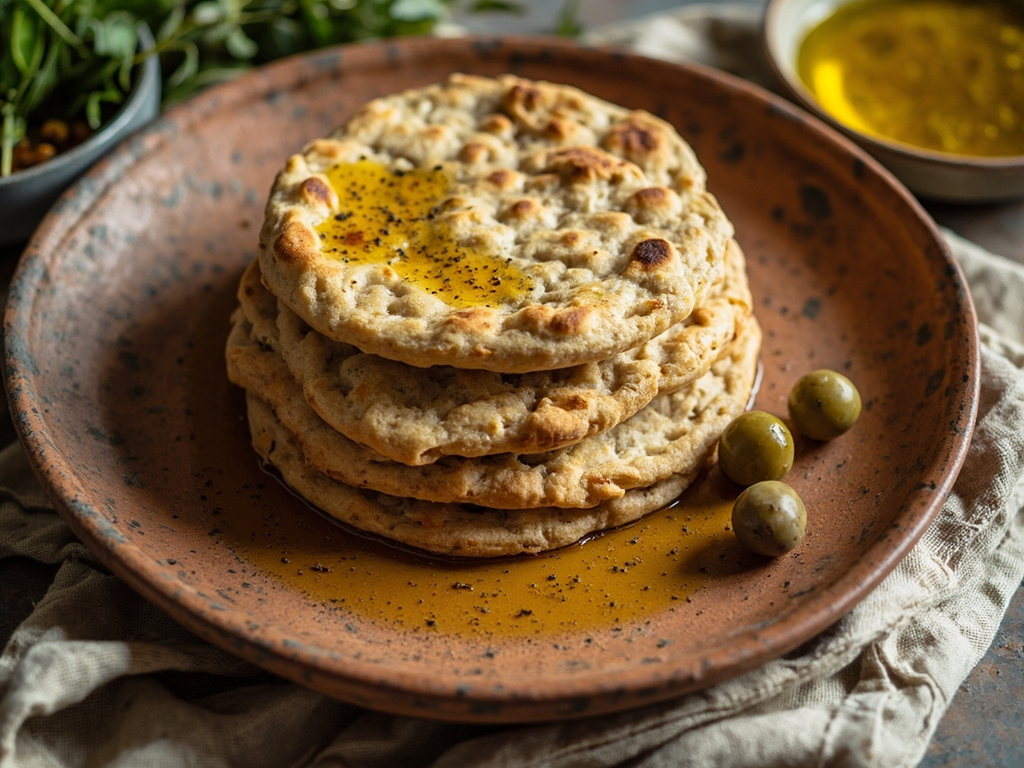
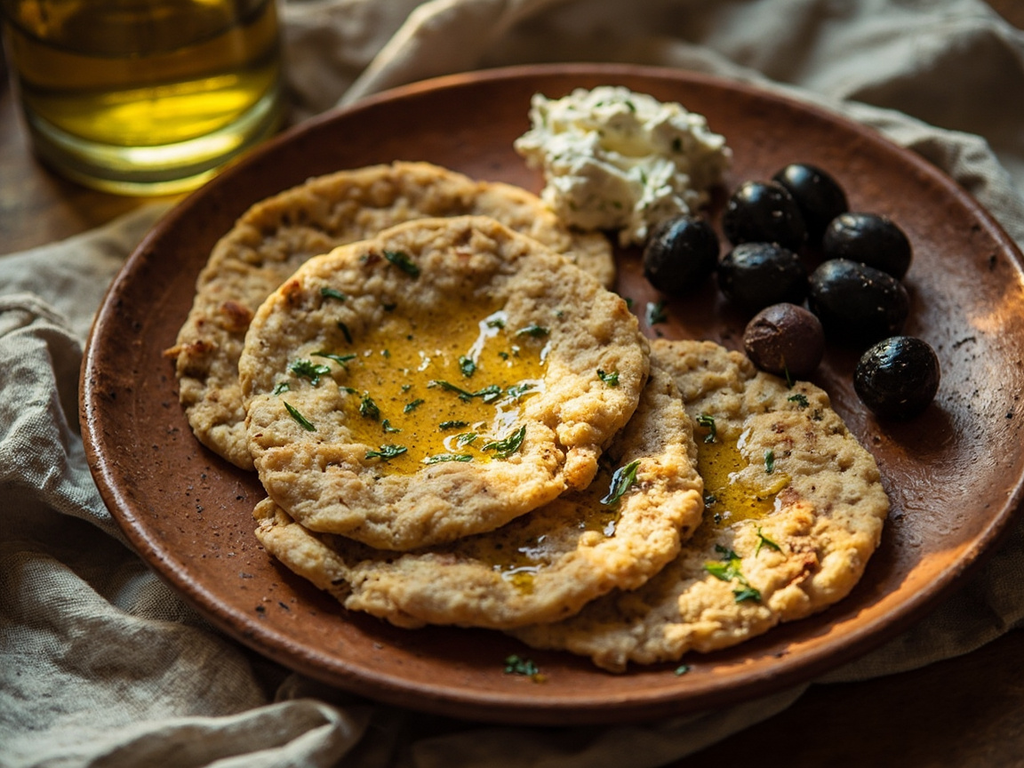
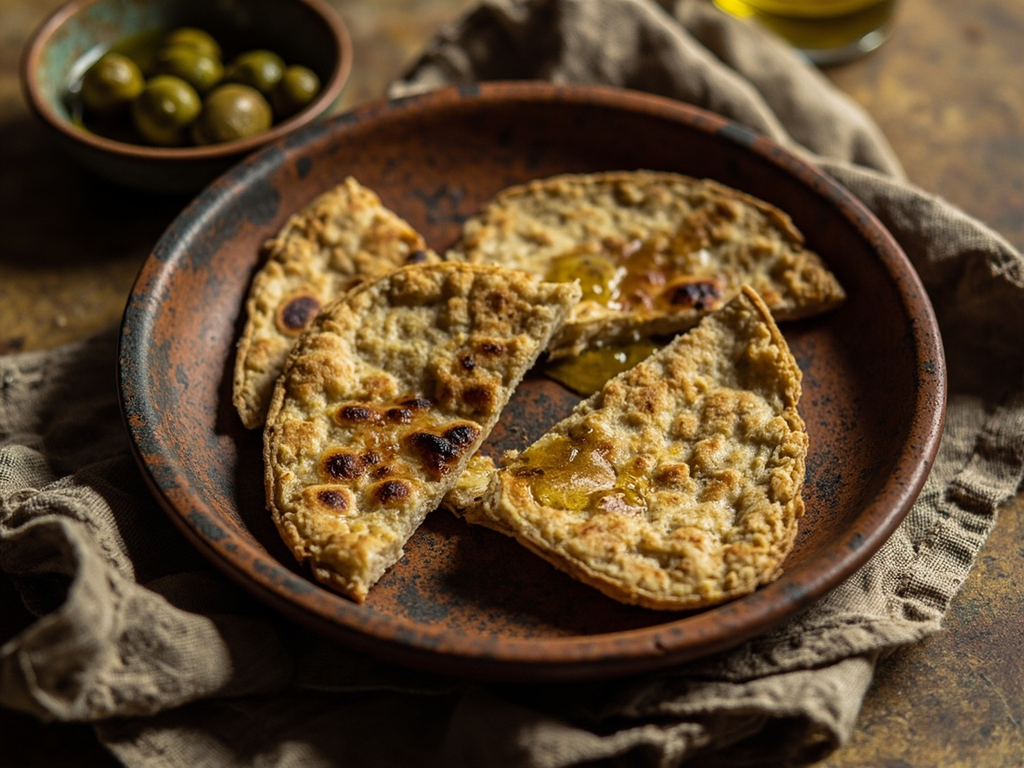
- Shape into flat cakes. Traditionally eaten as is (uncooked); for a milder taste, pan-fry for 8 minutes on a dry pan.
How it was made : Maza — raw kneaded barley flour — was the daily bread of the ordinary Greek, much more common than baked wheat bread, reserved for festive days. Homer calls the abode of the dead the 'asphodel meadow': the plant, whose tuberous roots fed the poor according to Hesiod and Theophrastus, is thus linked both to the humble table and the afterlife.
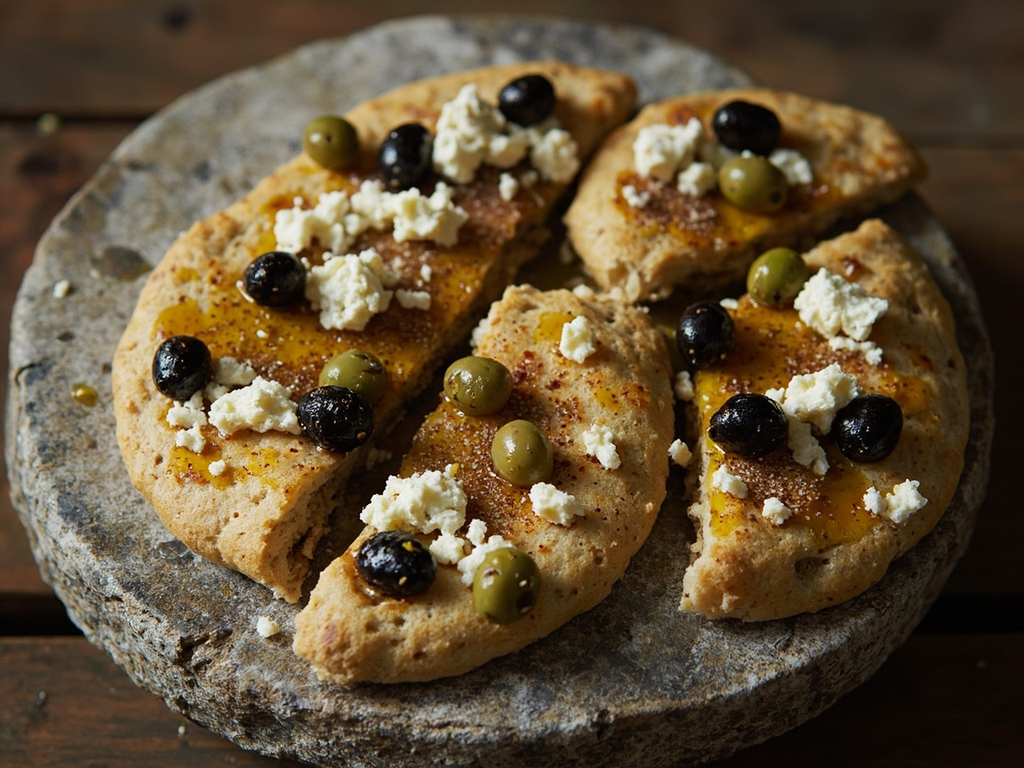
The contemporary twist : Served as a thin grilled flatcake with a drizzle of new olive oil and a drop of honey to break the bitterness: the dark-and-sweet contrast that sums up the boundary between the dead and the living.
Sources : Homer, Odyssey (the 'asphodel meadow') · Hesiod, Works and Days (asphodel of the poor) · Theophrastus, Enquiry into Plants
Achlys · Charactorium