 flip
flipSalt Oat Porridge
Salt Oat Porridge
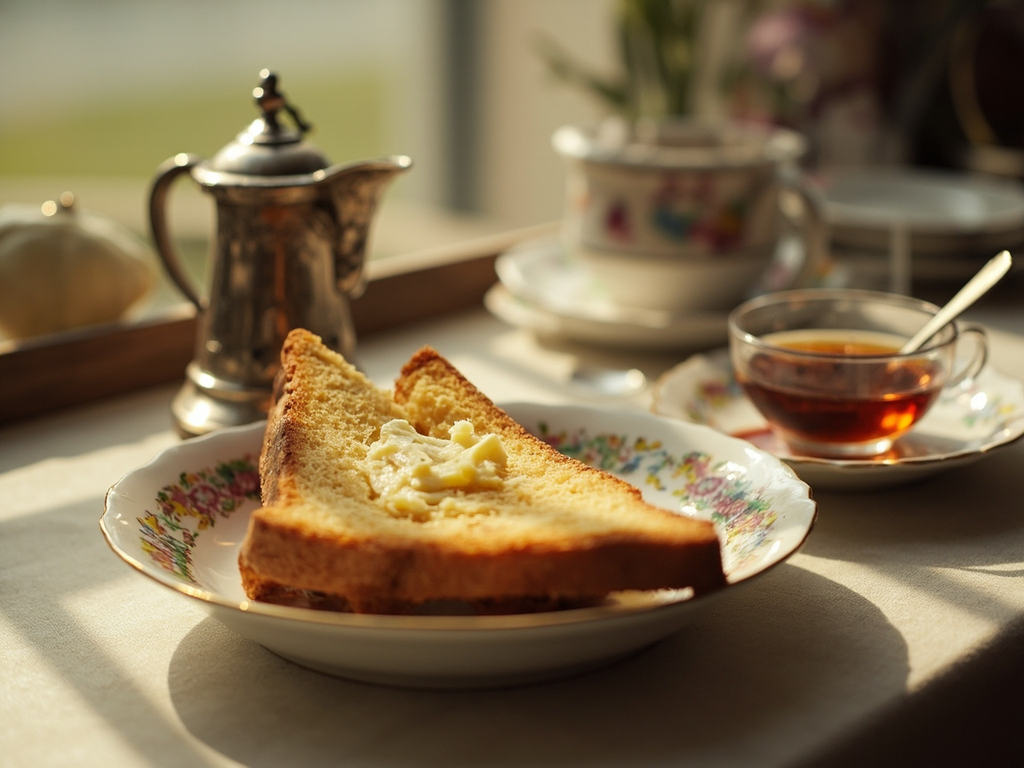
Why this dish? Smith ate simply: oatcakes and porridge were the daily fare of the Scottish middle classes, in Kirkcaldy as in Edinburgh. Distracted to the point of legend, he is said to have one morning dipped a buttered slice of bread into his teapot while pursuing a thought — porridge, for its part, required only a spoon and a wandering attention.
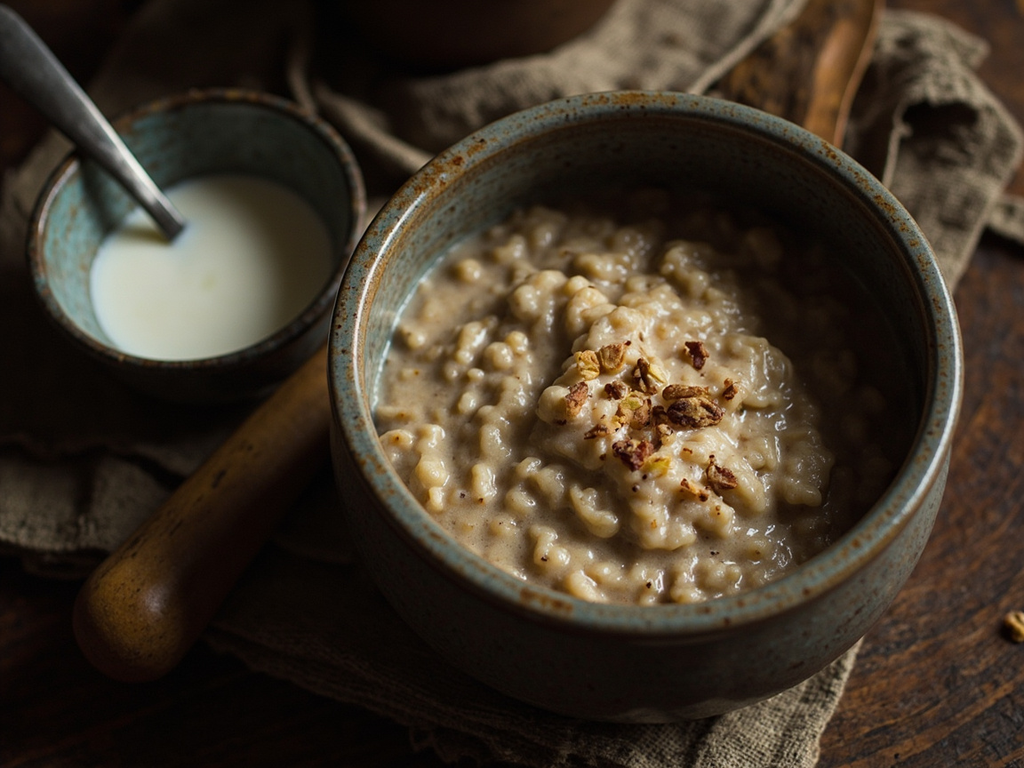
A porridge of pinhead oatmeal cooked long in salted water, stirred with a spurtle (wooden stick), thick and comforting. True Scottish porridge is salted, never sweetened: each spoonful is dipped into a bowl of cold milk set beside it.
Allow me to speak to you of my morning oatmeal, for there is no table more honest than this one. It is made with water and salt, not with sugar as some might think — for sugar comes from afar and costs the labour of others, while oats grow at our door. Stir it in one direction only with the stick, slowly, and dip each spoonful into cold milk: there is all the science. I confess I have often thought of a thousand things while forgetting my own — the mind wanders, but the belly is content.
- •Pinhead oatmeal — two handfuls (base)
- •Spring water — to cover generously (cooking liquid)
- •Salt — a pinch (seasoning)
- •Fresh milk — a separate bowl (accompaniment)
Salt Oat Porridge
A porridge of pinhead oatmeal cooked long in salted water, stirred with a spurtle (wooden stick), thick and comforting. True Scottish porridge is salted, never sweetened: each spoonful is dipped into a bowl of cold milk set beside it.
Why this dish? Smith ate simply: oatcakes and porridge were the daily fare of the Scottish middle classes, in Kirkcaldy as in Edinburgh. Distracted to the point of legend, he is said to have one morning dipped a buttered slice of bread into his teapot while pursuing a thought — porridge, for its part, required only a spoon and a wandering attention.
Allow me to speak to you of my morning oatmeal, for there is no table more honest than this one. It is made with water and salt, not with sugar as some might think — for sugar comes from afar and costs the labour of others, while oats grow at our door. Stir it in one direction only with the stick, slowly, and dip each spoonful into cold milk: there is all the science. I confess I have often thought of a thousand things while forgetting my own — the mind wanders, but the belly is content.
Ingredients (period version)
- Pinhead oatmeal — two handfuls (base)
- Spring water — to cover generously (cooking liquid)
- Salt — a pinch (seasoning)
- Fresh milk — a separate bowl (accompaniment)
Ingredients
- Thick rolled oats or pinhead oatmeal — 80 g (base)
- Water — 400 ml (cooking liquid)
- Fine salt — 1/2 tsp (seasoning)
- Whole cold milk — 150 ml (accompaniment)
Method
- Bring the water to a simmer in a heavy-bottomed saucepan.
- Sprinkle in the oats while stirring to avoid lumps.
- Reduce the heat and cook for 10 to 25 minutes depending on the grind, stirring regularly in the same direction.
- Salt only at the end of cooking (salt added too early hardens the grain).
- Serve very hot in a bowl, with a second bowl of cold milk on the side: dip each spoonful into the milk.
How it was made : Oats were cooked in a cast-iron pot over a peat fire, stirred with a spurtle, a rounded stick that does not trap the porridge. Families sometimes prepared a large quantity, poured it into a drawer (the 'porridge drawer') where it cooled into a block; slices were then cut off to take to the fields.
The contemporary twist : Serve it 'Edinburgh-style' in a deep bowl, cold milk in a circle around the oat dome, a pinch of Maldon salt on top for crunch.
Sources : F. Marian McNeill, The Scots Kitchen (1929)
Adam Smith · Charactorium