 flip
flipZeit w za'atar — bread, olive oil and za'atar
Zeit w za'atar — bread, olive oil and za'atar
Why this dish? Adonis was born in 1930 in Al-Qassabin, a hamlet of olive trees in the Alawite mountains, into a poor peasant family. Before school, before books, there was that morning: bread dipped in oil and rolled in za'atar, the only luxury of a modest table.
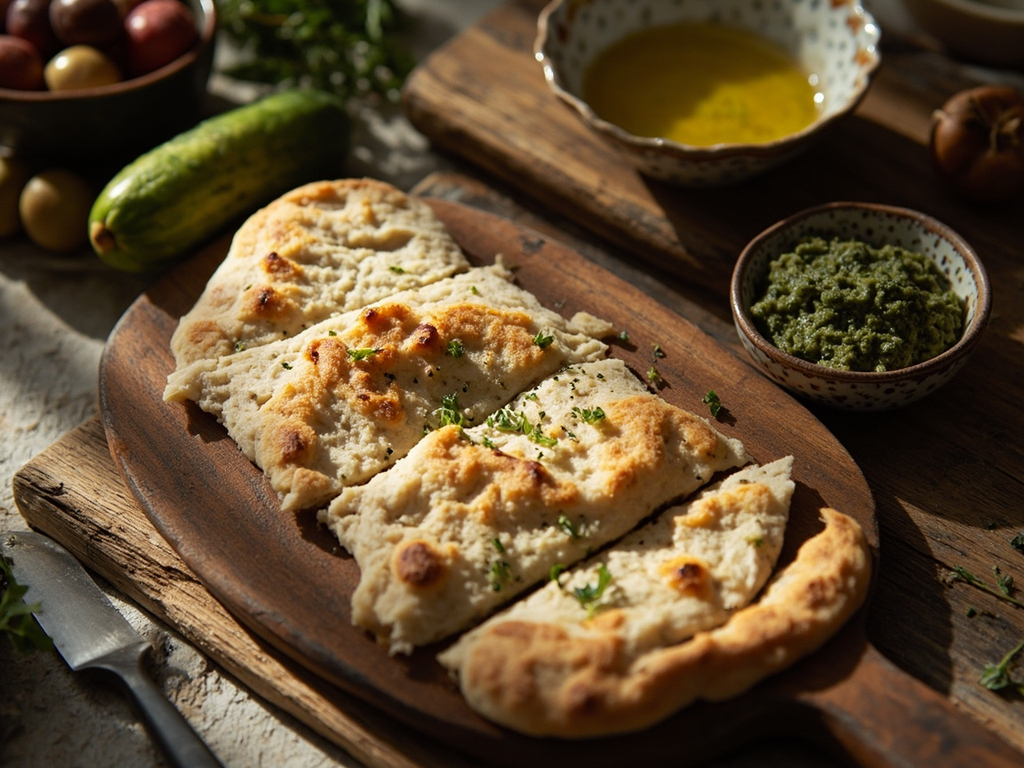
The simplest and oldest meal in the Levant: warm flatbread, a drizzle of green olive oil, a handful of za'atar. Three elements, a thousand mornings. You tear the bread, dip it, sprinkle — and you already have the whole country in your mouth.
Listen, child: before I became Adonis, I was a barefoot kid from Qassabin, and our olive trees were worth more than the gold we didn't have. In the morning, my father would break the bread, bathe it in the fresh oil from our press, roll it in the za'atar that my mother had dried in the sun. It was bitter and green and alive, like the mountain. I never found again, neither in Beirut nor in Paris, that taste of a poor bread that contained, I swear to you, all the light of the Levant.
- •Country flatbread (markouk / saj) — a few rounds (support)
- •Green olive oil, village-pressed — generous (fat and signature)
- •Za'atar (dried wild thyme, sumac, sesame, salt) — as much as you like (aromatic seasoning)
Zeit w za'atar — bread, olive oil and za'atar
The simplest and oldest meal in the Levant: warm flatbread, a drizzle of green olive oil, a handful of za'atar. Three elements, a thousand mornings. You tear the bread, dip it, sprinkle — and you already have the whole country in your mouth.
Why this dish? Adonis was born in 1930 in Al-Qassabin, a hamlet of olive trees in the Alawite mountains, into a poor peasant family. Before school, before books, there was that morning: bread dipped in oil and rolled in za'atar, the only luxury of a modest table.
Listen, child: before I became Adonis, I was a barefoot kid from Qassabin, and our olive trees were worth more than the gold we didn't have. In the morning, my father would break the bread, bathe it in the fresh oil from our press, roll it in the za'atar that my mother had dried in the sun. It was bitter and green and alive, like the mountain. I never found again, neither in Beirut nor in Paris, that taste of a poor bread that contained, I swear to you, all the light of the Levant.
Ingredients (period version)
- Country flatbread (markouk / saj) — a few rounds (support)
- Green olive oil, village-pressed — generous (fat and signature)
- Za'atar (dried wild thyme, sumac, sesame, salt) — as much as you like (aromatic seasoning)
Ingredients
- Pita or Lebanese bread — 4 rounds (support)
- Extra-virgin olive oil — 6 tbsp (fat)
- Za'atar (thyme-sumac-sesame blend) — 4 tbsp (seasoning)
- Olives, tomatoes, cucumber, white cheese (optional) — to taste (sofra accompaniments)
Method
- Briefly warm the bread in the oven or a dry pan so it is soft and warm.
- In a small bowl, mix za'atar with enough olive oil to form a moist paste, or keep them separate.
- Tear off a piece of bread, dip it in the oil, then press it into the za'atar.
- Serve with olives, cucumber, tomato and white cheese for a true mountain tarwiqa.
How it was made : In the villages of the Syrian coast, each family pressed its own oil in autumn and dried wild thyme gathered from the slopes. Morning za'atar was said to 'open the mind' of schoolchildren — it was given to children before lessons and recitations.
The contemporary twist : Transformed into man'ousheh: spread the za'atar-oil paste on a disc of bread dough and bake — the morning pizza of the entire Levant.
Adonis · Charactorium