 flip
flipAttiéké (Fermented Cassava Semolina)
Attiéké (Fermented Cassava Semolina)
Why this dish? Attiéké is the emblem of Ivory Coast, born from the fermentation of cassava — a preservation technique that transforms a fragile tuber into a tangy reserve. An everyday food in Abidjan where Kourouma lived, it accompanies fish at the market as at home.
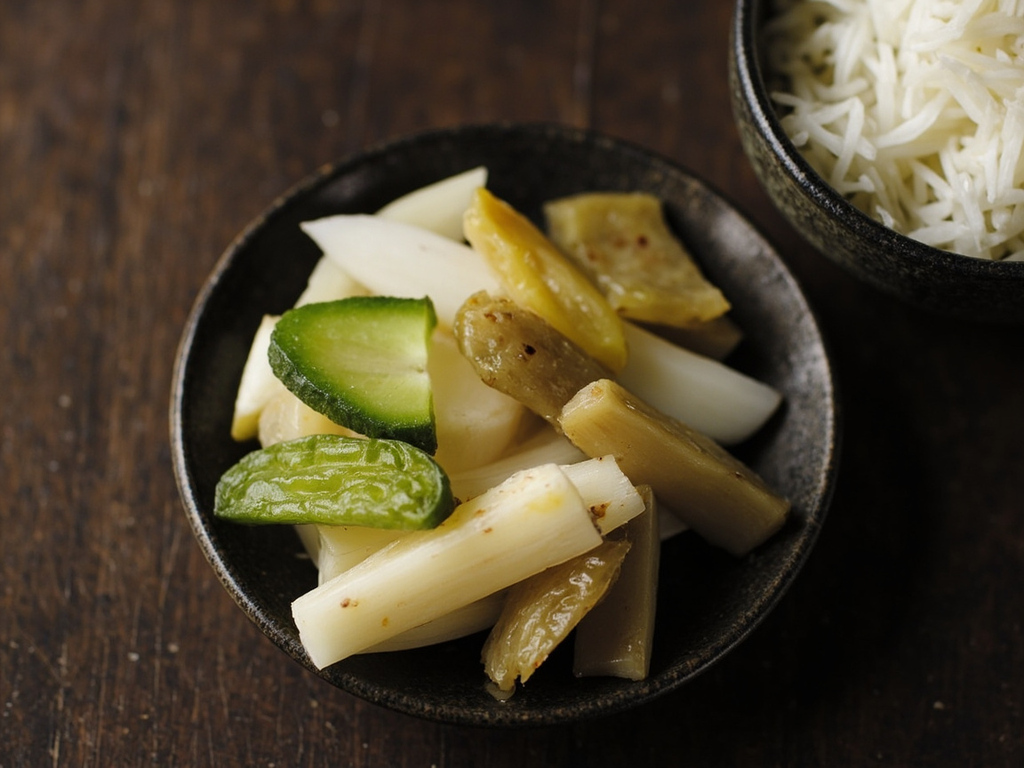
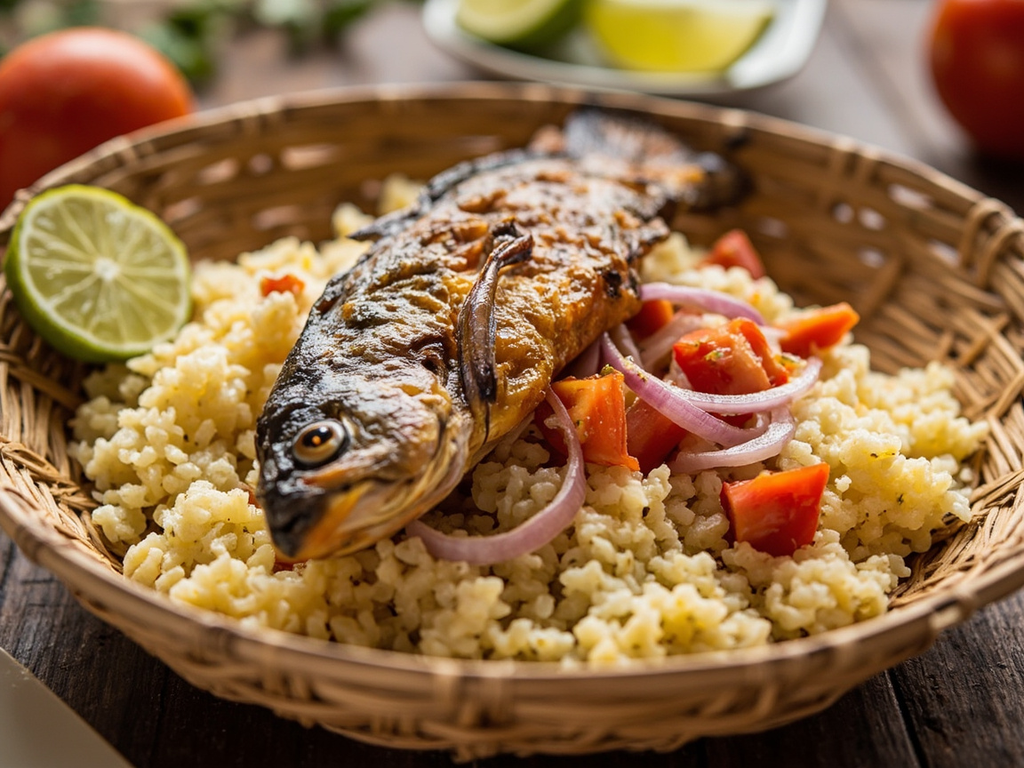
A fermented cassava semolina, then steamed, with light grains and a delicately tangy flavor. Served warm with grilled fish, onions, and tomatoes — a discreet but essential base of the Ivorian table.
Attiéké, my friend, is cassava that has learned patience. You grate it, you let it ferment for the right amount of time — neither too much nor too little, for cassava that hasn't waited long enough remains bland, and that which has waited too long turns nasty. Then you steam it until each grain separates, light as the dust of the harmattan. With a grilled fish and a few onion rings, here is a meal that rich and poor eat side by side by the lagoon. Such is the wisdom of the pot: yesterday's slowness feeds today's hunger.
- •Fresh cassava — several tubers (base)
- •Cassava starter (magnan) — a little paste from the previous batch (fermentation starter)
- •Red palm oil — a drizzle (greasing and color)
- •Salt — a pinch (seasoning)
Attiéké (Fermented Cassava Semolina)
A fermented cassava semolina, then steamed, with light grains and a delicately tangy flavor. Served warm with grilled fish, onions, and tomatoes — a discreet but essential base of the Ivorian table.
Why this dish? Attiéké is the emblem of Ivory Coast, born from the fermentation of cassava — a preservation technique that transforms a fragile tuber into a tangy reserve. An everyday food in Abidjan where Kourouma lived, it accompanies fish at the market as at home.
Attiéké, my friend, is cassava that has learned patience. You grate it, you let it ferment for the right amount of time — neither too much nor too little, for cassava that hasn't waited long enough remains bland, and that which has waited too long turns nasty. Then you steam it until each grain separates, light as the dust of the harmattan. With a grilled fish and a few onion rings, here is a meal that rich and poor eat side by side by the lagoon. Such is the wisdom of the pot: yesterday's slowness feeds today's hunger.
Ingredients (period version)
- Fresh cassava — several tubers (base)
- Cassava starter (magnan) — a little paste from the previous batch (fermentation starter)
- Red palm oil — a drizzle (greasing and color)
- Salt — a pinch (seasoning)
Ingredients
- Ready-to-use attiéké (bag) to rehydrate — 400 g (base)
- Hot water — as per bag instructions (rehydration)
- Fish (sea bream or mackerel) to grill — 2 (accompaniment)
- Onion — 1 (raw garnish)
- Tomato — 1 (raw garnish)
- Lemon, salt, chili pepper — to taste (seasoning)
Method
- Rehydrate the attiéké: pour a little salted hot water over the semolina, cover for 10 minutes, then fluff the grains with a fork (if not using fresh cassava to ferment yourself).
- Optionally steam the attiéké for a few minutes so it is warm and fluffy.
- Grill the fish seasoned with salt, lemon, and chili.
- Slice onion and tomato as fresh garnish.
- Serve the warm attiéké with the grilled fish and garnish, a squeeze of lemon on top.
How it was made : Preparing attiéké from scratch is a long female skill: you peel and grate the cassava, inoculate it with a bit of fermented paste (magnan), let it ferment for one to two days, press out the water, granulate it by hand, then steam it. The fermentation, besides flavor, reduces the natural toxicity of bitter cassava.
The contemporary twist : The “garba” of Abidjan — attiéké and fried tuna served on paper — is the street food version of this base; recreate it in a colorful bowl for today's gatherings.
Ahmadou Kourouma · Charactorium