 flip
flipTorshi (Pickled Vegetables, Gilan Style)
Torshi (Pickled Vegetables, Gilan Style)
Why this dish? The Koker region in humid Gilan, where Kiarostami shot his famous trilogy, is renowned for its highly fragrant torshis. On every Iranian sofreh, torshi cuts through the richness of stews with a sour edge — a small piquant detail, like the filmmaker's discreet humor.
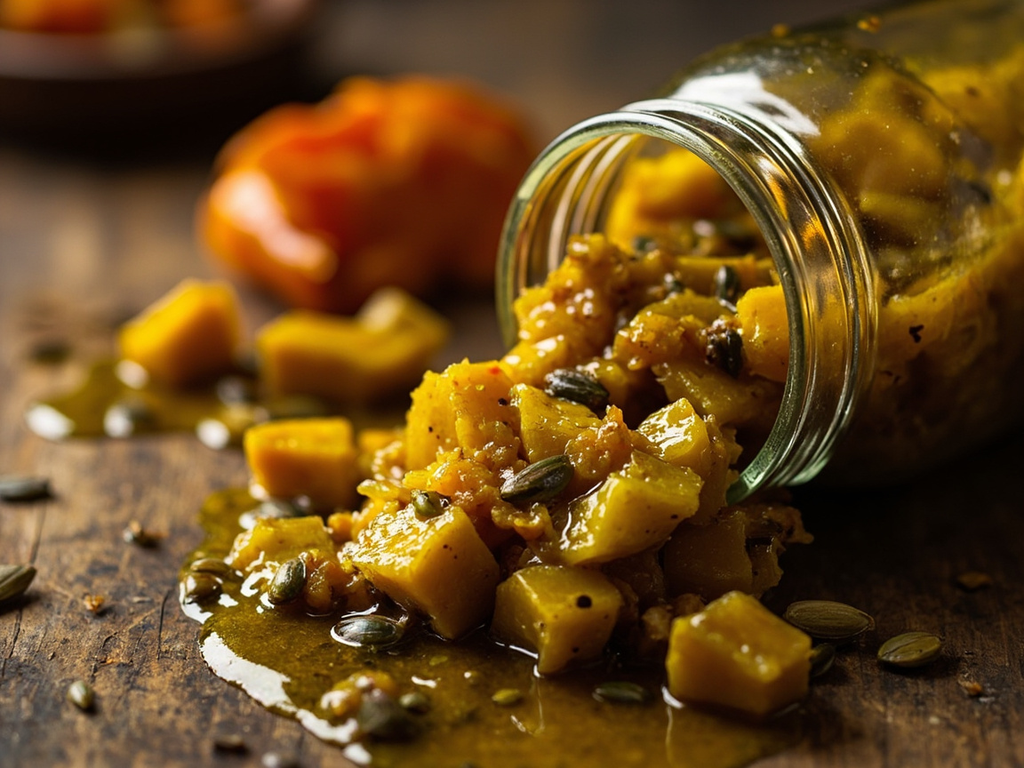
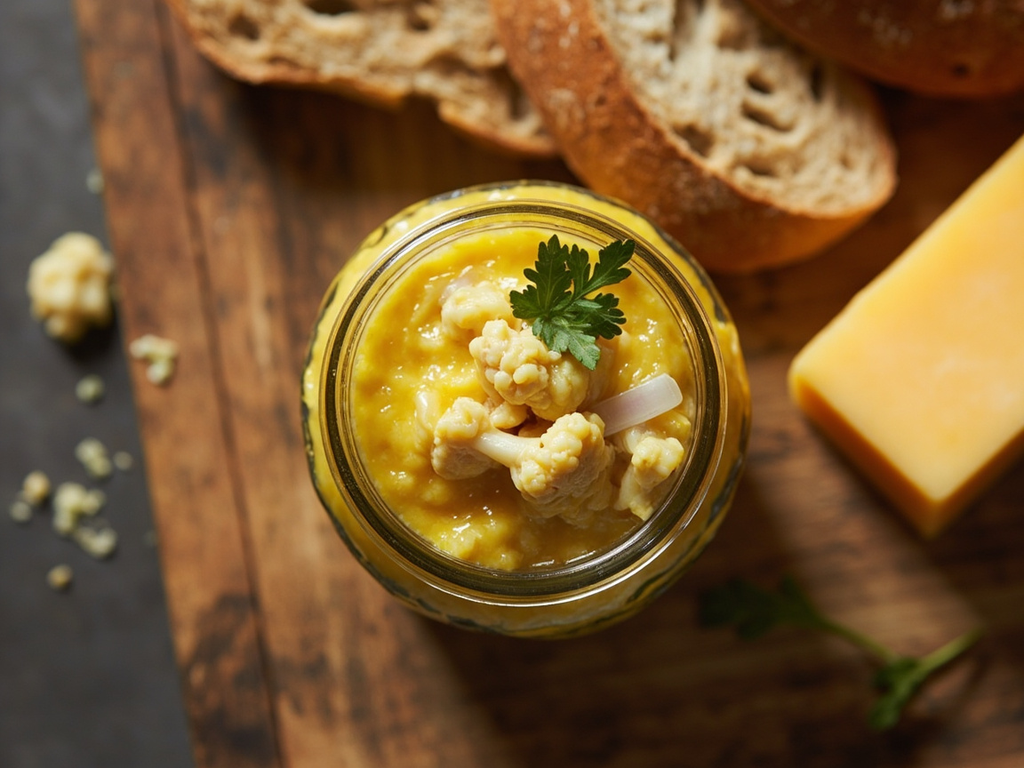
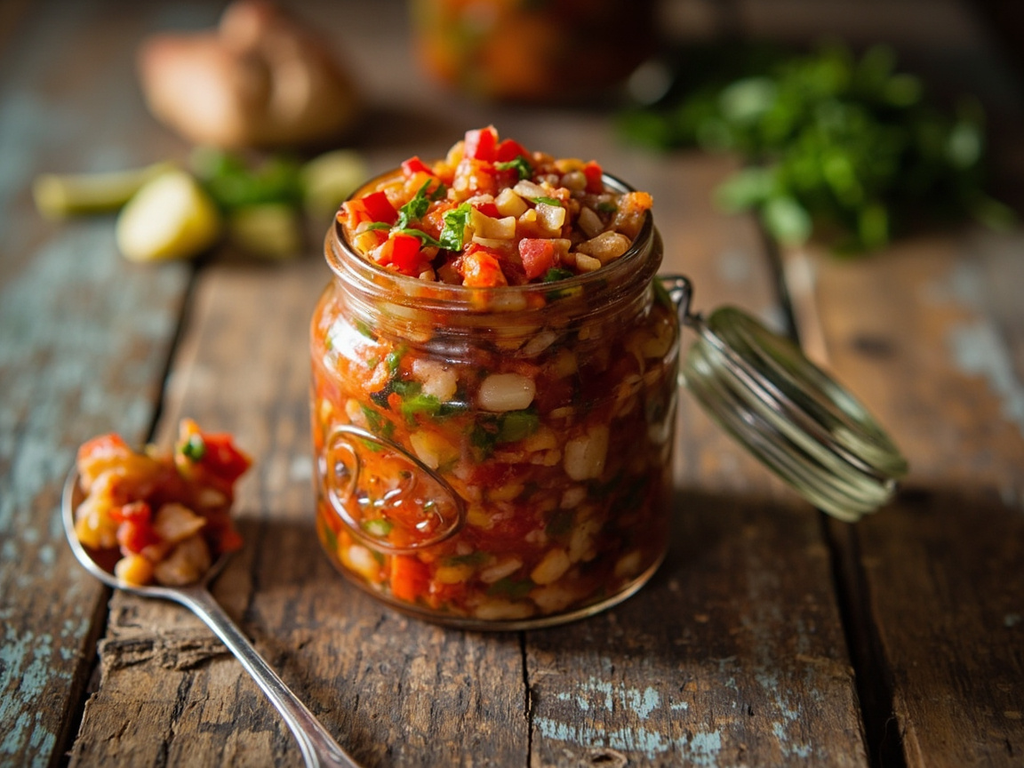
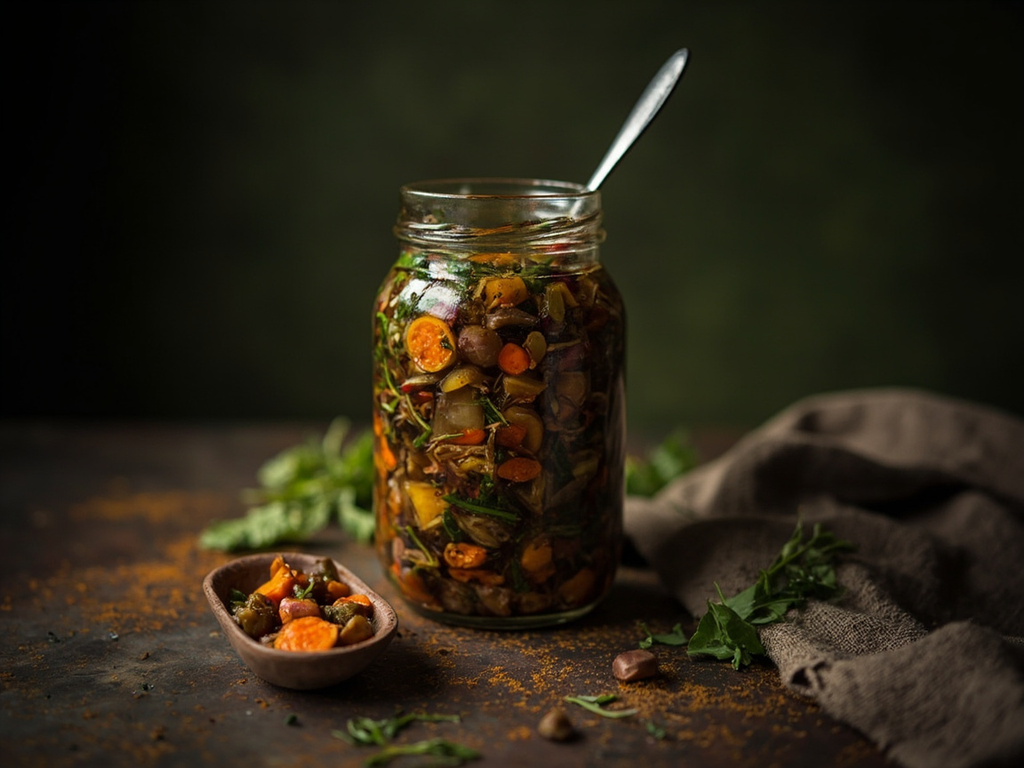
An assortment of chopped vegetables and herbs, long-preserved in vinegar with garlic and spices. Sour, powerful, it keeps for months and is served in small spoonfuls to awaken rice and stews.
In the north, the air is humid and everything grows in abundance; so we preserve summer in jars. We finely chop the vegetables and herbs, drown everything in good vinegar with plenty of garlic, and wait — weeks, sometimes. The older it is, the better, the elders said. A single spoonful next to the rice, and the mouth wakes up. It is the sour counterpoint that gives relief to the rest, like a shadow makes the light stand out.
- •Eggplant and garden vegetables — in varied proportions (base)
- •Herbs (mint, cilantro, parsley) — in abundance (flavor)
- •Garlic — a lot (pungency)
- •Vinegar — enough to cover (preservation)
- •Salt and aromatic seeds — to taste (seasoning)
Torshi (Pickled Vegetables, Gilan Style)
An assortment of chopped vegetables and herbs, long-preserved in vinegar with garlic and spices. Sour, powerful, it keeps for months and is served in small spoonfuls to awaken rice and stews.
Why this dish? The Koker region in humid Gilan, where Kiarostami shot his famous trilogy, is renowned for its highly fragrant torshis. On every Iranian sofreh, torshi cuts through the richness of stews with a sour edge — a small piquant detail, like the filmmaker's discreet humor.
In the north, the air is humid and everything grows in abundance; so we preserve summer in jars. We finely chop the vegetables and herbs, drown everything in good vinegar with plenty of garlic, and wait — weeks, sometimes. The older it is, the better, the elders said. A single spoonful next to the rice, and the mouth wakes up. It is the sour counterpoint that gives relief to the rest, like a shadow makes the light stand out.
Ingredients (period version)
- Eggplant and garden vegetables — in varied proportions (base)
- Herbs (mint, cilantro, parsley) — in abundance (flavor)
- Garlic — a lot (pungency)
- Vinegar — enough to cover (preservation)
- Salt and aromatic seeds — to taste (seasoning)
Ingredients
- Eggplant — 2, in small dice (base)
- Carrot and cauliflower — 200 g total, in small pieces (crunchy base)
- Fresh herbs (mint, cilantro, parsley) — 1 bunch, chopped (flavor)
- Garlic — 1 head, sliced (pungency)
- Wine or cider vinegar — 500 ml (enough to cover) (preservation and acidity)
- Nigella and fenugreek seeds — 1 tsp each (spice)
- Salt — 2 tbsp (brine)
Method
- Cut all vegetables into very small, uniform pieces. For eggplant, salt and let sit for 30 minutes, then pat dry.
- Mix vegetables, chopped herbs, garlic, seeds, and salt in a clean bowl.
- Pack everything into a sterilized jar and cover completely with vinegar (the vegetables must be submerged).
- Seal and let macerate in a cool, dark place for at least 2 to 3 weeks before opening.
- Serve in small spoonfuls alongside rice and stews. Keeps for several months in a cool place once submerged in vinegar.
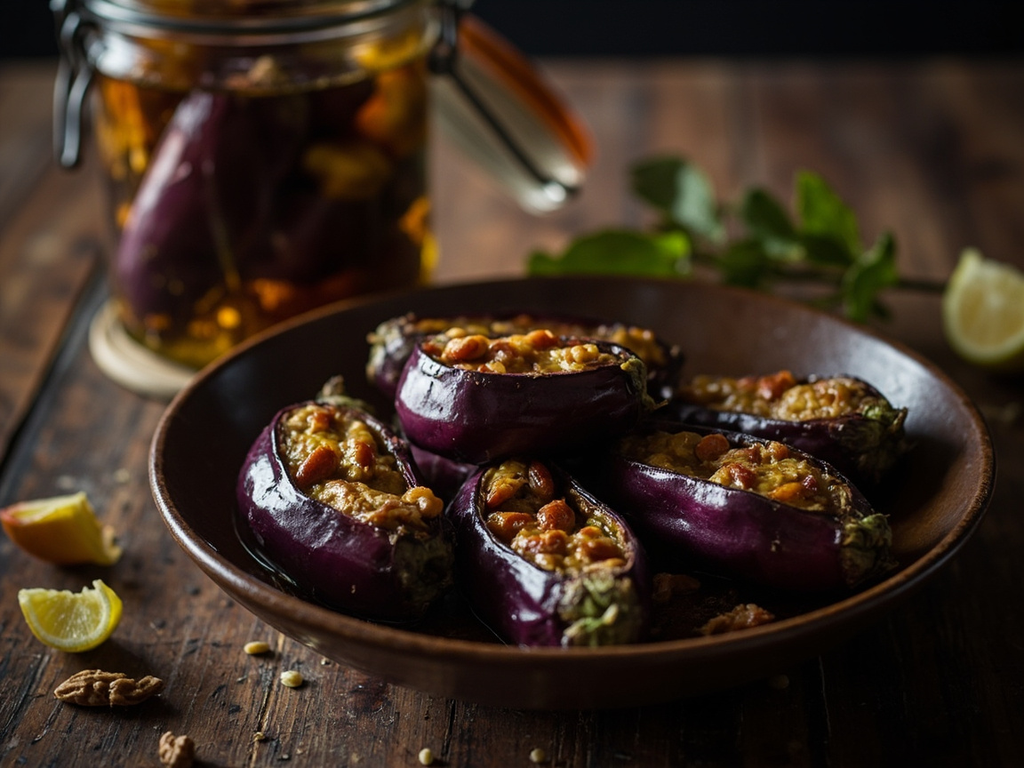
How it was made : Torshi ("sour" in Persian) is a millennia-old preservation technique born from the need to keep harvests through the off-season. In Gilan, with its rainy and fertile climate, each family had its jars of torshi liteh (based on eggplant and herbs) maturing in the cellar. They were judged by ear as well as taste: a good torshi subtly "fizzes" from its fermentation.
The contemporary twist : Serve torshi in small appetizer glasses, chef-style condiment, to accompany modern grilled dishes.
Sources : Najmieh Batmanglij, Food of Life · Margaret Shaida, The Legendary Cuisine of Persia
Abbas Kiarostami · Charactorium