 flip
flipDrôn, the Consecrated Round Bread
Drôn, the Consecrated Round Bread
Why this dish? The drôn is the quintessential ritual bread of Zoroastrian worship: a round wheat flatbread, marked with signs, blessed during the ceremony and presented on the offering table of Ahura Mazda before being shared. It is the bread that every faithful associated with prayer addressed to the creator god.
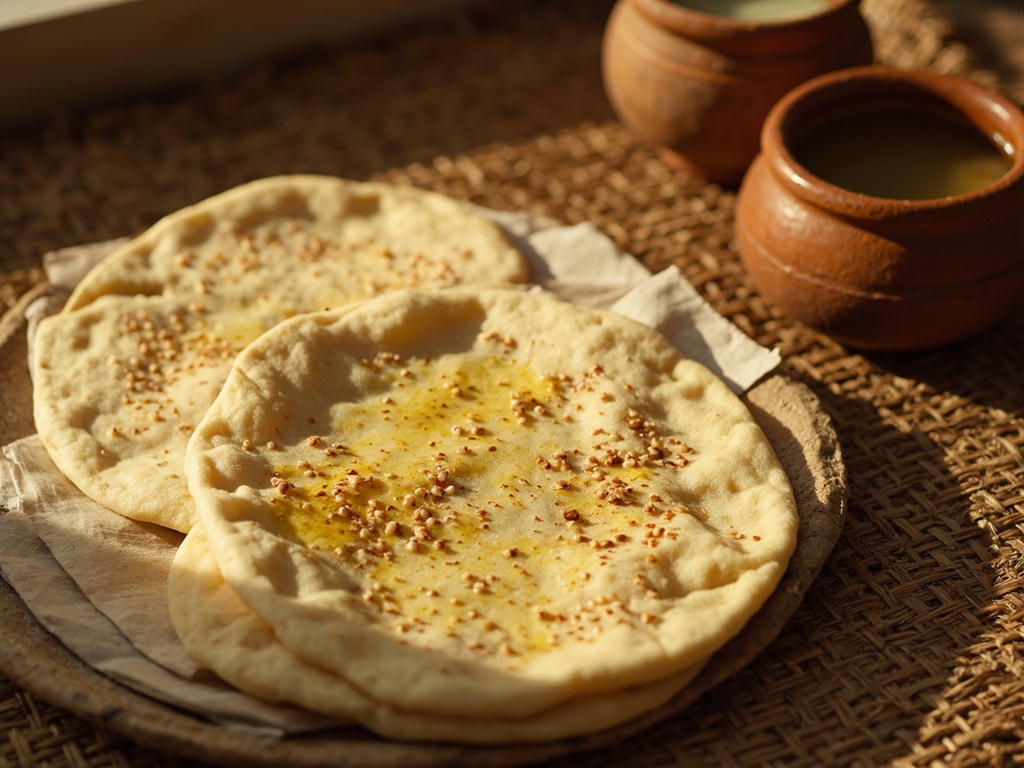
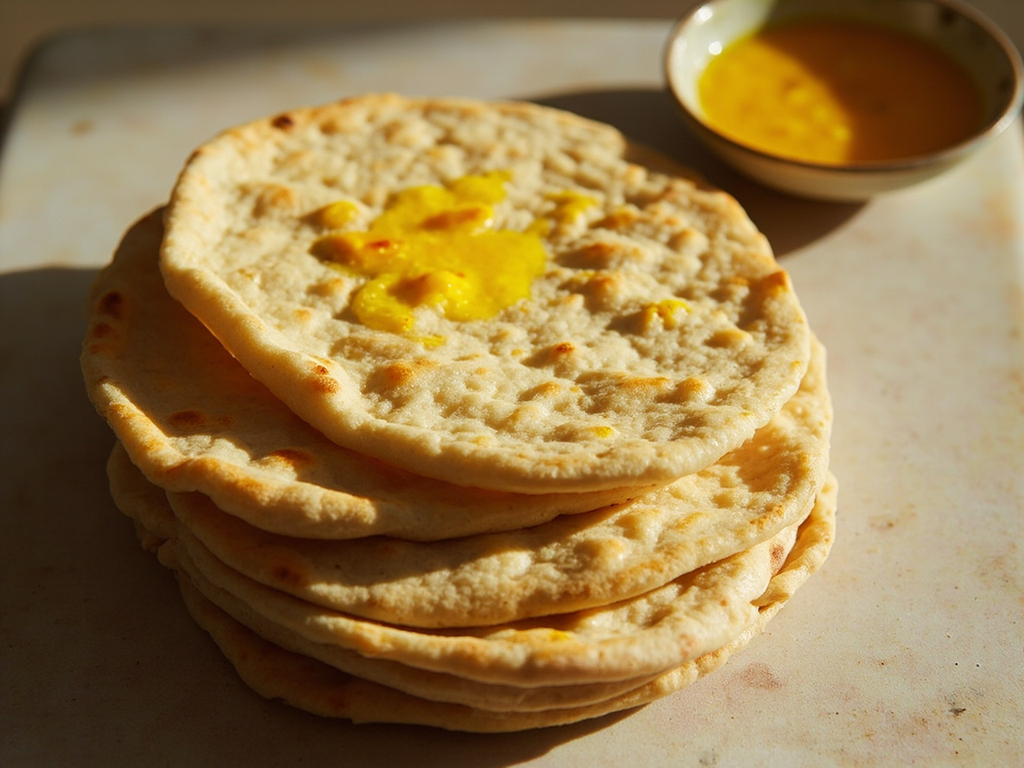
A small unleavened wheat flatbread, thin and golden, marked with fingertips and brushed with a little clarified butter — the simplest and most sacred bread on the Mazdean table.
Look at this round bread: it is the image of the world I have unfolded, clean and whole. My priest kneaded it from pure wheat, with washed hands, then marked it with his finger while reciting the good words I taught him. It is blessed before My flame, anointed with a little butter clear as light, and none breaks it before the end of the prayer. Then eat it with your brothers: what was consecrated in purity nourishes the body as much as the soul.
- •Wheat flour — a few handfuls (base of the sacred bread)
- •Pure water — as needed (binder)
- •Salt — a pinch (seasoning and preservation)
- •Clarified butter (gôshudô) — a little (ritual anointing of the bread)
Drôn, the Consecrated Round Bread
A small unleavened wheat flatbread, thin and golden, marked with fingertips and brushed with a little clarified butter — the simplest and most sacred bread on the Mazdean table.
Why this dish? The drôn is the quintessential ritual bread of Zoroastrian worship: a round wheat flatbread, marked with signs, blessed during the ceremony and presented on the offering table of Ahura Mazda before being shared. It is the bread that every faithful associated with prayer addressed to the creator god.
Look at this round bread: it is the image of the world I have unfolded, clean and whole. My priest kneaded it from pure wheat, with washed hands, then marked it with his finger while reciting the good words I taught him. It is blessed before My flame, anointed with a little butter clear as light, and none breaks it before the end of the prayer. Then eat it with your brothers: what was consecrated in purity nourishes the body as much as the soul.
Ingredients (period version)
- Wheat flour — a few handfuls (base of the sacred bread)
- Pure water — as needed (binder)
- Salt — a pinch (seasoning and preservation)
- Clarified butter (gôshudô) — a little (ritual anointing of the bread)
Ingredients
- All-purpose wheat flour — 250 g (bread structure)
- Warm water — 130 ml (hydration)
- Fine salt — 1 tsp (flavor)
- Clarified butter (ghee) — 2 tbsp (anointing and shine)
Method
- Mix the flour and salt, add the water little by little until you obtain a smooth, supple dough (no yeast: drôn is a flatbread).
- Let the dough rest for 20 minutes under a clean cloth.
- Divide into small balls, roll each into a thin round flatbread.
- With your fingertips, gently press a few circular marks into the surface.
- Cook for 2 to 3 minutes on each side on a hot, dry griddle, until golden spots appear.
- Upon removal, brush with a little clarified butter and serve warm.
How it was made : The drôn (or draonâ) has long been attested in Mazdean liturgy: a round wheat flatbread marked with signs, consecrated during the bâj then shared. Wheat, salt, clarified butter, and pure water sufficed — all the value lay in the purity of the gestures and the blessing pronounced before the sacred fire.
The contemporary twist : Present the flatbreads stacked on a light wooden board with a small bowl of melted butter and a few fresh herbs: an "offering bread" to break and share at the center of the table.
Sources : Mary Boyce, A History of Zoroastrianism, vol. 1, Brill, 1975 · Jamsheed K. Choksy, Purity and Pollution in Zoroastrianism, University of Texas Press, 1989 · Avesta, Yasna (drôn / bâj rite)
Ahura Mazda · Charactorium