 flip
flipDrôn — the Ritual Flatbread, Marked with Clarified Butter
Drôn — the Ritual Flatbread, Marked with Clarified Butter
Why this dish? In the cult of Anahita, breads are placed on the sacred mat before reciting hymns. The drôn, the consecrated flatbread of the ancient Iranians, is the bread shared after being presented to the deity—a humble support of wheat and water, two gifts that the goddess of fertilizing waters makes possible.
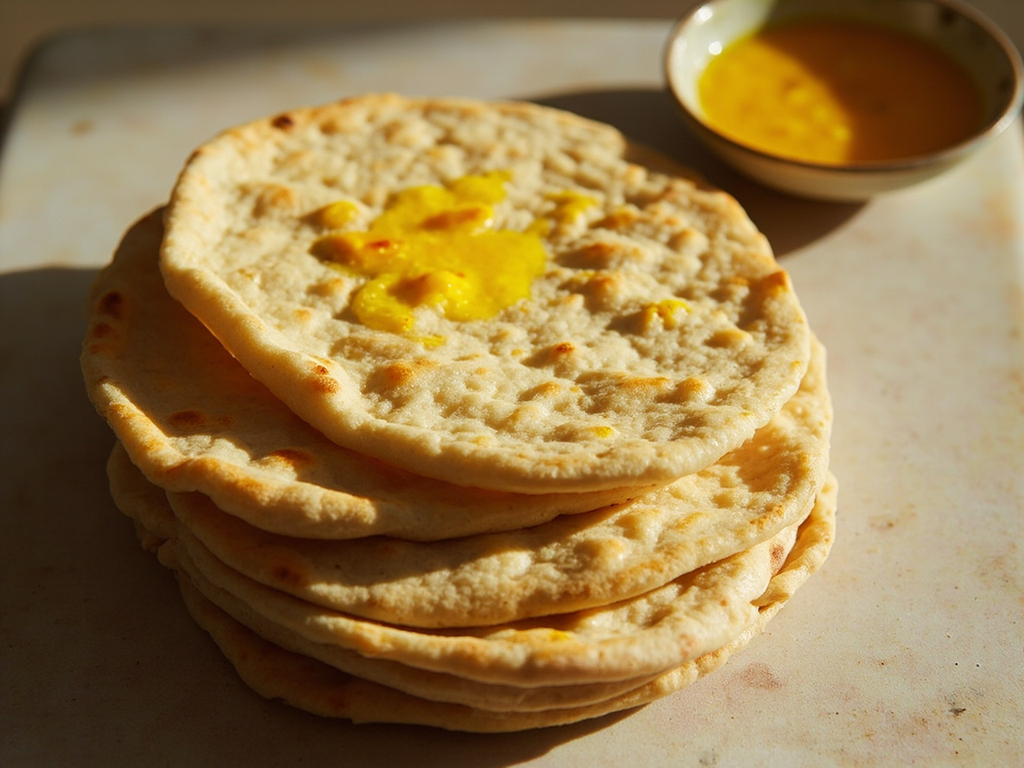
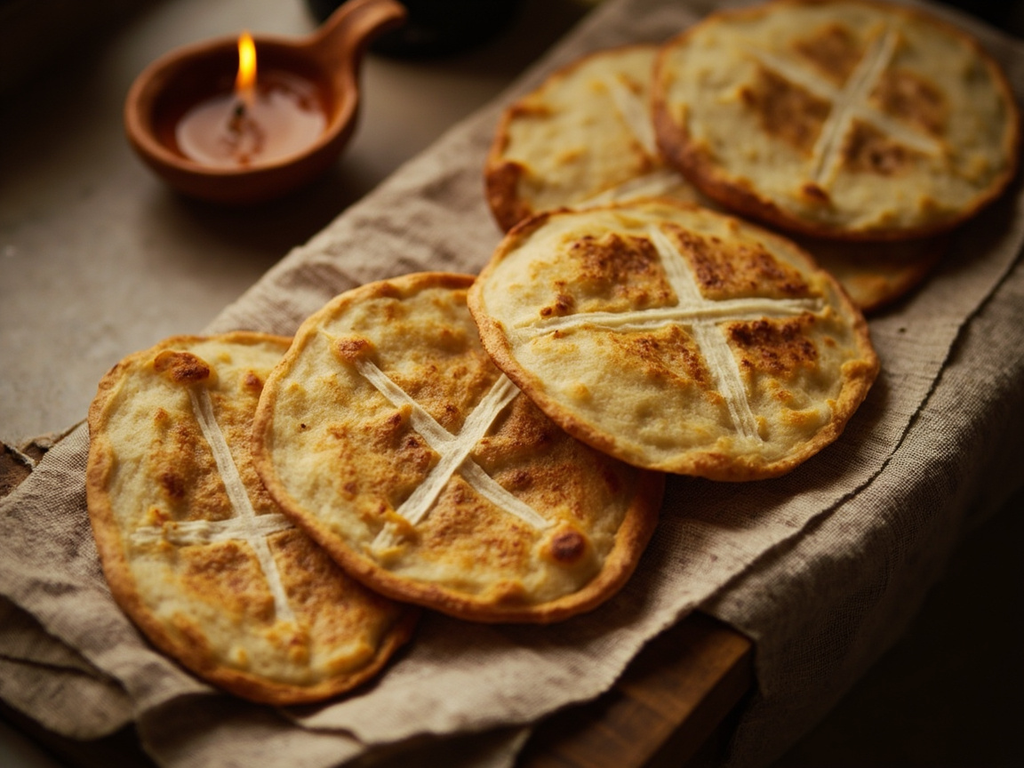
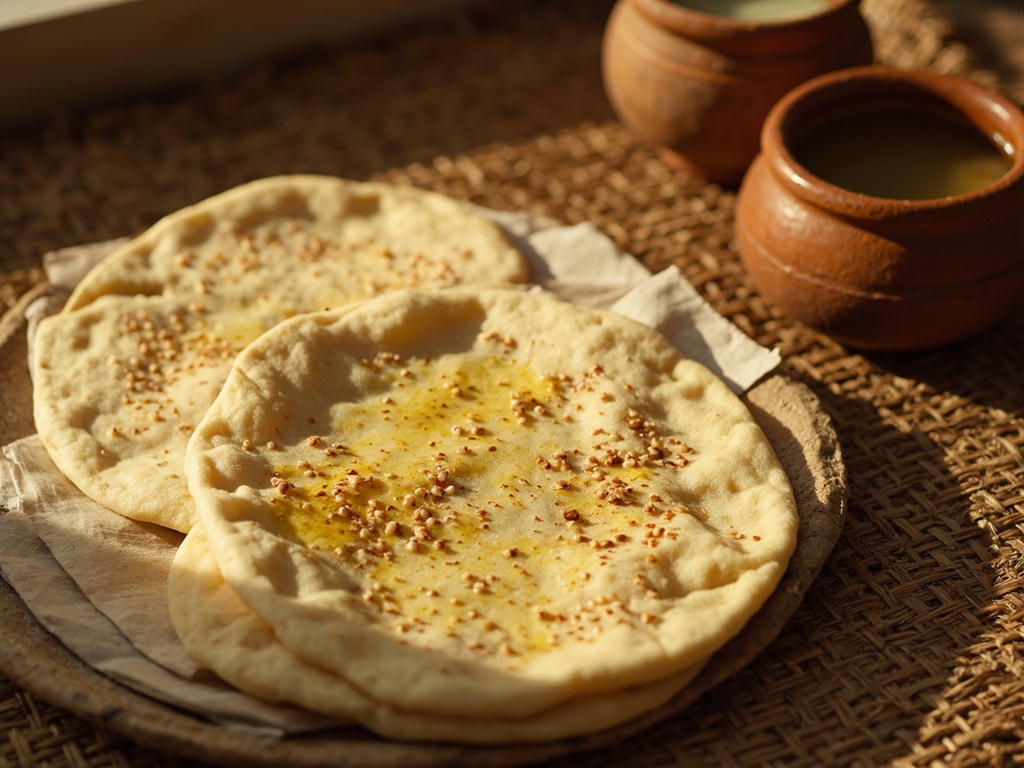
A wheat flatbread cooked on a hot stone, brushed with clarified butter and marked with fine grooves. Simple, fragrant, made to be offered first, then eaten.
Mortal, listen to the goddess of waters that make the grain rise. This bread, you do not knead for your belly alone: you place it before me, on the clean mat, before you set your teeth to it. Take spring water that I have made flow, the wheat that my rains have swollen, and a little butter from your herds. Mark its face with your finger, as a sign that you know whence the gift comes—and only then, break it and feed your kin.
- •Wheat flour — two handfuls per person (base of the flatbread)
- •Pure spring water — enough to bind (hydration, link to the water goddess)
- •Salt — a pinch (seasoning)
- •Clarified butter (roghan) — a little (flavored brush-on)
Drôn — the Ritual Flatbread, Marked with Clarified Butter
A wheat flatbread cooked on a hot stone, brushed with clarified butter and marked with fine grooves. Simple, fragrant, made to be offered first, then eaten.
Why this dish? In the cult of Anahita, breads are placed on the sacred mat before reciting hymns. The drôn, the consecrated flatbread of the ancient Iranians, is the bread shared after being presented to the deity—a humble support of wheat and water, two gifts that the goddess of fertilizing waters makes possible.
Mortal, listen to the goddess of waters that make the grain rise. This bread, you do not knead for your belly alone: you place it before me, on the clean mat, before you set your teeth to it. Take spring water that I have made flow, the wheat that my rains have swollen, and a little butter from your herds. Mark its face with your finger, as a sign that you know whence the gift comes—and only then, break it and feed your kin.
Ingredients (period version)
- Wheat flour — two handfuls per person (base of the flatbread)
- Pure spring water — enough to bind (hydration, link to the water goddess)
- Salt — a pinch (seasoning)
- Clarified butter (roghan) — a little (flavored brush-on)
Ingredients
- All-purpose wheat flour (T65) — 300 g (dough base)
- Warm water — 180 ml (hydration)
- Salt — 5 g (seasoning)
- Clarified butter (or ghee) — 40 g (brushing and shine)
- Sesame seeds — 1 tbsp (optional) (decoration)
Method
- Mix flour and salt, gradually add water and knead for 8 minutes until a supple dough forms. Cover and let rest for 30 minutes.
- Divide into fist-sized balls, roll each into a thin 20 cm disk.
- Using your fingertips, trace light parallel grooves on the surface (the mark of the drôn).
- Cook each flatbread for 2 to 3 minutes per side on a very hot griddle or cast-iron pan, without fat, until golden blisters appear.
- Upon removal, brush with melted clarified butter, sprinkle with sesame, and serve warm.
How it was made : The drôn (or drāonah) is attested as a consecrated bread in Zoroastrian tradition: it is presented during ceremonies before being consumed. Cooked on a stone or hot griddle without leavening, it continues a tradition of flatbread common to the entire ancient East, from Mesopotamian flatbreads to Iranian lavash.
The contemporary twist : For a nod to the goddess of a hundred stars, mark the flatbread with small dots in a circle before baking: the golden bubbles will form an edible constellation.
Sources : Mary Boyce, A History of Zoroastrianism (Brill) · Mary Boyce, Zoroastrians: Their Religious Beliefs and Practices (Routledge)
Anahita · Charactorium