 flip
flipRoasted Beef Thigh from Amphitryon's Banquet
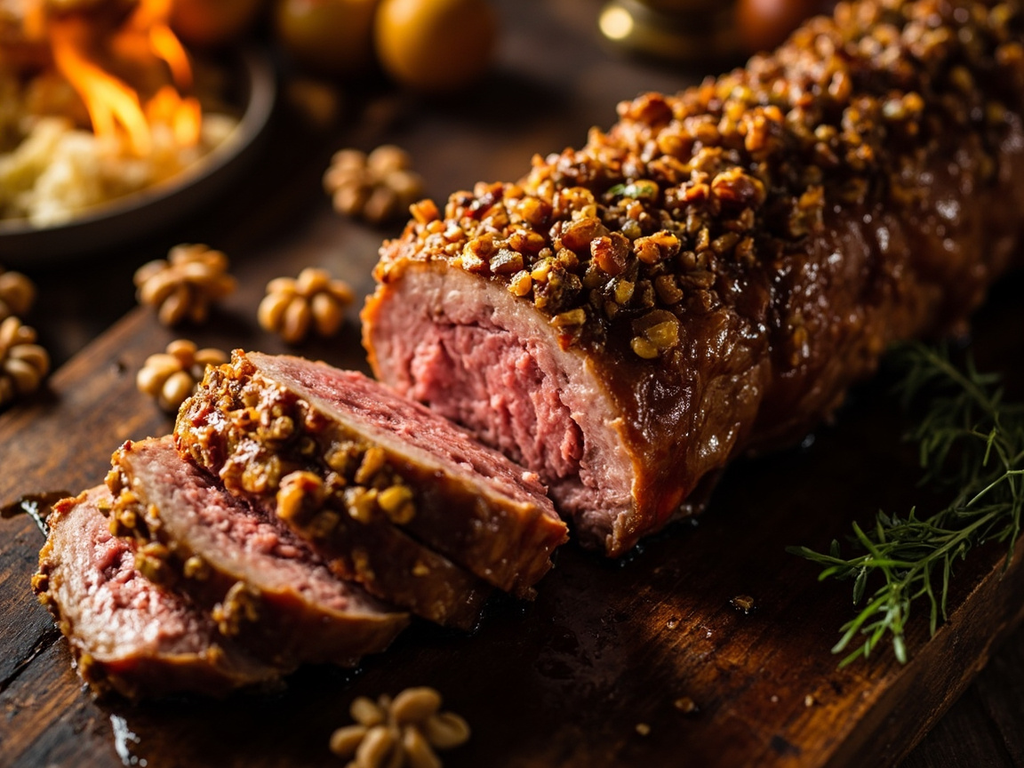
Roasted Beef Thigh from Amphitryon's Banquet
Why this dish? When Amphitryon returns victorious over the Taphians, the palace celebrates with a great sacrifice and banquet. Roasted meat, shared in equal portions among the guests, is the highlight of the heroic feast: the moment when Alcmene, queen for an evening, sits at the warriors' table.
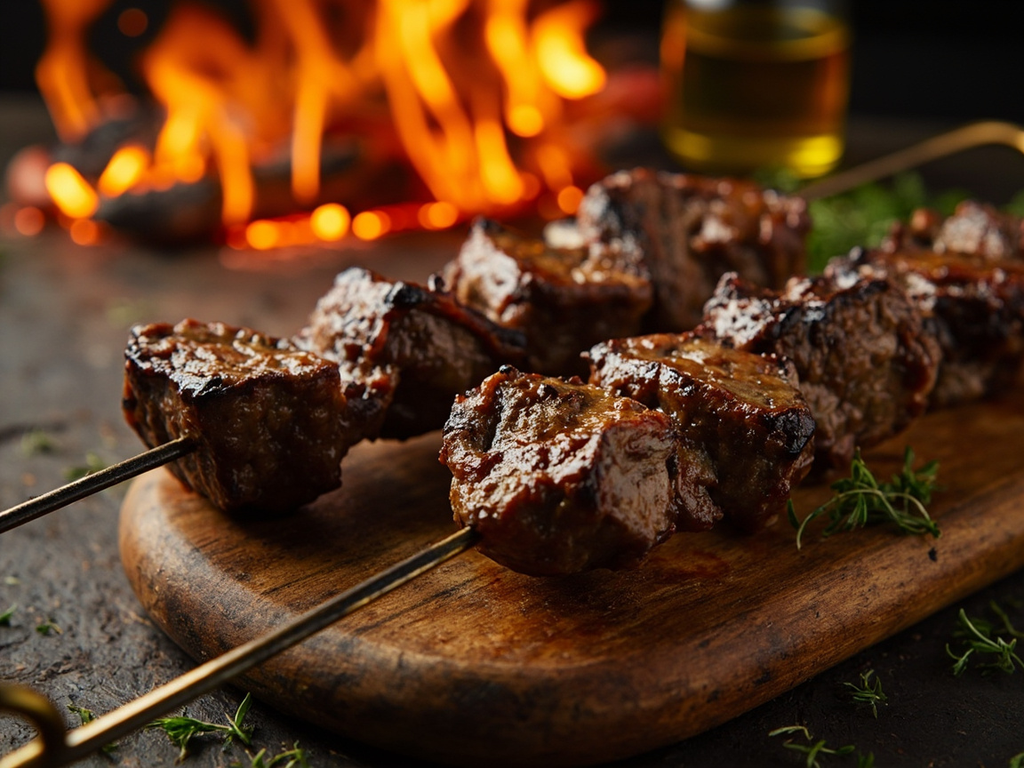
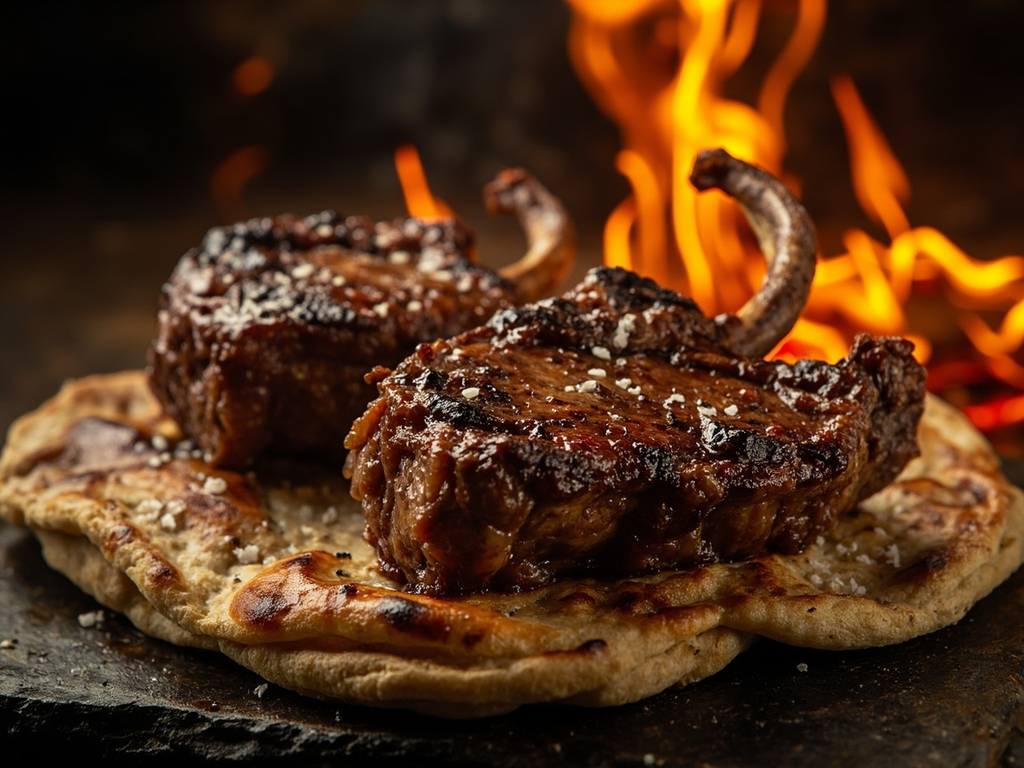
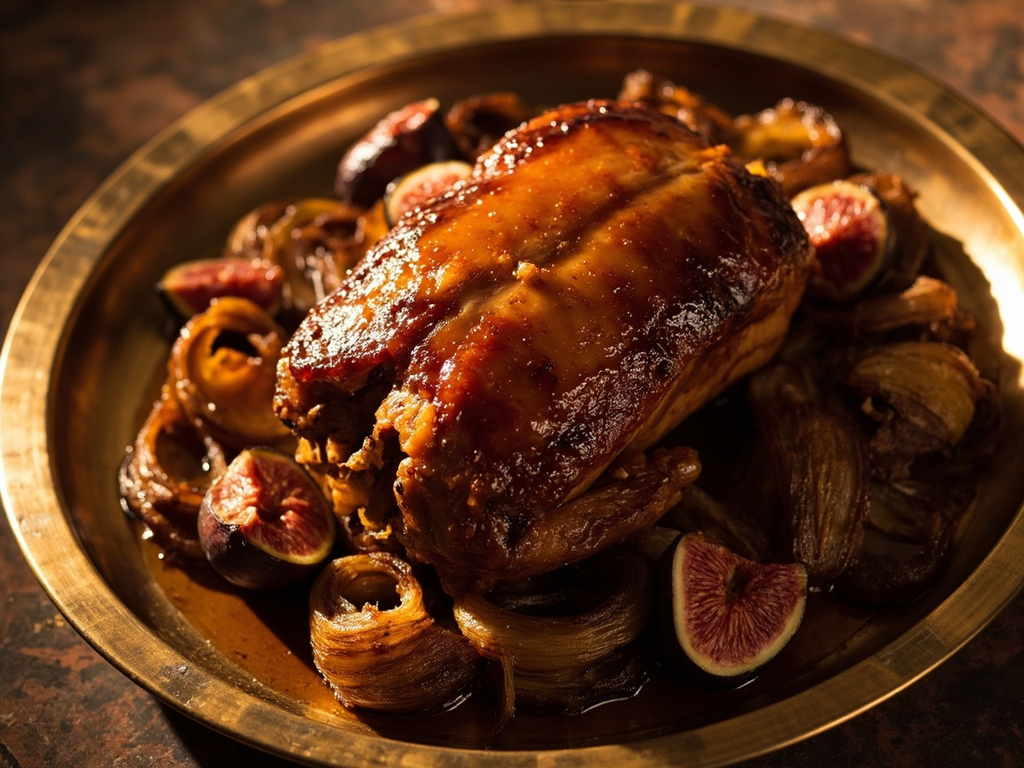
A piece of beef (or mutton) skewered and roasted over the flame after sacrifice, rubbed with salt and herbs from the hills, served with its juices and barley bread. The meat-based cuisine of Homer's heroes, reserved for feast days.
Tonight the hearth blazes high, for my husband has returned covered in glory! We have bled the ox over the altar, burned the thighs wrapped in fat for the gods, and the rest now turns on the spit. Rub the flesh with salt and that fragrant herb that grows on our hillsides, turn it over the coals until it sings. Each will have an equal share, from the greatest to the least of guests: thus is kept a table worthy of a king.
- •Piece of beef or mutton — a fine piece (feast meat)
- •Sea salt — as needed (seasoning)
- •Wild oregano and thyme — a good handful (flavor)
- •Olive oil — for rubbing (cooking)
Roasted Beef Thigh from Amphitryon's Banquet
A piece of beef (or mutton) skewered and roasted over the flame after sacrifice, rubbed with salt and herbs from the hills, served with its juices and barley bread. The meat-based cuisine of Homer's heroes, reserved for feast days.
Why this dish? When Amphitryon returns victorious over the Taphians, the palace celebrates with a great sacrifice and banquet. Roasted meat, shared in equal portions among the guests, is the highlight of the heroic feast: the moment when Alcmene, queen for an evening, sits at the warriors' table.
Tonight the hearth blazes high, for my husband has returned covered in glory! We have bled the ox over the altar, burned the thighs wrapped in fat for the gods, and the rest now turns on the spit. Rub the flesh with salt and that fragrant herb that grows on our hillsides, turn it over the coals until it sings. Each will have an equal share, from the greatest to the least of guests: thus is kept a table worthy of a king.
Ingredients (period version)
- Piece of beef or mutton — a fine piece (feast meat)
- Sea salt — as needed (seasoning)
- Wild oregano and thyme — a good handful (flavor)
- Olive oil — for rubbing (cooking)
Ingredients
- Beef roast (or leg of lamb) — 1.2 kg (feast meat)
- Sea salt — 2 tsp (seasoning)
- Dried oregano — 2 tsp (flavor)
- Fresh thyme — a few sprigs (flavor)
- Olive oil — 3 tbsp (cooking)
Method
- Bring the meat to room temperature, rub with olive oil, salt, oregano, and stripped thyme leaves.
- Sear on all sides over high heat (pan or coals) to form a crust.
- Finish cooking in the oven at 200°C or away from the coals, 20-30 minutes depending on thickness, basting with juices.
- Let rest for 10 minutes under a cloth before slicing.
- Serve in generous portions with barley bread for dipping.
How it was made : In Homer, the heroic banquet revolves around spit-roasted meat, almost always linked to a sacrifice: the bones wrapped in fat were burned for the gods, the men ate the flesh. Butcher's meat remained a festive dish; the daily portion was cereal. Equal sharing (*daïs*) sealed the equality of the guests.
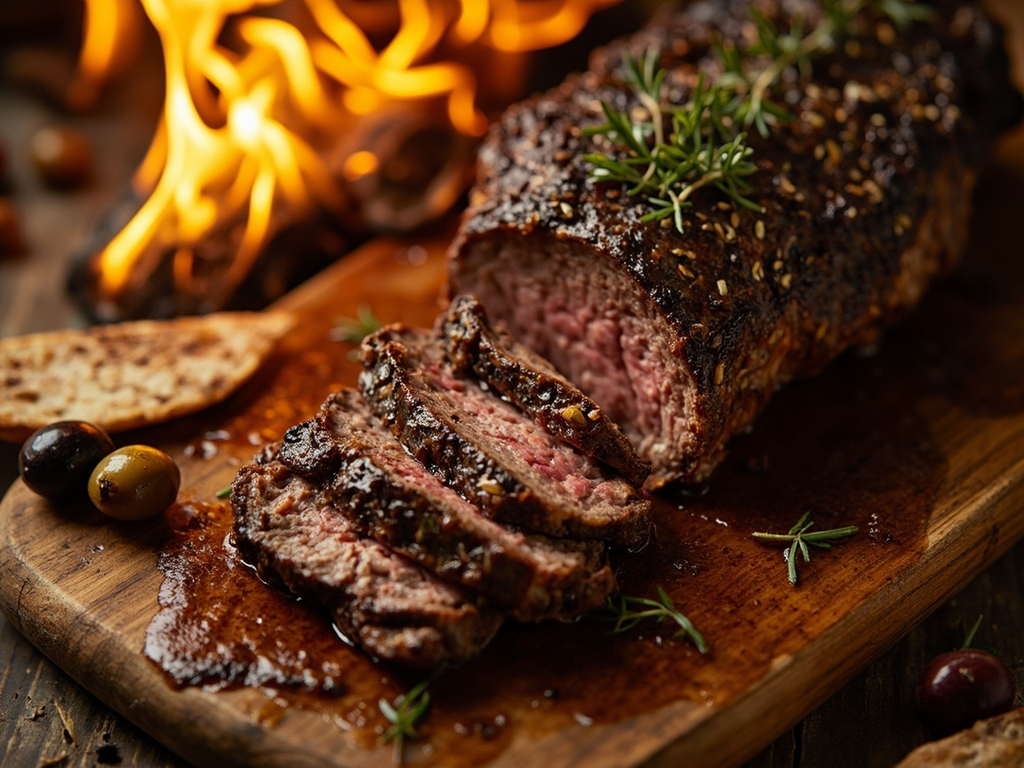
The contemporary twist : Thinly sliced and arranged on a board with olives, fresh herbs, and new olive oil, it becomes a 'heroic grill' perfect for a grand outdoor meal.
Alcmene · Charactorium