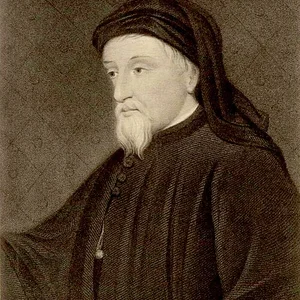

Geoffrey Chaucer (c. 1343–1400) is the greatest English poet of the Middle Ages, author of The Canterbury Tales. A diplomat and royal official, he brought the vernacular English language into high literature, leaving a lasting influence on English letters.
Geoffrey Chaucer(1343 — 1400)
Geoffrey Chaucer
royaume d'Angleterre
8 min read
Frequently asked questions
Famous Quotes
« Time and tide wait for no man.»
« The lyf so short, the craft so long to lerne.»
Key Facts
- c. 1343: born in London into a family of wine merchants
- 1367–1387: serves as valet and then squire at the royal court of Edward III and Richard II
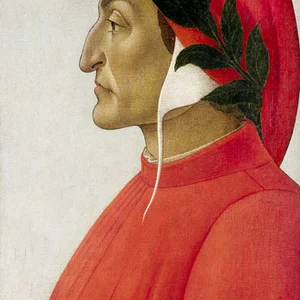
- 1372–1378: diplomatic missions to Italy, where he discovers Dante, Petrarch, and Boccaccio
- c. 1387–1400: writes The Canterbury Tales, his unfinished masterwork
- 1400: dies in London; first person buried in Poets' Corner at Westminster Abbey
Works & Achievements
An unfinished collection of 24 tales told by pilgrims traveling to Canterbury, spanning every genre and social class. A masterpiece of medieval English literature, it laid the foundations of modern English prose and poetry.
A long epic and lyric poem in five books inspired by Boccaccio, tracing the tragic fate of two lovers during the siege of Troy. Widely regarded as the first great work of prose romance in English literature.
An elegy composed in honor of Blanche of Lancaster, wife of John of Gaunt, who died of plague. It marks Chaucer's literary debut and his mastery of French and allegorical poetic forms.
An allegorical poem in three books in which the narrator, guided by a giant eagle, explores the palace of Fame. The work reflects the influence of Dante and questions the fragile nature of literary glory.
A practical astronomy manual written in English for the education of his son Lewis. The first major scientific text written in the vernacular English language, it illustrates Chaucer's interest in science and pedagogy.
A collection of verse narratives devoted to heroines of antiquity undone by love — Cleopatra, Dido, Lucretia, and others. Chaucer experiments here with the frame prologue form and explores medieval literary misogyny with irony.
Anecdotes
In 1386, Geoffrey Chaucer was elected to the English Parliament as a knight of the shire for Kent. Although little evidence of his parliamentary activity survives, this episode illustrates how well he was integrated into royal power circles, moving effortlessly between the pen and politics.
In 1380, Cecilia Chaumpaigne signed a document releasing Chaucer from all charges related to a case of 'raptus'. The exact meaning of this Latin term — which could refer to abduction or assault — remains debated among historians, making this episode one of the most discussed grey areas in his biography.
Chaucer was taken prisoner during a military campaign in France in 1360, during the Hundred Years' War. King Edward III personally contributed sixteen pounds toward his ransom — a modest sum, yet one that reflects the royal regard held for the young page who would become a great poet.
Chaucer served as Controller of Customs on wool, hides, and tanned skins at the port of London between 1374 and 1386. This painstaking administrative work provided him with a steady income, while also giving him ample opportunity to observe a colorful crowd of merchants, sailors, and travelers — all potential models for his literary characters.
Chaucer spent his final years in a house rented in the garden of Westminster Abbey, from October 1399. He died in 1400 and was buried in the abbey, thus becoming the first occupant of what would become Poets' Corner, the famous resting place of great figures of English literature.
Primary Sources
Whan that Aprill with his shoures soote / The droghte of March hath perced to the roote, / And bathed every veyne in swich licour / Of which vertu engendred is the flour...
Go, litel bok, go, litel myn tragedye, / Ther God thi makere yet, er that he dye, / So sende myght to make in som comedye!
And I awook, and other bokes toke / Me for to rede, and fables olde / Of storyes, and of thynges tolde / Were in myn hed, I dar wel seyn.
Lyte Lowys my sone, I aperceyve wel by certeyne evydences thyn abilite to lerne sciences touching nombres and proporciouns; and as wel considre I thy besy praier in special to lerne the tretys of the Astrelabie.
Key Places
Chaucer lived from 1374 to 1386 in an apartment above the Aldgate, at the eastern entrance to the City of London. It was here that he wrote several of his major works, in the heart of a bustling, cosmopolitan trading city.
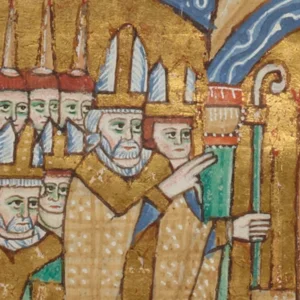
The destination of the fictional pilgrimage in the Canterbury Tales, where the shrine of Thomas Becket, the archbishop martyred in 1170, is located. This beloved place of devotion provides the entire narrative framework for Chaucer's work.
Chaucer rented a house in the abbey garden in the final years of his life and was buried there in 1400, thus founding the famous Poets' Corner, where many of Britain's greatest writers would later come to be interred.
Chaucer travelled to Italy in 1372–1373 and again in 1378 on diplomatic missions. His time in Florence brought him into contact with Boccaccio and Petrarch, whose influence was decisive in shaping the conception of the Canterbury Tales.
An administrative building on the banks of the Thames where Chaucer served as Controller of Customs from 1374 to 1386, overseeing the collection of taxes on wool exports — a cornerstone of the medieval English economy.
Liens externes & ressources
Références
Œuvres
Les Contes de Canterbury (The Canterbury Tales)
vers 1387-1400
Troïlus et Criseyde (Troilus and Criseyde)
vers 1382-1386
Le Livre de la Duchesse (The Book of the Duchess)
vers 1368-1374
La Maison de la Renommée (The House of Fame)
vers 1374-1385
Traité de l'Astrolabe (Treatise on the Astrolabe)
1391
La Légende des Femmes Illustres (The Legend of Good Women)
vers 1386-1394