 flip
flipRaw Fish in Coconut Milk, Papeete Style (inspired by ia ota)
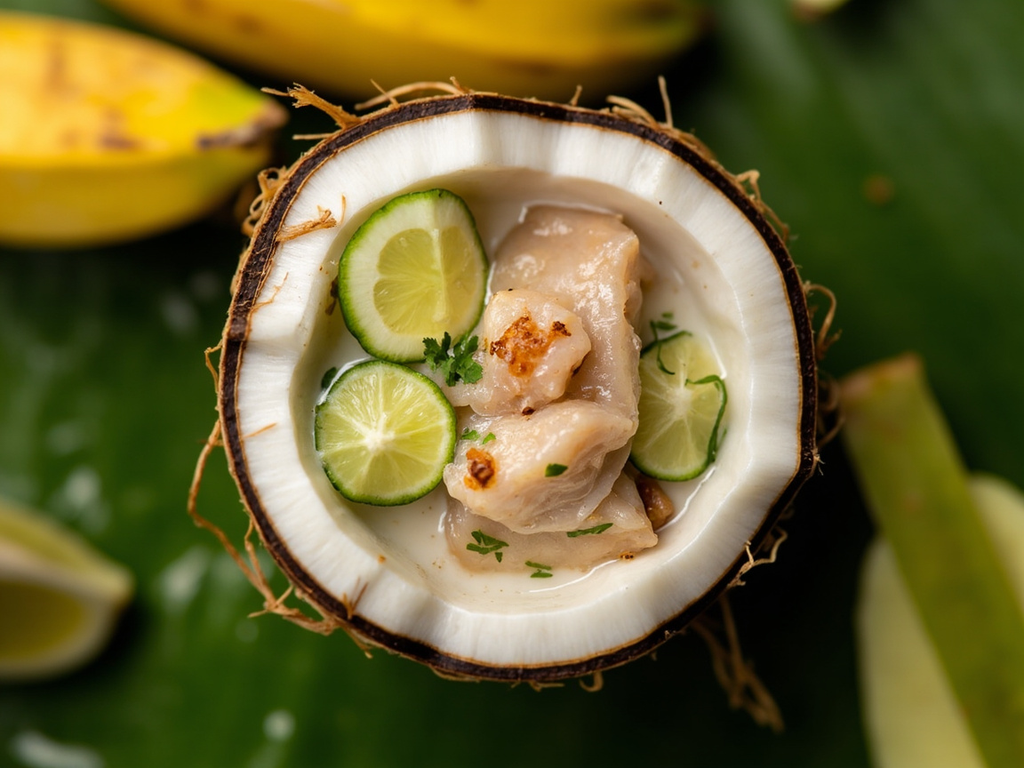
Raw Fish in Coconut Milk, Papeete Style (inspired by ia ota)
Why this dish? Alain Colas lived and married in Tahiti, and it was in Tahitian that he named his trimaran Manureva, "the bird of passage." This fresh, tangy raw fish, a festive dish of the islands, evokes the Polynesian part of his life, the exact opposite of the gray canned food of the open sea.
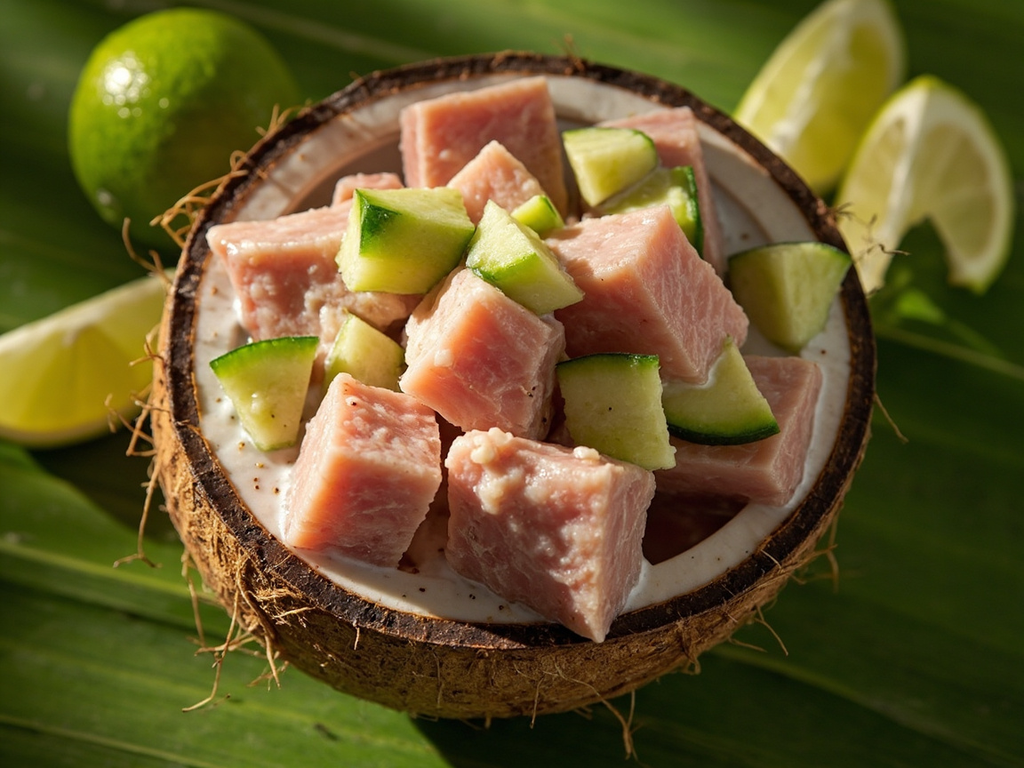
Diced very fresh white fish "cooked" by lime juice, refreshed with cucumber and drizzled with coconut milk. Inspired by Tahitian ia ota, it is a sharing dish, lively and bright, served for reunions ashore.
When I returned to Papeete, no more sad shipboard meals: we would sit on the ground around the ma'a and prepare the fish just out of the lagoon. You cut it into cubes, squeeze it in lime juice until it turns white, then drown it in fresh coconut milk pressed by hand. That is the table of the islands, generous, shared with bare hands — the exact opposite of the ocean's solitude. Manureva, that is where the name comes from: the bird of passage, like me between two seas.
- •Very fresh lagoon fish (tuna, mahi-mahi) — according to the catch (base, "cooked" by acid)
- •Lime — several (acidity that denatures the flesh)
- •Fresh coconut — 1 (milk pressed by hand)
- •Cucumber — 1 (freshness and crunch)
- •Sea salt — a pinch (seasoning)
Raw Fish in Coconut Milk, Papeete Style (inspired by ia ota)
Diced very fresh white fish "cooked" by lime juice, refreshed with cucumber and drizzled with coconut milk. Inspired by Tahitian ia ota, it is a sharing dish, lively and bright, served for reunions ashore.
Why this dish? Alain Colas lived and married in Tahiti, and it was in Tahitian that he named his trimaran Manureva, "the bird of passage." This fresh, tangy raw fish, a festive dish of the islands, evokes the Polynesian part of his life, the exact opposite of the gray canned food of the open sea.
When I returned to Papeete, no more sad shipboard meals: we would sit on the ground around the ma'a and prepare the fish just out of the lagoon. You cut it into cubes, squeeze it in lime juice until it turns white, then drown it in fresh coconut milk pressed by hand. That is the table of the islands, generous, shared with bare hands — the exact opposite of the ocean's solitude. Manureva, that is where the name comes from: the bird of passage, like me between two seas.
Ingredients (period version)
- Very fresh lagoon fish (tuna, mahi-mahi) — according to the catch (base, "cooked" by acid)
- Lime — several (acidity that denatures the flesh)
- Fresh coconut — 1 (milk pressed by hand)
- Cucumber — 1 (freshness and crunch)
- Sea salt — a pinch (seasoning)
Ingredients
- Extra-fresh tuna or cod fillet — 400 g (base)
- Lime — 4 (acidity)
- Coconut milk — 20 cl (creaminess, island signature)
- Cucumber — 1/2 (crunch)
- Tomato (land option) — 1 (color and freshness)
- Spring onion — 2 (mild bite)
- Salt — to taste (seasoning)
Method
- Cut the fish into regular 1.5 cm cubes.
- Pour the lime juice over them, add salt, and let "cook" cold for 10 to 15 minutes: the flesh turns white.
- Drain excess lime juice so the dish isn't too acidic.
- Add diced cucumber, sliced spring onion (and tomato if you want color).
- Generously drizzle with coconut milk, mix gently, and serve immediately, well chilled.
How it was made : Ia ota, raw fish in coconut milk and lime, is an iconic dish of the traditional Tahitian table, served during shared meals (ma'a). The fish is not cooked by fire but chemically "cooked" by the acid of the lime, a technique widespread throughout the Pacific.
The contemporary twist : Serve it in a hollowed-out half coconut and sprinkle with lime zest for a sea-spray aroma.
Alain Colas · Charactorium