 flip
flipFirecrest Ship's Biscuit
Firecrest Ship's Biscuit
Why this dish? During his first east-to-west Atlantic crossing in 1923, part of Gerbault's provisions spoiled and nearly left him to starve. The ship's biscuit, hard and indestructible, remained his only reliable bread under the spray.
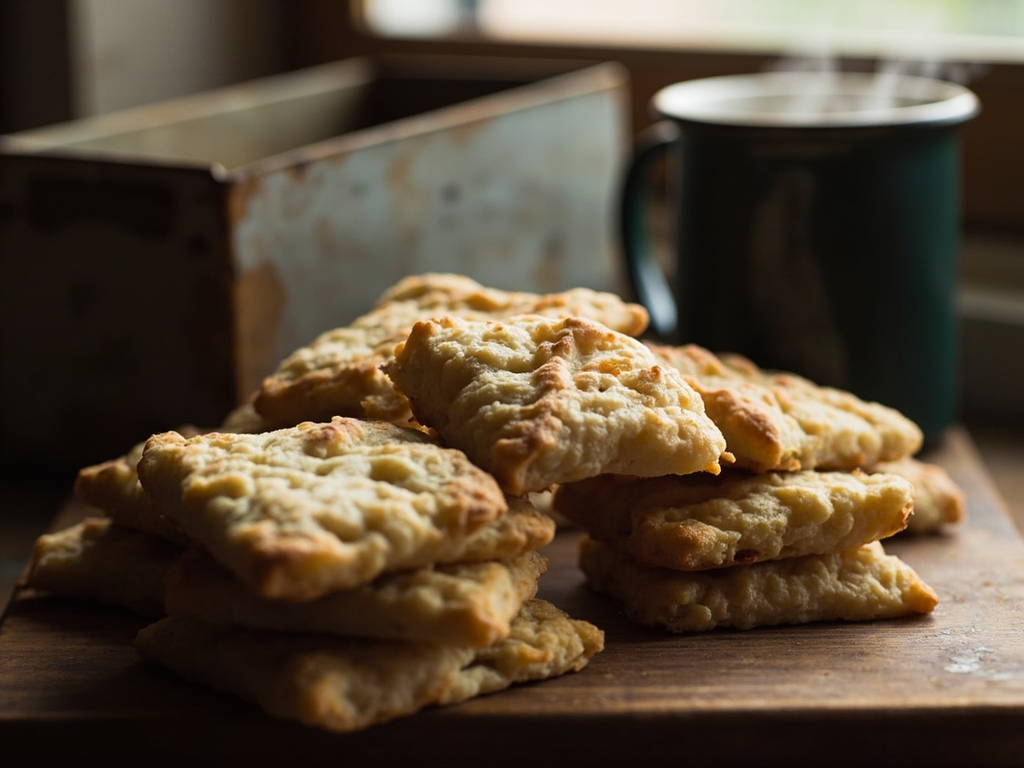
A flat, wood-hard biscuit, twice-baked to drive out all moisture. It doesn't mold, doesn't crush in the galley, and lasts months in a tin box. You dip it in tea or water before you can bite it.
My bread aboard was not the soft bread of Laval's bakers. It was this hard biscuit I stored in a tin box, safe from the salt. When hunger gnawed at me in the middle of the Atlantic, I would let it soften a long while in my mug of tepid water, and eat it slowly, thinking of landfalls. Believe me, the man who has known true hunger never scorns a crust again.
- •Wheat flour — several handfuls (base)
- •Fresh water — enough to bind (binder)
- •Sea salt — a pinch (preservation and flavor)
Firecrest Ship's Biscuit
A flat, wood-hard biscuit, twice-baked to drive out all moisture. It doesn't mold, doesn't crush in the galley, and lasts months in a tin box. You dip it in tea or water before you can bite it.
Why this dish? During his first east-to-west Atlantic crossing in 1923, part of Gerbault's provisions spoiled and nearly left him to starve. The ship's biscuit, hard and indestructible, remained his only reliable bread under the spray.
My bread aboard was not the soft bread of Laval's bakers. It was this hard biscuit I stored in a tin box, safe from the salt. When hunger gnawed at me in the middle of the Atlantic, I would let it soften a long while in my mug of tepid water, and eat it slowly, thinking of landfalls. Believe me, the man who has known true hunger never scorns a crust again.
Ingredients (period version)
- Wheat flour — several handfuls (base)
- Fresh water — enough to bind (binder)
- Sea salt — a pinch (preservation and flavor)
Ingredients
- All-purpose flour — 300 g (base)
- Water — 130 ml (binder)
- Fine salt — 1 teaspoon (preservation and flavor)
Method
- Mix the flour and salt, add water little by little until you get a firm, dry dough, barely sticky.
- Knead briefly, then roll out the dough to 1 cm thickness.
- Cut into squares or rounds, prick with a fork to prevent puffing.
- Bake at medium heat (160°C) for about 30 minutes, until dry and pale.
- Lower to 110°C and let dry for another hour: this second baking makes them indestructible.
- Let cool completely and store in an airtight container. Dip before biting!
How it was made : Ship's biscuit (or "hardtack") was the staple of shipboard provisions for centuries: baked twice to remove all water, it could keep for years. Sailors dipped it in soup, coffee, or water, lest they break a tooth.
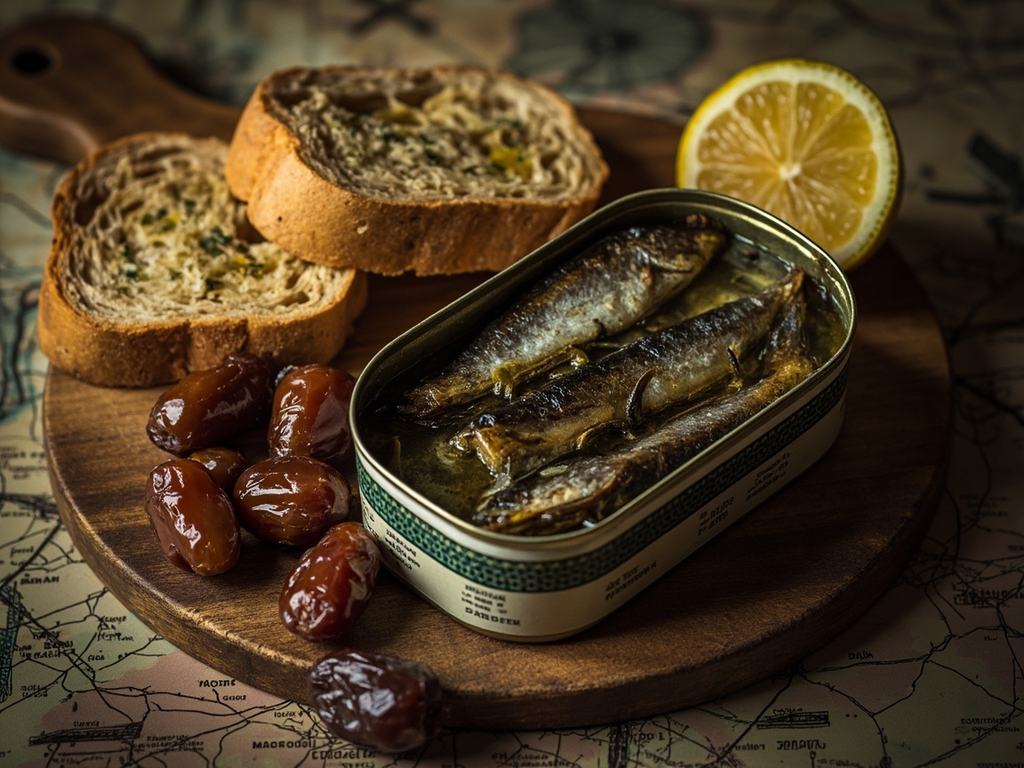
The contemporary twist : Serve on a charcuterie board with mackerel rillettes and a squeeze of lemon: the old sea wolf's biscuit becomes a party cracker.
Sources : Alain Gerbault, Seul à travers l'Atlantique, 1924
Alain Gerbault · Charactorium