 flip
flipMouna (Pied-Noir Orange Brioche)
Mouna (Pied-Noir Orange Brioche)
Why this dish? Mouna is the cake of Easter feasts and Pied-Noir picnics: it was taken, huge and golden, for Sunday outings to the sea or countryside. Camus, who celebrated in *Nuptials* the feasts of the body in the sun of Tipasa, knew those luminous days when mouna was shared on the grass.
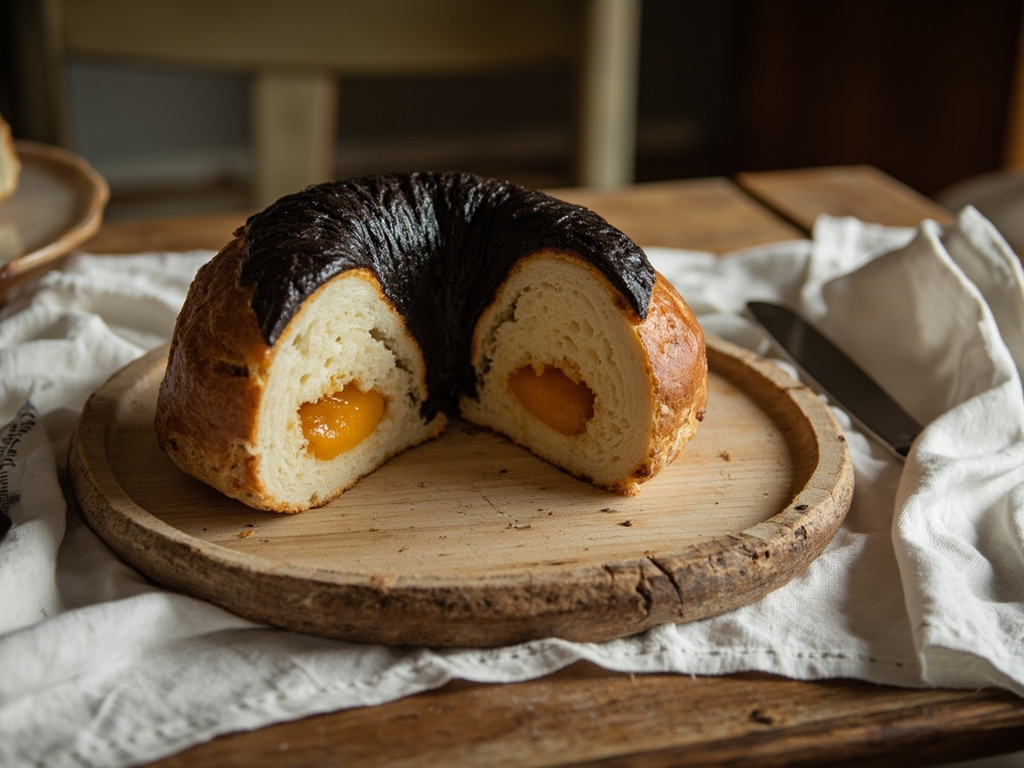
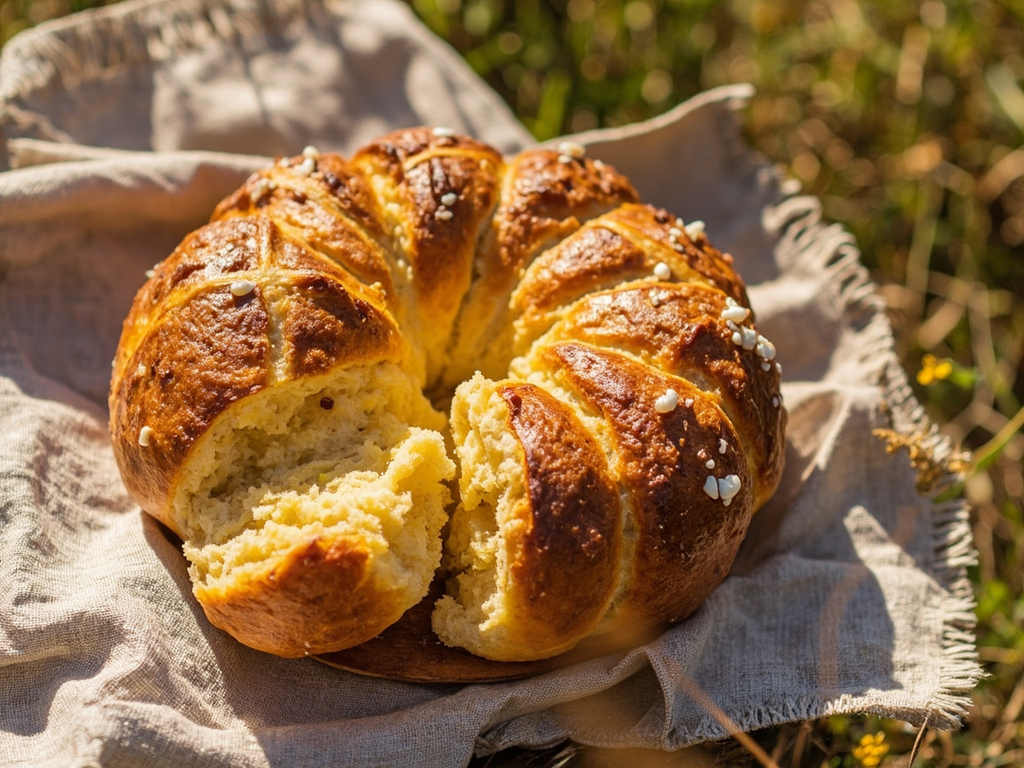
A soft, domed brioche, flavored with orange, lemon, and anise, golden and cracked with sugar on top. It is torn by hand and dipped in coffee.
On Easter Monday, we would load the baskets and head down to the sea, and at the heart of the basket sat the mouna, round and golden like a little sun. My grandmother kneaded it the night before, her arm deep in the dough, and the whole house smelled of orange and anise. We would tear it by hand on the grass, dip it in coffee, and happiness was entirely in that warm crumb and that cloudless sky. Believe me, there is no surer paradise than that.
- •Flour — as needed (base)
- •Eggs — several (richness)
- •Sugar — generous (sweetness)
- •Mild olive oil or butter — a little (softness)
- •Orange and lemon zest — to taste (signature aroma)
- •Anise seeds — a pinch (aroma)
- •Baker's yeast — as needed (leavening)
Mouna (Pied-Noir Orange Brioche)
A soft, domed brioche, flavored with orange, lemon, and anise, golden and cracked with sugar on top. It is torn by hand and dipped in coffee.
Why this dish? Mouna is the cake of Easter feasts and Pied-Noir picnics: it was taken, huge and golden, for Sunday outings to the sea or countryside. Camus, who celebrated in *Nuptials* the feasts of the body in the sun of Tipasa, knew those luminous days when mouna was shared on the grass.
On Easter Monday, we would load the baskets and head down to the sea, and at the heart of the basket sat the mouna, round and golden like a little sun. My grandmother kneaded it the night before, her arm deep in the dough, and the whole house smelled of orange and anise. We would tear it by hand on the grass, dip it in coffee, and happiness was entirely in that warm crumb and that cloudless sky. Believe me, there is no surer paradise than that.
Ingredients (period version)
- Flour — as needed (base)
- Eggs — several (richness)
- Sugar — generous (sweetness)
- Mild olive oil or butter — a little (softness)
- Orange and lemon zest — to taste (signature aroma)
- Anise seeds — a pinch (aroma)
- Baker's yeast — as needed (leavening)
Ingredients
- Flour — 500 g (base)
- Eggs — 3 (richness)
- Sugar — 120 g (sweetness)
- Softened butter — 80 g (softness)
- Juice and zest of 1 orange — 1 (signature aroma)
- Zest of 1 lemon — 1 (aroma)
- Anise seeds — 1 tsp (aroma)
- Fresh baker's yeast — 20 g (leavening)
- Pearl sugar — for topping (crust)
Method
- Dissolve yeast in a little warm orange juice. Mix flour, sugar, zests, and anise.
- Add beaten eggs, yeast mixture, remaining orange juice, then butter. Knead until smooth and elastic.
- Let rise covered for 1 h 30, until doubled.
- Shape into a large ball, place on a baking sheet, let rise again for 1 h.
- Brush with egg wash, sprinkle with pearl sugar, score a cross on top.
- Bake at 180°C for 30–35 min, until golden brown. Let cool slightly before tearing.
How it was made : Mouna came from families of Spanish origin in Oran and Algiers, who prepared it in large quantities for Easter. Baked in the neighborhood oven due to lack of a home oven, it kept for several days and accompanied the great spring outings.
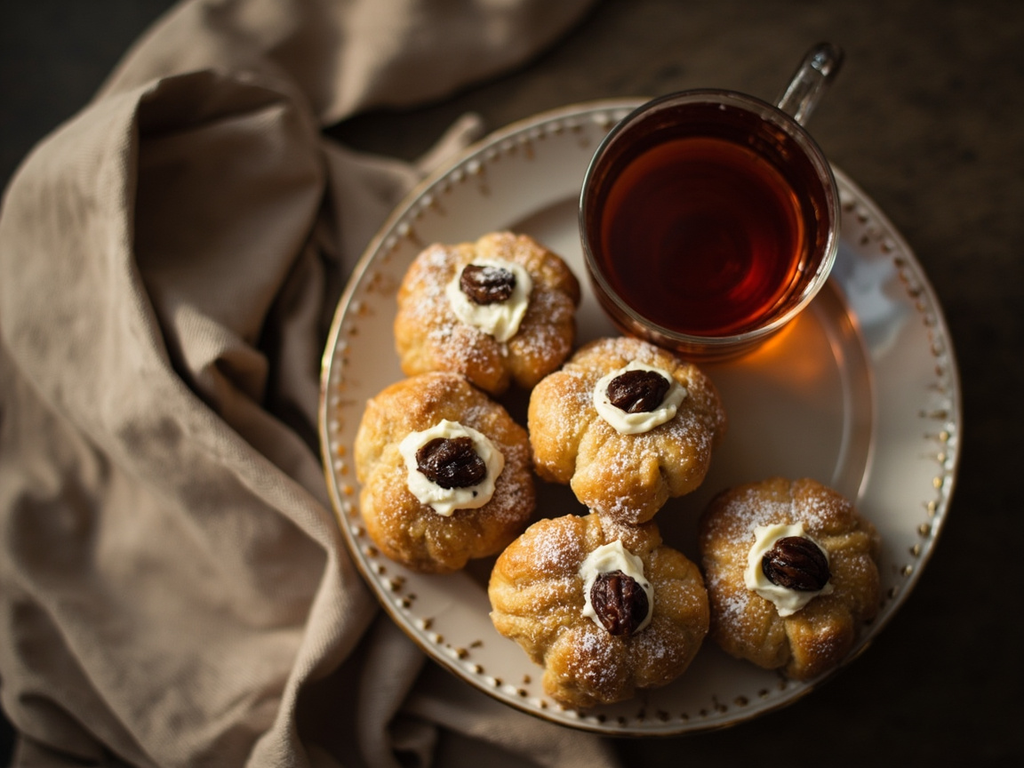
The contemporary twist : In individual versions as small orange-blossom brioches, glazed with sugar, mouna fits into a contemporary Easter brunch.
Sources : Pied-Noir Easter traditions of Oran and Algiers region (mouna) · Albert Camus, *Nuptials* (1939)
Albert Camus · Charactorium