 flip
flipFigs with Honey, Fresh Cheese and Thyme
Figs with Honey, Fresh Cheese and Thyme
Why this dish? Yourcenar spent years in the intimacy of Greco-Roman antiquity to write Memoirs of Hadrian, staying at Hadrian's Villa in Tivoli. This clear dish of figs, honey and cheese — flavors dear to the Mediterranean world she loved — evokes that solar part of her imagination that she invited on reception days.
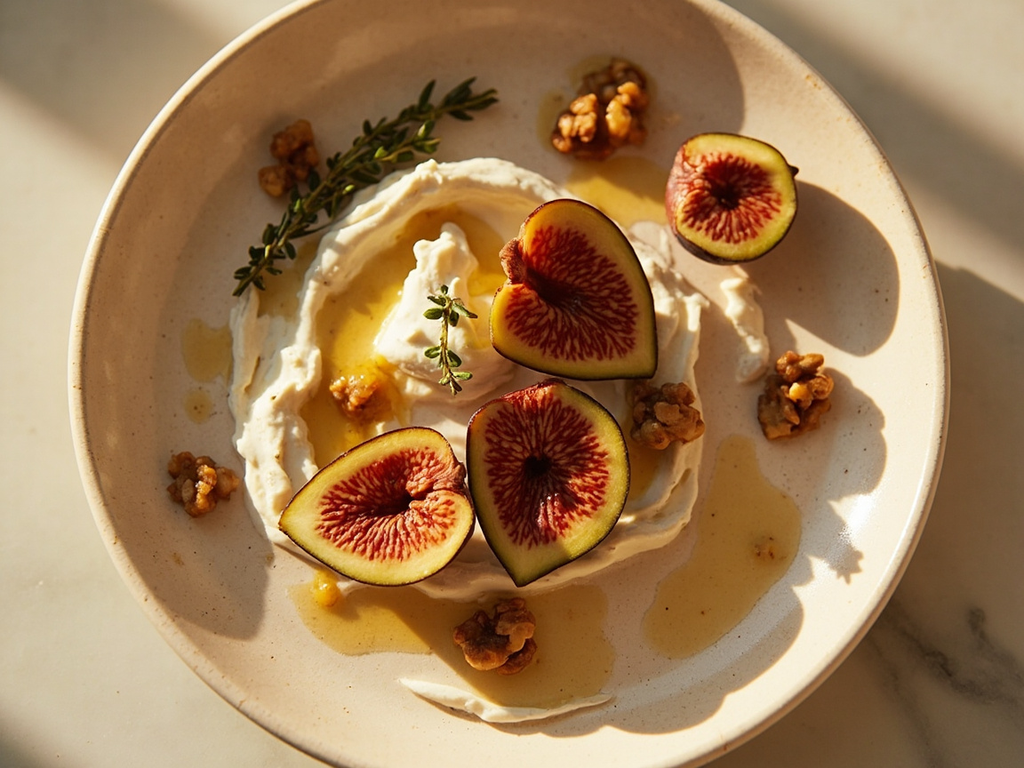
Warm figs drizzled with honey, placed on fresh cheese, perfumed with thyme and a few crushed walnuts. A luminous festive dish, halfway between sweet and savory, a tribute to the Mediterranean of her books.
When I wish to honor a guest, I do not set a banquet: I bring figs, that fruit the ancients considered a gift from the gods, and I marry them with honey and a very simple cheese. This is how, I imagine, they feasted on the terraces of Tivoli, in the time when Hadrian dreamed of his villa. Taste in it the warmth of a South that I have long carried within me, even in my Maine winters. The table does not need to be rich to be noble.
- •Ripe figs — a bowl (central fruit)
- •Honey — a generous spoonful (sweetness and binder)
- •Fresh goat or sheep cheese — a bowlful (creamy freshness)
- •Thyme — a few sprigs (Mediterranean perfume)
- •Walnuts — a handful (crunch)
Figs with Honey, Fresh Cheese and Thyme
Warm figs drizzled with honey, placed on fresh cheese, perfumed with thyme and a few crushed walnuts. A luminous festive dish, halfway between sweet and savory, a tribute to the Mediterranean of her books.
Why this dish? Yourcenar spent years in the intimacy of Greco-Roman antiquity to write Memoirs of Hadrian, staying at Hadrian's Villa in Tivoli. This clear dish of figs, honey and cheese — flavors dear to the Mediterranean world she loved — evokes that solar part of her imagination that she invited on reception days.
When I wish to honor a guest, I do not set a banquet: I bring figs, that fruit the ancients considered a gift from the gods, and I marry them with honey and a very simple cheese. This is how, I imagine, they feasted on the terraces of Tivoli, in the time when Hadrian dreamed of his villa. Taste in it the warmth of a South that I have long carried within me, even in my Maine winters. The table does not need to be rich to be noble.
Ingredients (period version)
- Ripe figs — a bowl (central fruit)
- Honey — a generous spoonful (sweetness and binder)
- Fresh goat or sheep cheese — a bowlful (creamy freshness)
- Thyme — a few sprigs (Mediterranean perfume)
- Walnuts — a handful (crunch)
Ingredients
- Fresh ripe figs — 8 (central fruit)
- Fresh goat cheese — 200 g (creamy base)
- Honey (thyme or acacia) — 3 tbsp (sweetness)
- Fresh thyme — 4 sprigs (perfume)
- Walnut halves — 40 g (crunch)
- Olive oil — 1 drizzle (salty binder)
- Salt, pepper — a pinch (balance)
Method
- Cut the figs into quarters without cutting the base completely, so they open like flowers.
- Spread the fresh cheese on the bottom of the plates, smooth, lightly salt and pepper.
- Place the figs on top, drizzle generously with honey.
- Briefly pass the figs in a hot oven (200 °C) for 4-5 minutes if you prefer them warm and soft.
- Sprinkle with thyme leaves and crushed walnuts, finish with a drizzle of olive oil.
- Serve immediately, warm or at room temperature.
How it was made : Figs, honey and cheese form a triad attested from Greek and Roman tables of antiquity, a world Yourcenar intimately frequented through her writing. In the 20th century, these Mediterranean products remained an accessible evocation of that ancient world, transposed into her personal cuisine.
The contemporary twist : Plate on a light dish, honey drizzled in a spiral and thyme flowers — an 'ancient still life' worthy of a Roman villa fresco.
Marguerite Yourcenar · Charactorium