 flip
flipRoyan-Style Éclade de Moules
Royan-Style Éclade de Moules
Why this dish? Roussel spent his final years in his villa in Royan, on the Atlantic coast, where he composed a large part of his late work. The éclade, this fire of mussels on a plank covered with pine needles, is the convivial celebration of the Charentais coastline that surrounded him.
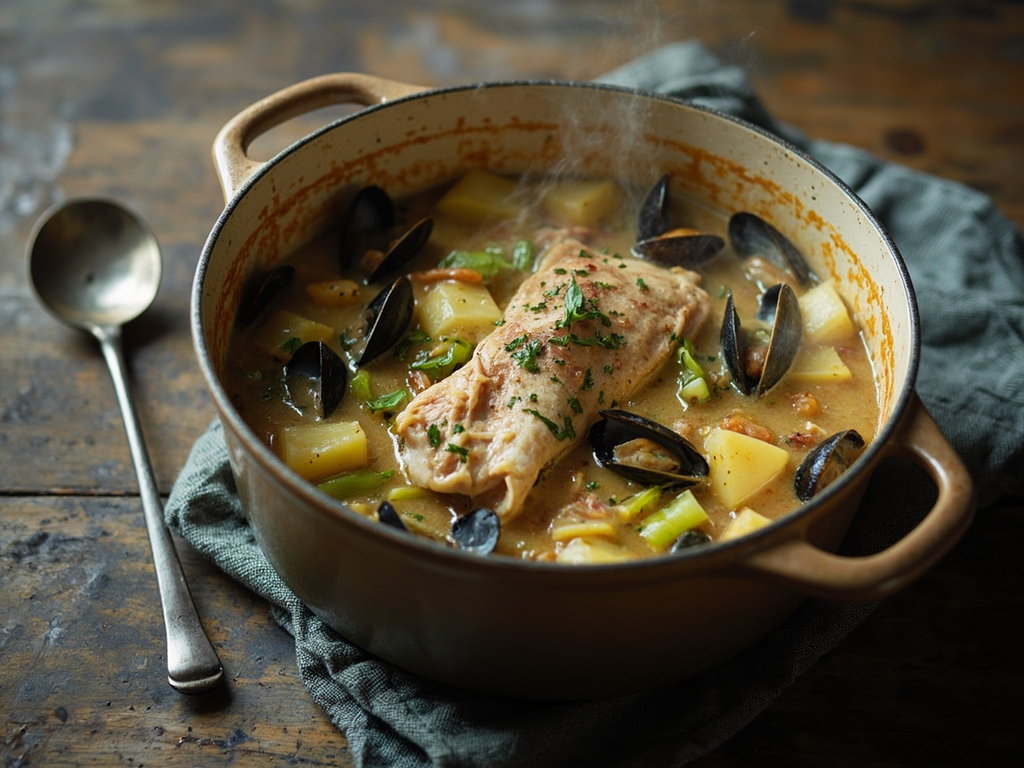
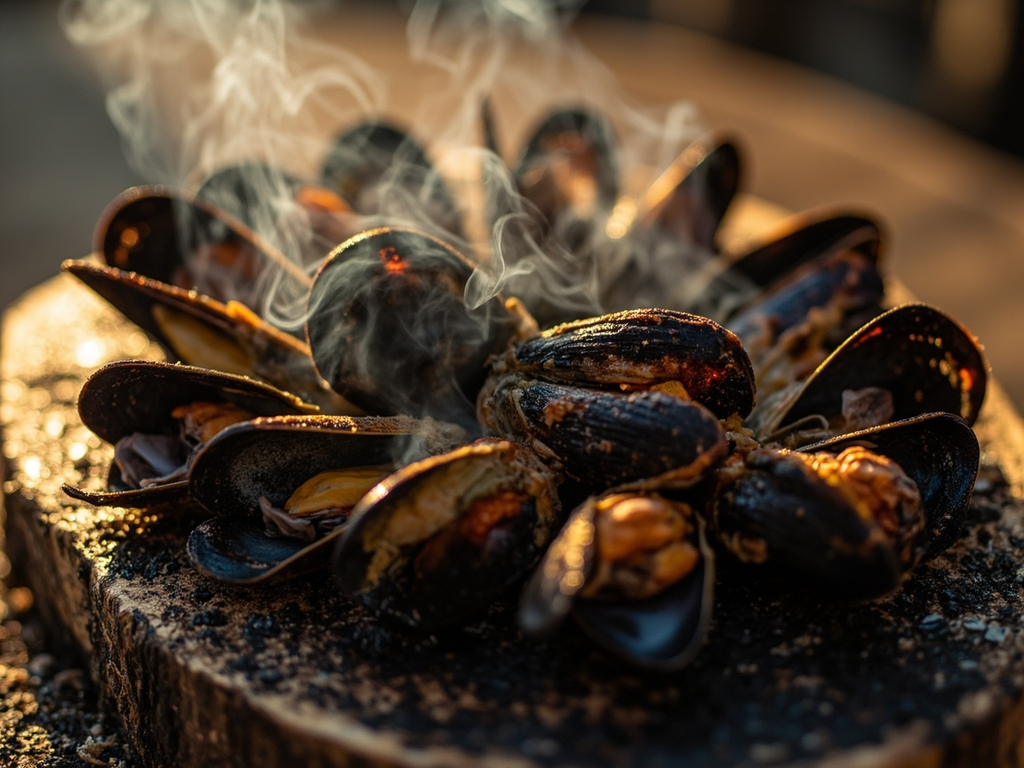
Mussels arranged in a rosette on a wooden plank, covered with pine needles that are set alight: the smoke and flame cook the shellfish in minutes. An outdoor, festive, communal dish.
In Royan, the open sea is never far, and I sometimes forget the orchestra for the crackling of a pine fire. We arrange the mussels point upward, tightly packed like the desks of a quartet, then cover them with dry needles and set them ablaze at once. The flame passes, quick and brief — an allegro movement, no more — and the resinous smoke perfumes the flesh. We eat them piping hot, with bread and butter, fingers blackened: that is a joy no concert hall has ever given me.
- •Bouchot mussels — in abundance (shellfish)
- •Dry maritime pine needles — a good armful (fuel and aroma)
- •Country bread — as needed (accompaniment)
- •Butter — a lump (accompaniment)
Royan-Style Éclade de Moules
Mussels arranged in a rosette on a wooden plank, covered with pine needles that are set alight: the smoke and flame cook the shellfish in minutes. An outdoor, festive, communal dish.
Why this dish? Roussel spent his final years in his villa in Royan, on the Atlantic coast, where he composed a large part of his late work. The éclade, this fire of mussels on a plank covered with pine needles, is the convivial celebration of the Charentais coastline that surrounded him.
In Royan, the open sea is never far, and I sometimes forget the orchestra for the crackling of a pine fire. We arrange the mussels point upward, tightly packed like the desks of a quartet, then cover them with dry needles and set them ablaze at once. The flame passes, quick and brief — an allegro movement, no more — and the resinous smoke perfumes the flesh. We eat them piping hot, with bread and butter, fingers blackened: that is a joy no concert hall has ever given me.
Ingredients (period version)
- Bouchot mussels — in abundance (shellfish)
- Dry maritime pine needles — a good armful (fuel and aroma)
- Country bread — as needed (accompaniment)
- Butter — a lump (accompaniment)
Ingredients
- Bouchot mussels — 2 kg (shellfish)
- Dry pine needles (untreated) — large quantity (fuel and aroma)
- Thick raw wooden plank — 1 (cooking surface)
- Country bread — 1 large loaf (accompaniment)
- Salted butter — 200 g (accompaniment)
Method
- Clean and scrub the mussels, remove the beards.
- On a plank, plant the mussels hinge side up, tightly packed in a rosette (you can secure them with a few nails).
- Cover entirely with a thick layer of dry pine needles.
- Ignite the needles; let them burn for 5 to 7 minutes outdoors, sheltered from the wind.
- When the flame subsides, blow away the ashes or use cardboard; the mussels are open and cooked.
- Enjoy immediately, with bread and salted butter.
How it was made : The éclade (or 'églade') is a documented tradition of the Charentais and Vendéen coastline: fishermen and families cooked mussels directly over a pine needle fire on the beach. This rustic, communal technique uses neither water nor fat — only fire and resin.
The contemporary twist : If an open pine fire is not allowed, you can 'cheat' with a kitchen blowtorch on mussels arranged on a baking sheet, but the resinous smoke remains irreplaceable.
Albert Roussel · Charactorium