 flip
flipCommon Room Filter Coffee
Common Room Filter Coffee
Why this dish? The profile says: Eskin shares coffees during seminars "where the best ideas are often born." In math departments worldwide — Chicago, Princeton, Stanford — the common room coffee machine is the true beating heart: you scribble on a corner of the table, you grab a colleague, you start a collaboration that will last ten years.
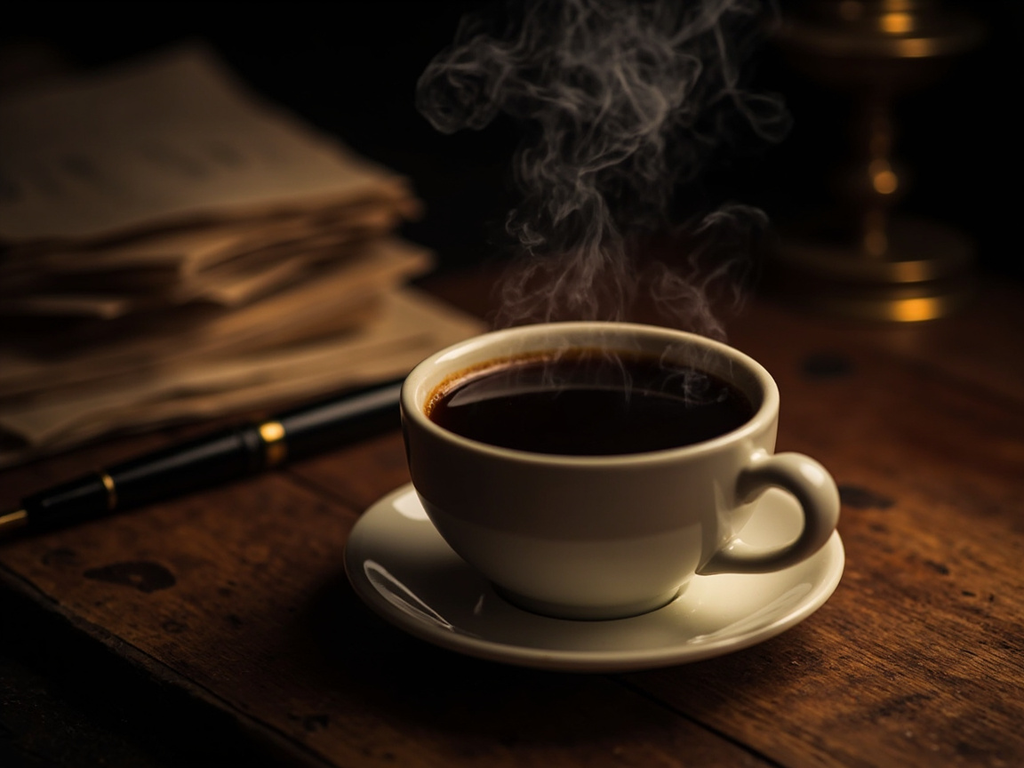
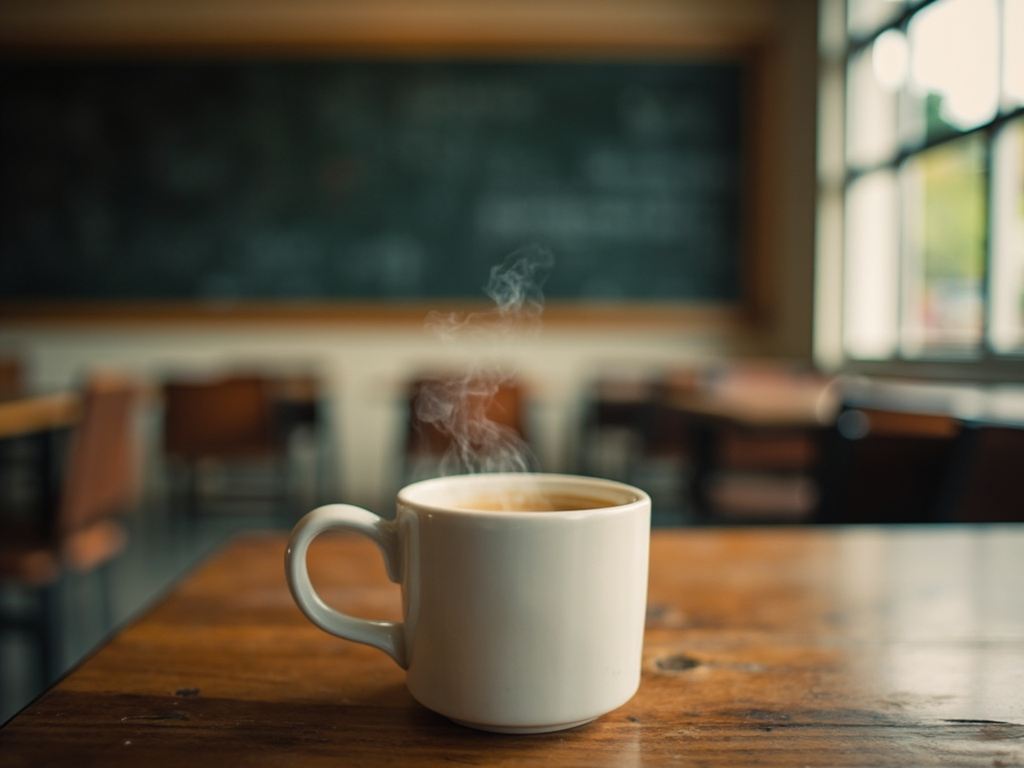
A large black filter coffee, no fuss, served in a carafe or pot, sipped standing in front of a blackboard covered in symbols. The zero degree of gastronomy, but the infinity of thought.
You want to understand how a proof works? First pour yourself a coffee — nothing fancy, just a good black filter in a cup. With Maryam, we spent years on what we ended up calling the magic wand, and I swear most of the breakthroughs happened near the machine, between two cups, when someone let slip a casual remark. A theorem gets scribbled on the blackboard, but it almost always starts in a common room with a cooling cup. Have another cup, I'll explain.
- •Ground coffee (medium roast) — as needed (base)
- •Filtered water — according to carafe (extraction)
Common Room Filter Coffee
A large black filter coffee, no fuss, served in a carafe or pot, sipped standing in front of a blackboard covered in symbols. The zero degree of gastronomy, but the infinity of thought.
Why this dish? The profile says: Eskin shares coffees during seminars "where the best ideas are often born." In math departments worldwide — Chicago, Princeton, Stanford — the common room coffee machine is the true beating heart: you scribble on a corner of the table, you grab a colleague, you start a collaboration that will last ten years.
You want to understand how a proof works? First pour yourself a coffee — nothing fancy, just a good black filter in a cup. With Maryam, we spent years on what we ended up calling the magic wand, and I swear most of the breakthroughs happened near the machine, between two cups, when someone let slip a casual remark. A theorem gets scribbled on the blackboard, but it almost always starts in a common room with a cooling cup. Have another cup, I'll explain.
Ingredients (period version)
- Ground coffee (medium roast) — as needed (base)
- Filtered water — according to carafe (extraction)
Ingredients
- Specialty ground coffee — 60 g per 1 L (base)
- Water at 92–94 °C — 1 L (extraction)
- Milk or cream — optional (soften bitterness)
Method
- Heat water just before boiling (about 93 °C).
- Place ground coffee in a paper filter or filter holder.
- Pour water in two stages: first wet the coffee for 30 seconds (the "bloom"), then slowly add the rest.
- Serve black, in a cup or large mug, and keep the carafe warm for refills.
- Drink standing in front of a blackboard, ideally while discussing an open problem.
How it was made : Coffee has been linked to mathematics since the 18th century: Euler, and later the Budapest school around Erdős, made it a work companion. In modern institutes (IHÉS, IAS Princeton), the institutionalized coffee break is a full-fledged research tool, designed to spark encounters between disciplines.
The contemporary twist : Serve the coffee in a mug printed with a translation surface or a polygonal billiard — a nod to the objects Eskin handles, those imaginary billiard tables where a ball bounces infinitely.
Alex Eskin · Charactorium