 flip
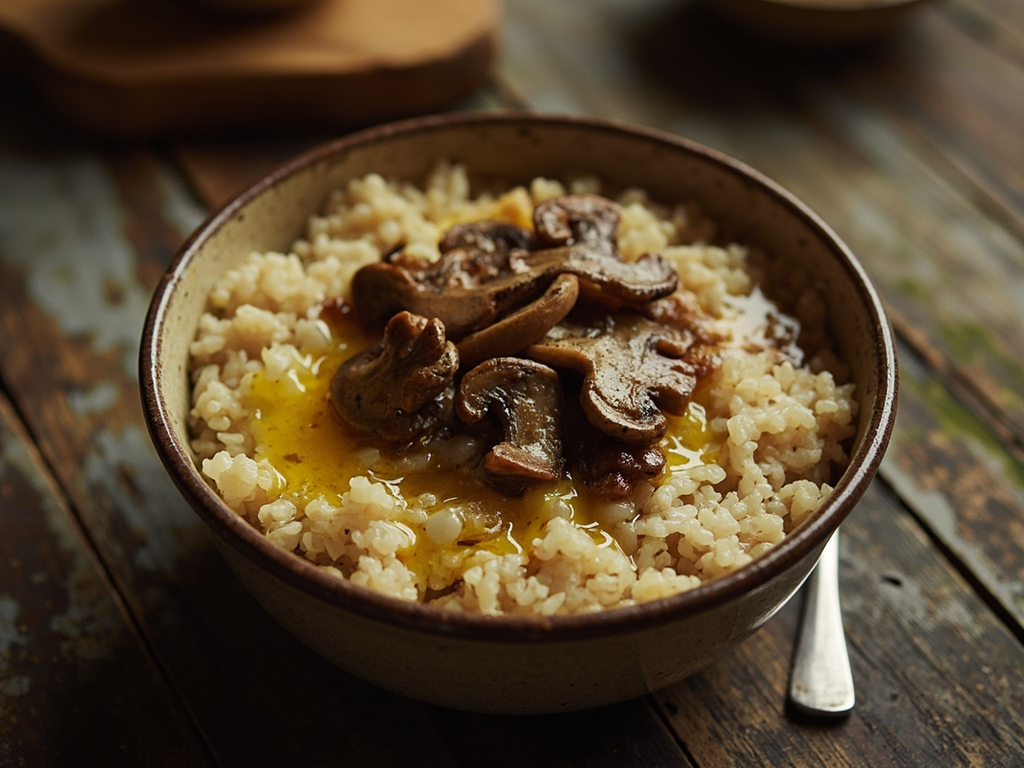
flipGretchka — Buckwheat Kasha with Butter
Gretchka — Buckwheat Kasha with Butter
Why this dish? Eskin was born in Moscow in 1965, in the heart of the Soviet era, before his family emigrated. Gretchka — toasted buckwheat porridge — is the most everyday food in Russia: the go-to breakfast and side dish, the madeleine taste of a Moscow childhood, long before American cafeterias.
Toasted buckwheat grains, plumped in water until tender, bound with a knob of melted butter. Nourishing, earthy, comforting — the ultimate study food that keeps you going when you're working for hours.
When I was little in Moscow, we ate gretchka without even thinking about it — it was just there, like air. You toast the grains, cover them with water, let them swell covered, and above all you don't stir: patience does all the work, exactly like a proof that needs to rest. A big knob of butter at the end, a little salt, and it's a dish that sticks with you all morning. Later, in American cafeterias, I looked for that taste without ever really finding it.
- •Toasted buckwheat (gretchka) — one bowl (base)
- •Water — twice the volume of grains (cooking)
- •Butter — a good knob (binder and flavor)
- •Salt — to taste (seasoning)
Gretchka — Buckwheat Kasha with Butter
Toasted buckwheat grains, plumped in water until tender, bound with a knob of melted butter. Nourishing, earthy, comforting — the ultimate study food that keeps you going when you're working for hours.
Why this dish? Eskin was born in Moscow in 1965, in the heart of the Soviet era, before his family emigrated. Gretchka — toasted buckwheat porridge — is the most everyday food in Russia: the go-to breakfast and side dish, the madeleine taste of a Moscow childhood, long before American cafeterias.
When I was little in Moscow, we ate gretchka without even thinking about it — it was just there, like air. You toast the grains, cover them with water, let them swell covered, and above all you don't stir: patience does all the work, exactly like a proof that needs to rest. A big knob of butter at the end, a little salt, and it's a dish that sticks with you all morning. Later, in American cafeterias, I looked for that taste without ever really finding it.
Ingredients (period version)
- Toasted buckwheat (gretchka) — one bowl (base)
- Water — twice the volume of grains (cooking)
- Butter — a good knob (binder and flavor)
- Salt — to taste (seasoning)
Ingredients
- Hulled toasted buckwheat (kasha) — 200 g (base)
- Water or broth — 400 ml (cooking)
- Butter — 30 g (binder and flavor)
- Button mushrooms or sautéed onion — optional, 100 g (umami)
- Salt, pepper — to taste (seasoning)
Method
- Rinse the buckwheat, then dry it for a few minutes in a hot pan to revive the toastiness (if not already toasted).
- Add salted water or broth, bring to a simmer.
- Cover and cook over very low heat for 15–18 minutes without stirring, until fully absorbed.
- Remove from heat, let swell covered for 5 minutes, then fluff with a fork.
- Fold in the butter and, if desired, sautéed mushrooms or onions to boost umami. Serve hot.
How it was made : Buckwheat has been cultivated in Russia since the Middle Ages; its kasha is among the oldest and most democratic dishes of the Slavic table. Under the USSR, gretchka was a staple of home cooking, sometimes rationed, and remains a strong identity marker today.
The contemporary twist : Serve the gretchka in a bowl with a soft-boiled egg and pan-fried mushrooms — the "brain food" version for a researcher spending the day at the blackboard.
Sources : William Pokhlyobkin, A History of Russian Cuisine (Поваренное искусство и поварские приклады)
Alex Eskin · Charactorium