 flip
flipContinental Soldier's Fire Cake
Continental Soldier's Fire Cake
Why this dish? Before the Treasury, Hamilton was an artillery officer and then Washington's aide-de-camp. During the terrible winter at Valley Forge (1777-1778), the starving army survived on "fire cake": a flour-and-water flatbread cooked on a hot stone. It is the bread of the Revolution he fought for as a soldier.
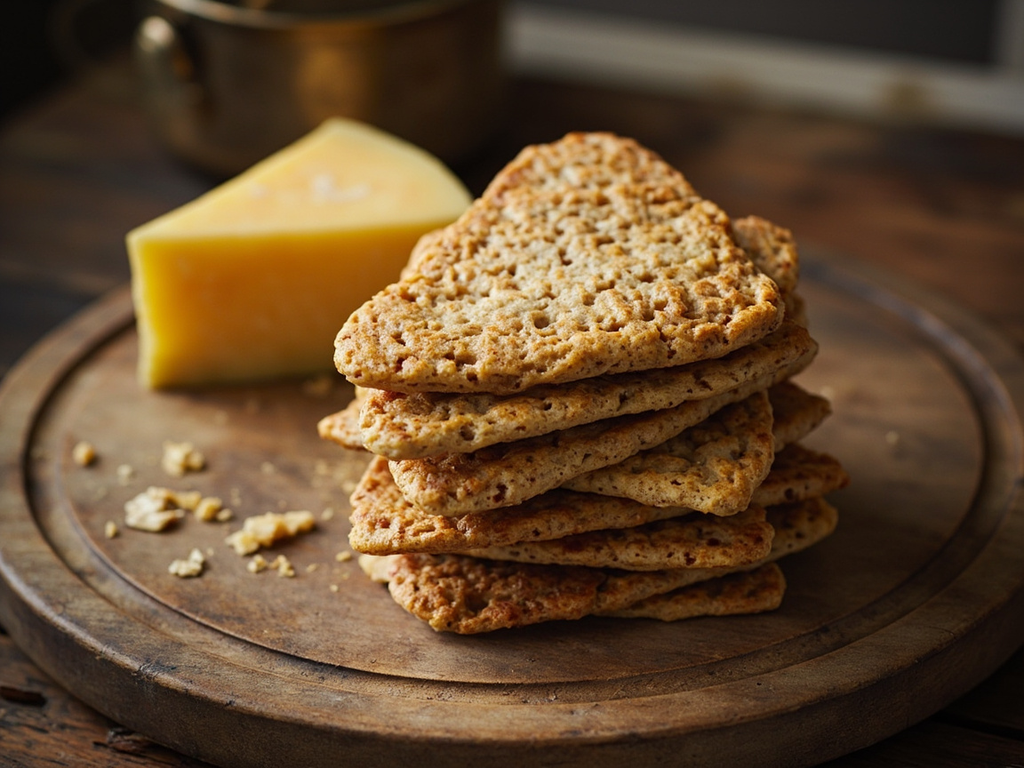
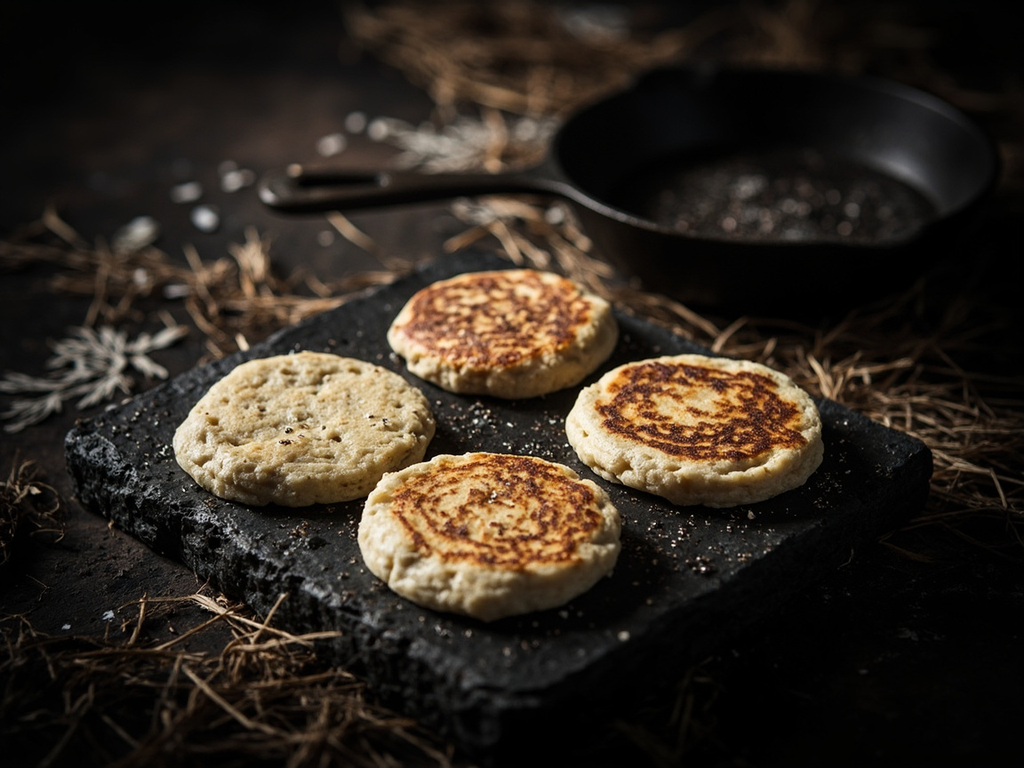
The harshest of recipes: flour, water, and salt, kneaded into a flat cake and cooked directly on a hot stone or griddle before the fire. No leavening, no fat—the survival food of the Continental Army. Taste it to understand what liberty was worth then.
May the fine diners forgive me: this is the bread we ate to build a nation. At Valley Forge, sir, we had no meat, sometimes no salt, no shoes—nothing but flour and stream water. We kneaded that gray dough, threw it on a stone heated in the fire, and called it fire cake. It was hard on the teeth and bitter to the heart. But we ate it as free men, and it is from that misery, believe me, that the Republic was born.
- •Wheat flour (or rye) — what was left (base)
- •Water — as needed (binder)
- •Salt — a pinch, when available (rare seasoning)
Continental Soldier's Fire Cake
The harshest of recipes: flour, water, and salt, kneaded into a flat cake and cooked directly on a hot stone or griddle before the fire. No leavening, no fat—the survival food of the Continental Army. Taste it to understand what liberty was worth then.
Why this dish? Before the Treasury, Hamilton was an artillery officer and then Washington's aide-de-camp. During the terrible winter at Valley Forge (1777-1778), the starving army survived on "fire cake": a flour-and-water flatbread cooked on a hot stone. It is the bread of the Revolution he fought for as a soldier.
May the fine diners forgive me: this is the bread we ate to build a nation. At Valley Forge, sir, we had no meat, sometimes no salt, no shoes—nothing but flour and stream water. We kneaded that gray dough, threw it on a stone heated in the fire, and called it fire cake. It was hard on the teeth and bitter to the heart. But we ate it as free men, and it is from that misery, believe me, that the Republic was born.
Ingredients (period version)
- Wheat flour (or rye) — what was left (base)
- Water — as needed (binder)
- Salt — a pinch, when available (rare seasoning)
Ingredients
- Wheat flour (or half rye) — 250 g (base)
- Water — 150 ml approx. (binder)
- Salt — 1 tsp (seasoning)
Method
- Mix the flour and salt, add water gradually to form a firm, non-sticky dough.
- Knead briefly, then flatten into cakes about 1 cm thick.
- Cook on a pizza stone, cast-iron griddle, or very hot pan, dry, without any fat.
- Let brown and harden on both sides (the cake should sound hollow and remain dense).
- Eat hot—and imagine the cold of Valley Forge to appreciate the contrast.
- To soften (historical inauthenticity): spread with a little butter or molasses.
How it was made : Fire cake is attested in the journals of Valley Forge soldiers, notably by surgeon Albigence Waldo, who described in 1777 this flour-and-water cake cooked on the fire as the desperate daily fare of starving troops. Without fat or yeast, it kept and traveled well—hence its function as a field ration.
The contemporary twist : Present it on a slate with a label reading "Valley Forge, Winter 1777": a "memory ration" that tells the price of independence.
Sources : Journal d'Albigence Waldo, chirurgien à Valley Forge, 1777 · Récits de l'armée continentale, hiver 1777-1778
Alexander Hamilton · Charactorium