 flip
flipLángos du marché — Garlic Fried Flatbread
Lángos du marché — Garlic Fried Flatbread
Why this dish? Before glory and ennoblement, young Sándor Kellner (his real name) was a boy of the plain and an apprentice journalist in Budapest, who knew the markets and their smells of frying. Lángos, a golden fried flatbread sold at stalls, is the popular taste of that Hungary he carried within him.
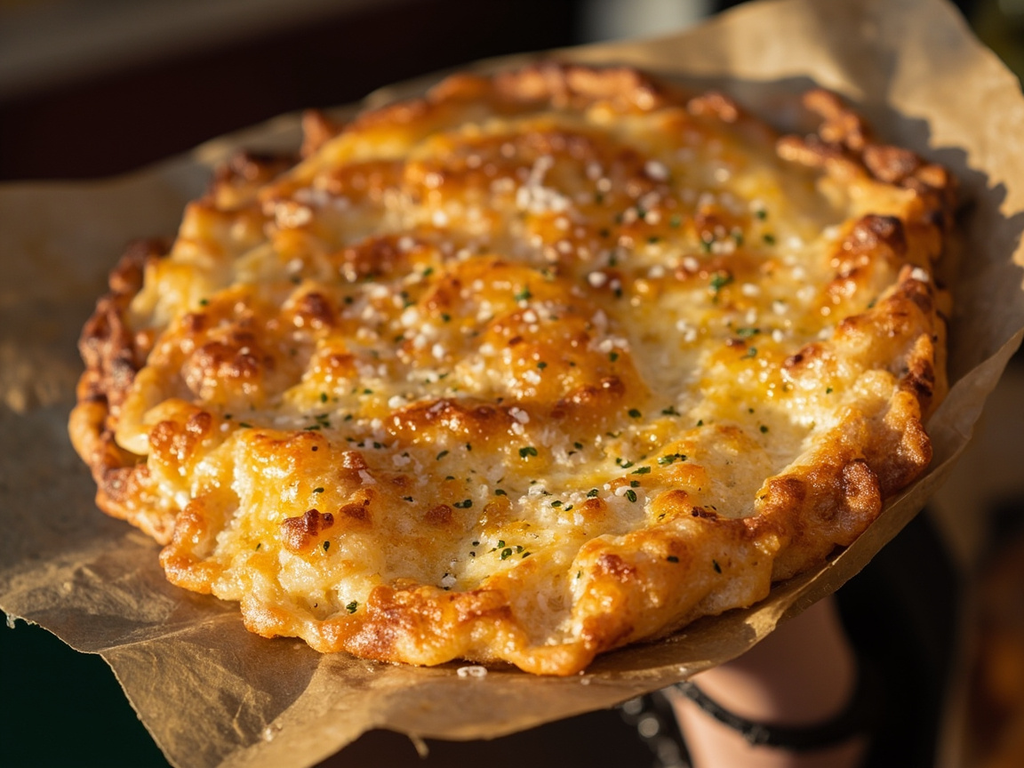
A yeast dough flatbread, fried until puffed and golden, rubbed with raw garlic and salted. Crispy outside, soft inside: the quintessential Hungarian street snack.
They call me Sir Alexander now, but show me a sizzling lángos and I become the kid from the plain again. At the fair we ate them burning hot, we burned our fingers, we rubbed the flatbread with a raw garlic clove and there, a little salt—nothing more, and it was a feast. The dough must rise properly, otherwise it stays flat and sad; a good dough breathes, like a scene that comes to life.
- •Flour — for the batch (base)
- •Sourdough or yeast — a little (leavening)
- •Warm water or milk — as needed (hydration)
- •Lard for frying — plenty (cooking)
- •Raw garlic — a few cloves (aromatic rub)
- •Salt — a pinch (seasoning)
Lángos du marché — Garlic Fried Flatbread
A yeast dough flatbread, fried until puffed and golden, rubbed with raw garlic and salted. Crispy outside, soft inside: the quintessential Hungarian street snack.
Why this dish? Before glory and ennoblement, young Sándor Kellner (his real name) was a boy of the plain and an apprentice journalist in Budapest, who knew the markets and their smells of frying. Lángos, a golden fried flatbread sold at stalls, is the popular taste of that Hungary he carried within him.
They call me Sir Alexander now, but show me a sizzling lángos and I become the kid from the plain again. At the fair we ate them burning hot, we burned our fingers, we rubbed the flatbread with a raw garlic clove and there, a little salt—nothing more, and it was a feast. The dough must rise properly, otherwise it stays flat and sad; a good dough breathes, like a scene that comes to life.
Ingredients (period version)
- Flour — for the batch (base)
- Sourdough or yeast — a little (leavening)
- Warm water or milk — as needed (hydration)
- Lard for frying — plenty (cooking)
- Raw garlic — a few cloves (aromatic rub)
- Salt — a pinch (seasoning)
Ingredients
- All-purpose flour — 300 g (base)
- Fresh yeast — 15 g (leavening)
- Warm milk — 180 ml (hydration)
- Neutral oil (or lard) for frying — frying bath (cooking)
- Garlic — 2 cloves (rub)
- Salt — to taste (finishing)
- Sour cream + grated cheese (optional) — to taste (modern topping)
Method
- Dissolve the yeast in warm milk, knead with the flour and a pinch of salt until a soft dough forms; let rise for 1 hour.
- Divide into balls, stretch each into a thin flatbread in the palms of your hands.
- Fry in hot oil (180°C), one flatbread at a time, spooning oil over it until it puffs and turns golden on both sides.
- Drain on paper, rub immediately with raw garlic and sprinkle with salt.
- Enjoy piping hot; modern style: spread with sour cream and top with grated cheese.
How it was made : Lángos was originally baked in the oven, by the flame ('láng' means flame), on the edge of the hearth using leftover bread dough. The fried version, now the one found at markets and baths, became a national street food in the 20th century.
The contemporary twist : Served in mini format, folded like a cinema ticket, garlic-cream-cheese, for a screening buffet.
Sources : George Lang, The Cuisine of Hungary (1971)
Alexander Korda · Charactorium