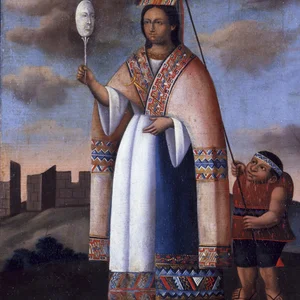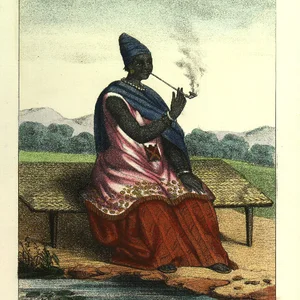

The last queen (linguère) of the Waalo, a Wolof kingdom in Senegal, Ndate Yalla Mbodj fiercely resisted French expansion in the 1840s–1850s. An iconic figure of African pre-colonial resistance, she is celebrated in Wolof and Toucouleur oral traditions.
Ndate Yalla Mbodj
Ndate Yalla Mbodj
Waalo
8 min read
Frequently asked questions
Famous Quotes
« "I would rather die than see my country fall into the hands of foreigners." (words attributed by Wolof oral tradition, unverified)»
Key Facts
- Around 1810: probable birth into the royal family of the Waalo, according to oral traditions
- 1846: becomes linguère (queen) of the Waalo following the death of her sister Ndjeumbeut Mbodj
- 1847–1855: leads active resistance against French military incursions under Governor Faidherbe
- 1855: defeat of the Waalo by French forces and annexation of the kingdom — Ndate Yalla is forced into exile
- Around 1860: death in exile, according to the oral traditions of the Wolof people
Works & Achievements
For nearly ten years, Ndate Yalla Mbodj organized and led the military and diplomatic resistance of the Waalo kingdom against French annexation, refusing to sign any treaty of cession. This stands as one of the longest and most determined examples of African precolonial resistance.
Ndate Yalla sought to build a coalition of African kingdoms against French expansion, negotiating with El Hadj Umar Tall and other rulers of the region. This diplomatic effort reflects a political vision that extended well beyond the borders of Waalo alone.
After the fall of Waalo, Ndate Yalla refused any reconciliation with the colonial authorities and continued from exile to maintain a resistance network, rejecting the political erasure the French sought to impose on her.
Though not her own personal works, the epic songs composed by Waalo griots in her honor represent her primary cultural legacy; they are still performed in Senegal today and continue to keep her memory alive in the national consciousness.
Anecdotes
When the French governor of Saint-Louis sent an emissary demanding that she cease all resistance and recognize colonial authority, Ndate Yalla Mbodj is said to have replied with pride: 'I would rather die standing than live on my knees.' This phrase, passed down by Wolof griots, has become one of the enduring symbols of pre-colonial African resistance.
In 1847, during a French incursion into the lands of Waalo, Ndate Yalla personally rode at the head of her warriors to drive back the colonial soldiers. Her presence on the battlefield — rare for a sovereign of her time — earned her an extraordinary reputation for courage among her people and even among her French adversaries.
Ndate Yalla Mbodj maintained direct correspondence with the French governors in Saint-Louis. Her letters, dictated to Arabic-speaking scribes, blended firm diplomacy with veiled threats, reflecting a remarkable command of political strategy. French colonial archives preserve several traces of these exchanges.
After the military defeat of Waalo at the hands of Governor Faidherbe's troops in 1855, Ndate Yalla categorically refused to pledge allegiance to France. Forced into exile, she continued her struggle from neighboring kingdoms, seeking alliances to reclaim her throne until her death.
The griots of Waalo still sing the 'wóy' (epic chant) of Ndate Yalla today, in which she is described as a lioness protecting her cubs. These oral songs, passed down from generation to generation, form the primary living memory of her reign and her resistance.
Primary Sources
The griots celebrate the linguère as one who 'never bowed her head before the stranger', recalling her rallying speeches to her warriors on the banks of the Senegal River before battles against the French tirailleurs.
French administrative reports repeatedly mention the linguère's persistent refusals to sign protectorate treaties, describing her opposition as 'remarkable obstinacy for a woman of her rank'.
Faidherbe recounts in his memoirs the unexpected resistance of Waalo under the leadership of its queen, noting that the conquest of this small kingdom had required more forces than anticipated due to the determination of its sovereign.
Oral testimonies gathered by travelers in the Senegal River valley describe Ndate Yalla leaving her palace in Nder with her head held high, refusing to take the royal insignia with her so as not to leave them in French hands.
Key Places
The principal city of the Kingdom of Waalo and residence of Ndate Yalla Mbodj. It was here that war councils were held against the French invasion before the city was destroyed by Faidherbe in 1855.
An island city founded by the French at the mouth of the Senegal River; seat of the colonial government and launching point for military expeditions against the Waalo, less than 100 km from Nder.
The vital artery of the Kingdom of Waalo, which the French sought to control in order to open a trade route toward Sudan. Ndate Yalla defended its banks against colonial incursions.
A fortified town in the Waalo on the Senegal River, the site of several clashes between Wolof warriors and French soldiers during the years 1847–1855.
Neighboring kingdoms where Ndate Yalla took refuge after her exile in 1855, seeking alliances to reclaim the Waalo — a goal she never achieved.
Typical Objects

Ceremonial seat reserved for the sovereign of Waalo, adorned with Wolof geometric motifs and royal symbols. It represented the supreme authority of the linguère over the kingdom.

A formal garment dyed in deep indigo blue and embroidered with gold thread, worn by Ndate Yalla during royal audiences and political ceremonies.

A royal adornment passed from mother to daughter through the line of Waalo's linguères; a symbol of matrilineal descent and female power in Wolof society.

An emblematic weapon of Waalo's military leaders; the linguère held one as an honorary symbol of her authority to command armies in times of threat.

A ceremonial vessel used during court rituals and libations offered to ancestors; both an everyday and sacred object in Wolof palace life.

Cavalry was a central element of Waalo's military power; oral traditions portray Ndate Yalla as a skilled horsewoman who commanded her troops on horseback.

A wooden board on which Muslim scholars wrote Quranic verses; present at the court of Waalo, which was influenced by Islam, it was used by the queen's religious advisors.
School Curriculum
Vocabulary & Tags
Key Vocabulary
Tags
Daily Life
Morning
Ndate Yalla begins her day with ritual ablutions, then receives reports from her advisors (diawrigne) on the kingdom's military and commercial situation. The morning royal audiences give village chiefs the opportunity to pay homage to her and bring their disputes before her.
Afternoon
The afternoon is devoted to war councils and diplomatic negotiations, particularly with French emissaries from Saint-Louis. The linguère also oversees the royal granaries and the preparations of the warriors (tyéddo) for the defense of the territory.
Evening
In the evening, the court gathers around fires to hear griots recite the royal genealogies and the exploits of the ancestors. Ndate Yalla grants private audiences to her closest advisors and to representatives of Islam, whose spiritual counsel she held in high regard.
Food
The diet at the Waalo court is based on millet (sorghum), black-eyed peas, and dried or smoked fish from the Senegal River. Royal meals include thiéboudienne (rice and fish), the ancestor of today's Senegalese national dish, served with vegetables and spiced sauces.
Clothing
Ndate Yalla wears richly woven boubous dyed with indigo or saffron and embroidered with Wolof geometric patterns. She covers her head with a large scarf tied in a tiara style, and adorns herself with carnelian, amber, and gold necklaces — signs of her royal rank and matrilineal lineage.
Housing
The linguère resides in a palace of banco (rammed earth) huts with thatched roofs, surrounded by a clay enclosure. The rooms are airy and decorated with woven mats; a central ceremonial space hosts royal audiences in the shade of a large kapok tree.
Historical Timeline
Period Vocabulary
Visual Style
Portrait royal dans une palette chaude et sahélienne — indigo profond, terre cuite, safran et or — mêlant réalisme documentaire du XIXe siècle et traditions artistiques de la cour wolof.
Sound Ambience
Ambiance sonore de la cour royale du Waalo au milieu du XIXe siècle : percussions cérémonielles, kora, bruits du fleuve Sénégal et récitations épiques des griots.
Liens externes & ressources
Références
Œuvres
Résistance armée au traité de protectorat français (1847-1855)
1847-1855
Alliance politique avec les chefs toucouleurs contre la France
Vers 1850-1854
Refus de l'exil intérieur et poursuite de la résistance depuis le Cayor
1855-vers 1860
Héritage oral : les chants épiques (wóy) en wolof
XIXe siècle — tradition vivante