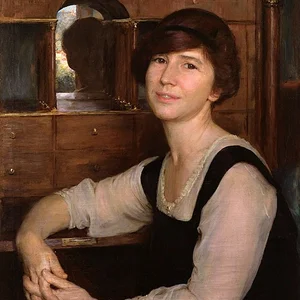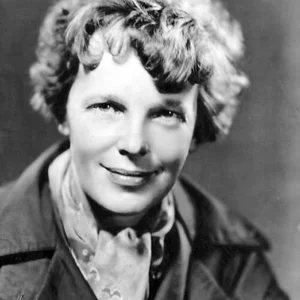

A pioneering American aviator of the 20th century, Amelia Earhart made history in aviation by becoming the first woman to cross the Atlantic by plane in 1928. She disappeared in 1937 during an attempt to circumnavigate the globe along the equator, becoming a legendary figure in the history of aerial exploration.
Frequently asked questions
Famous Quotes
« The most effective way to do it, is to do it.»
« Courage is the price that Life exacts for granting peace.»
Key Facts
- 1928: First woman to cross the Atlantic by plane, as a passenger aboard the Friendship
- 1932: First woman to fly solo across the Atlantic Ocean
- 1935: First solo flight from Honolulu to California across the Pacific Ocean
- 1937: Disappeared on July 2nd during an attempted equatorial circumnavigation with Fred Noonan
- 1939: Officially declared dead on January 5th
Works & Achievements
Amelia Earhart became the first woman to cross the North Atlantic by plane as a passenger, then as a pilot in 1932. This achievement marked a major turning point in aviation history and established her international reputation as a pioneering aviator.
She set a world altitude record for women pilots, reaching 4,267 meters. This technical feat demonstrated women's capabilities in professional aviation and pushed the boundaries of aeronautical technology of the era.
Amelia Earhart attempted an aerial circumnavigation along the equator with her navigator Fred Noonan. Her mysterious disappearance during this expedition over the Pacific Ocean became one of the greatest mysteries in aviation history.
She founded this organization of women aviators to support women in aviation and promote professional equality. The Ninety-Nines became a lasting institution for the recognition of women pilots.
Amelia Earhart published several books including '20 Hrs. 40 Min.' and 'The Fun of It' recounting her flying experiences. These writings inspired generations and popularized aviation among the American public.
She actively campaigned for the recognition of women pilots' professional capabilities and against discrimination in the aviation sector. Her commitment helped shift attitudes regarding the role of women in aviation.
Anecdotes
In 1928, at age 30, Amelia Earhart became the first woman to cross the Atlantic by plane, although she was not the pilot on that historic flight. She traveled as a passenger aboard the Fokker Trimotor "Friendship", but the experience left a deep impression on her and strengthened her passion for aviation.
In 1932, four years after the Atlantic crossing, Amelia became the first woman to cross the Atlantic solo in her small Lockheed Vega aircraft. This spectacular flight lasted approximately 15 hours and she landed in Ireland, cementing her reputation as a pioneer of world aviation.
Amelia Earhart set numerous world aviation records throughout the 1930s, including women's speed records and altitude records for female pilots. These successive achievements made her an international celebrity and a source of inspiration for young girls aspiring to careers in science and technology.
In 1937, at the age of 39, Amelia undertook her final great challenge: flying around the world along the equator with her navigator Fred Noonan. The plane mysteriously disappeared over the Pacific Ocean near Howland Island, creating one of the greatest mysteries in aviation history, one that still fascinates historians today.
Before her career as an aviator, Amelia held several varied jobs: truck driver, mechanic, photographer, and car salesperson. This breadth of experience revealed her bold personality and her refusal to conform to the limited expectations placed on women of her era.
Primary Sources
I was just a passenger. After all, I was the only woman. It seemed little short of a miracle that I was permitted to go at all.
Women must try to do things as men have tried. When they fail, their failure must be but a challenge to others.
We are running north and south. The line of position of 157-337 is a line we must stay on. We have been unable to locate the Line Islands.
We are on the line north and south. We are running on line N-S. We are running north and south.
Key Places
Amelia Earhart's hometown, where she was born on July 24, 1897. Her childhood home, now a museum, bears witness to her early years in Kansas.
A major hub of American aviation where Amelia Earhart developed her passion for flying and earned her first pilot's licenses in the 1920s.
The departure point of Amelia Earhart's historic transatlantic flight as a passenger on June 17, 1928, marking the beginning of her international fame.
A tiny atoll in the central Pacific where Amelia Earhart disappeared on July 2, 1937 during her attempt to circumnavigate the globe along the equator, becoming one of history's enduring mysteries.
The region of the 1928 transatlantic flight connecting Newfoundland to Galway, Ireland, a flight that established Earhart as a pioneer of women's aviation.
The airfield from which Amelia Earhart took off in 1937 for her final attempt to circumnavigate the globe with her navigator Fred Noonan.
Typical Objects
Twin-engine plane used by Amelia Earhart for her 1937 around-the-world attempt. This modern, high-performance aircraft represents the technological advances in aviation during the interwar period and disappeared along with the pilot over the Pacific Ocean.

Protective garment worn by aviation pioneers, including Amelia Earhart. This thick leather suit was essential for enduring the cold at altitude and the harsh conditions of the earliest international flights.
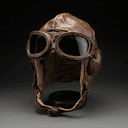
Iconic equipment worn by pilots of the 1930s, the leather helmet with its distinctive flight goggles symbolizes the iconic image of Amelia Earhart and the pioneers of aviation.
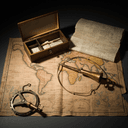
Essential tools for long-haul aviators of the era, flight charts and instruments such as the altimeter and compass allowed pilots like Earhart to navigate intercontinental distances.

An indispensable accessory for navigation calculations on long-distance flights. Chronometric precision was crucial for interwar aviators navigating without modern electronic aids.
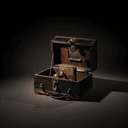
Communication device allowing the pilot to stay in contact with ground stations. The radio aboard Earhart's Electra, though malfunctioning during her final flight, represents the aerial communication technology of the era.
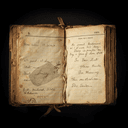
Navigation notebook in which pilots recorded their observations, positions, and flight conditions. These historical documents bear witness to the rigorous methods of 20th-century aerial explorers like Amelia Earhart.
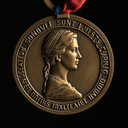
Honorary distinctions attesting to Amelia Earhart's achievements, most notably her 1928 transatlantic crossing. These awards symbolize her status as a pioneer and her legendary impact on world aviation.
School Curriculum
Vocabulary & Tags
Key Vocabulary
Tags
Mouvement
Daily Life
Morning
Amelia rises early to check her flight instruments and review weather conditions. She has a light breakfast before heading to the hangar or airfield, often dressed in her practical flight suit.
Afternoon
The afternoon is devoted to test flights, aircraft maintenance, or meetings with her mechanics and co-pilots. She may also work on planning her next record attempts, analyzing flight paths and fuel reserves.
Evening
In the evenings, Amelia often relaxes by reading technical reports or writing articles for newspapers and magazines. She attends professional or social dinners in aviation circles, where she is highly respected.
Food
Her diet is typical of the American upper-middle class in the 1930s: meats, vegetables, white bread, and fruit. During flights, she consumes light, energy-dense rations to stay alert.
Clothing
Amelia wears leather flight suits, practical trousers and shirts, long before this was common for women. In public, she adopts more conventional 1930s attire, while remaining understated and functional.
Housing
She lives in a comfortable middle-class home in Los Angeles, close to the airfields. Her interior reflects her status as a prestigious aviator, with a technical library and mementos from her aerial explorations.
Historical Timeline
Period Vocabulary
Visual Style
Un style Art Déco géométrique et dynamique inspiré des années 1930, combinant les codes visuels de l'aviation pionnière avec une esthétique d'affiche de voyage des années folles. L'ambiance mêle le réalisme des tons sépia aux reflets métalliques, créant une atmosphère héroïque et légendaire.
Sound Ambience
Une ambiance sonore immersive du cockpit d'un avion des années 1930, mêlant le rugissement des moteurs d'époque, les crépitements des communications radio, et les bruits mécaniques caractéristiques d'une cabine de pilotage pionnière, évoquant les défis et la solitude de l'exploration aérienne transocéanique.
Liens externes & ressources
Références
Œuvres
Traversée de l'Atlantique Nord en avion
1928
Record d'altitude féminin en avion
1931
Tour du monde à l'équateur
1937
Fondation de l'association The Ninety-Nines
1929
Ouvrages autobiographiques et de vulgarisation
1928-1937
Advocacy pour les droits des femmes dans l'aviation
1930-1937