 flip
flipDresil, Sweet Rice for Special Days
Dresil, Sweet Rice for Special Days
Why this dish? In the Buddhist borderlands where Alexandra stayed, this sweet buttered rice was prepared for the Tibetan New Year (Losar) and placed as an offering on altars — a festive sweetness she may have seen shared in the monasteries of Sikkim and Tibet.
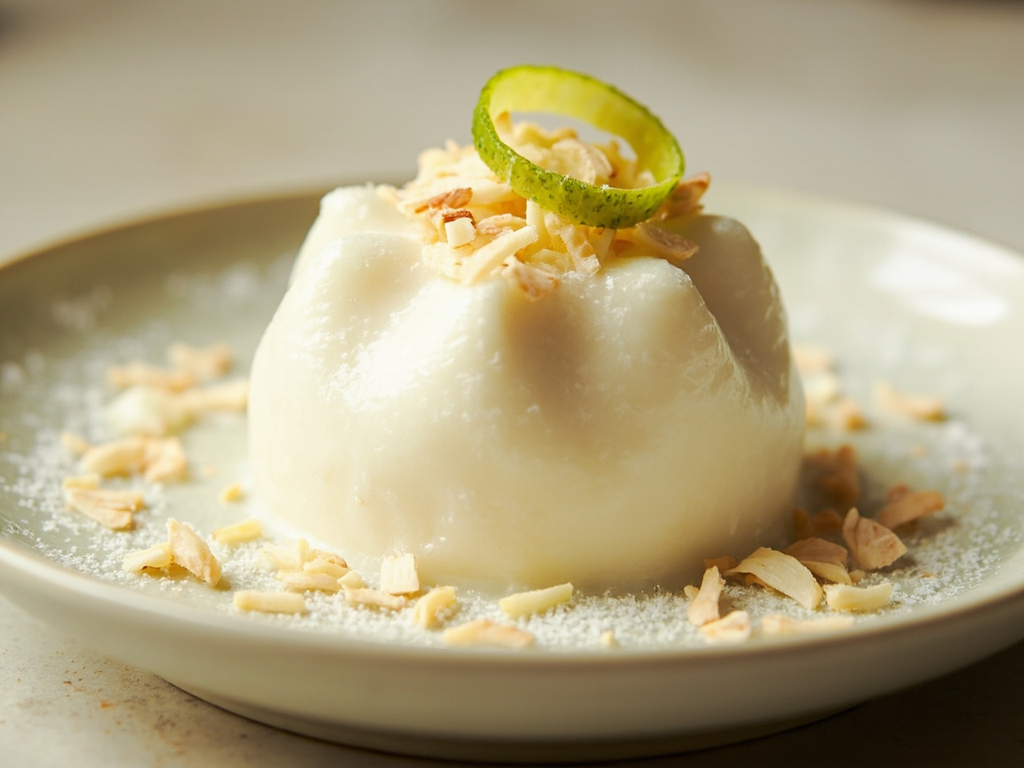
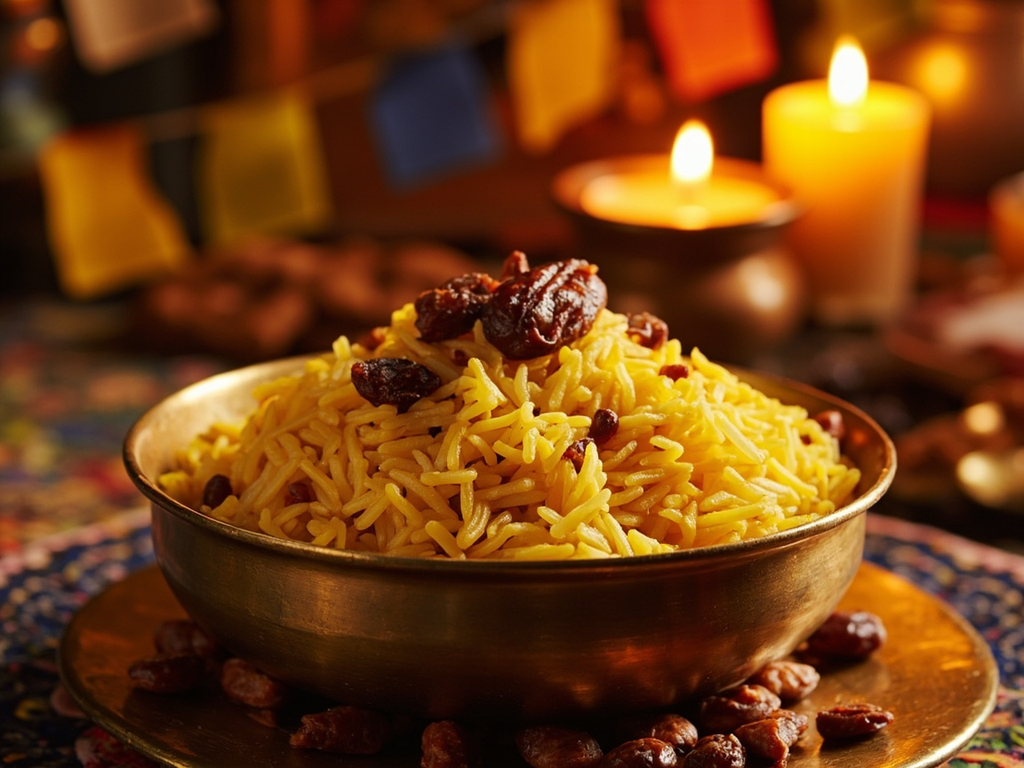
A sweet, buttery, fragrant rice, sweetened and garnished with dried fruits, served during major festivals and offered as a tribute. A rare sweet touch in a cuisine dominated by savory, it marks sacred days and celebrations.
In a world of salty tea and barley flour, here is the only true sweetness I tasted up there. For New Year, one cooks the rice, binds it with melted butter and sugar, tosses in raisins and tiny fruits, and places a bowl on the altar before tasting it oneself. It is not a dessert in the sense we mean in Paris, but a dish of rejoicing, offered to the divinities as much as to the guests. I remember it as a festival of light in the heart of the Tibetan winter.
- •Rice — one measure (base)
- •Melted yak butter — generously (richness)
- •Sugar or molasses — to taste (sweetness)
- •Raisins — a handful (garnish)
- •Droma (small sweet roots) or dates — a few (sweet garnish)
Dresil, Sweet Rice for Special Days
A sweet, buttery, fragrant rice, sweetened and garnished with dried fruits, served during major festivals and offered as a tribute. A rare sweet touch in a cuisine dominated by savory, it marks sacred days and celebrations.
Why this dish? In the Buddhist borderlands where Alexandra stayed, this sweet buttered rice was prepared for the Tibetan New Year (Losar) and placed as an offering on altars — a festive sweetness she may have seen shared in the monasteries of Sikkim and Tibet.
In a world of salty tea and barley flour, here is the only true sweetness I tasted up there. For New Year, one cooks the rice, binds it with melted butter and sugar, tosses in raisins and tiny fruits, and places a bowl on the altar before tasting it oneself. It is not a dessert in the sense we mean in Paris, but a dish of rejoicing, offered to the divinities as much as to the guests. I remember it as a festival of light in the heart of the Tibetan winter.
Ingredients (period version)
- Rice — one measure (base)
- Melted yak butter — generously (richness)
- Sugar or molasses — to taste (sweetness)
- Raisins — a handful (garnish)
- Droma (small sweet roots) or dates — a few (sweet garnish)
Ingredients
- Basmati or short-grain rice — 200 g (base)
- Butter — 40 g (richness)
- Sugar — 3 tbsp (sweetness)
- Raisins — 50 g (garnish)
- Dates or dried apricots — 6, chopped (garnish)
- A pinch of saffron (optional) — 1 pinch (flavor and color)
Method
- Cook the rice in water until tender, then drain.
- Melt the butter in a saucepan, add the raisins and dates and let them plump for 2 minutes.
- Add the rice and sugar (and saffron), gently mix over low heat to coat well.
- Mound into a bowl and serve warm, during a festival or a shared meal.
How it was made : Traditional dresil was perfumed with droma, a small sweet root harvested on the plateau, unavailable outside Tibet. It was prepared for Losar (Tibetan New Year) and ceremonies, where a portion was offered on the family altar before being consumed. Sugar, imported and costly, made it a luxury reserved for special days.
The contemporary twist : Served in small verrines sprinkled with saffron and pistachios, this Himalayan sweet rice makes an original festive dessert, halfway between rice pudding and Central Asian sweet pilaf.
Sources : Rinjing Dorje, Food in Tibetan Life, Prospect Books, 1985
Alexandra David-Néel · Charactorium