 flip
flipRose Water Turkish Delight
Rose Water Turkish Delight
Why this dish? In 1852, Gautier stayed in Constantinople and produced a travel book full of wonder. There he discovered the Turkish sweets offered to visitors with coffee—a gesture of hospitality that enchanted him.
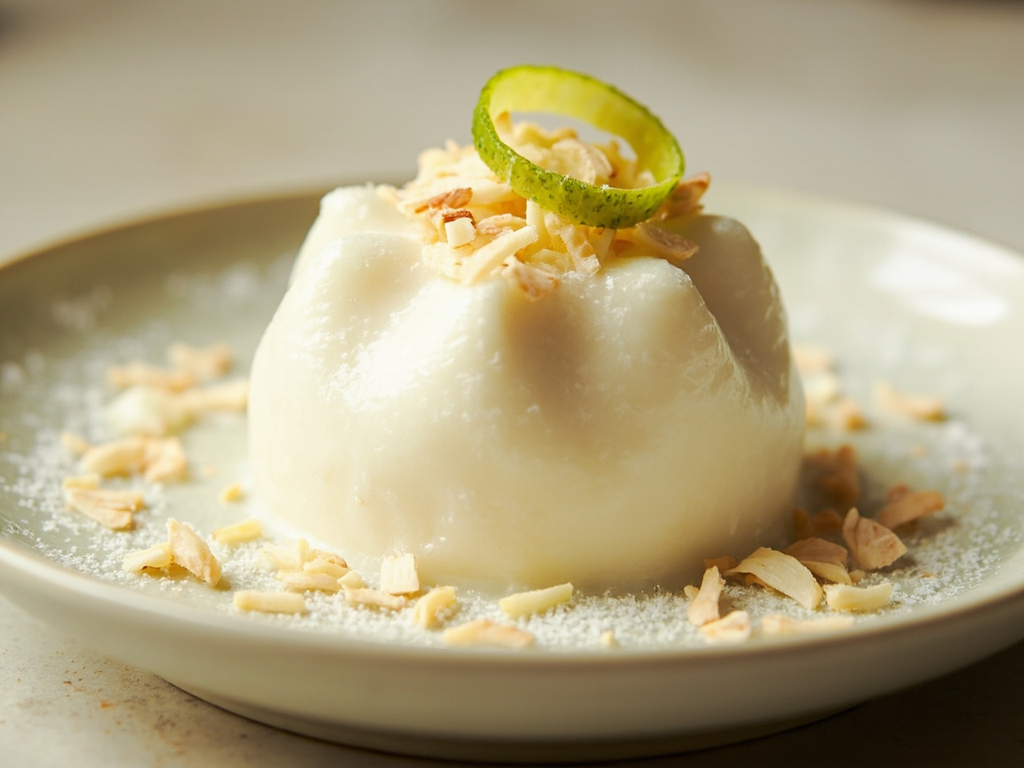
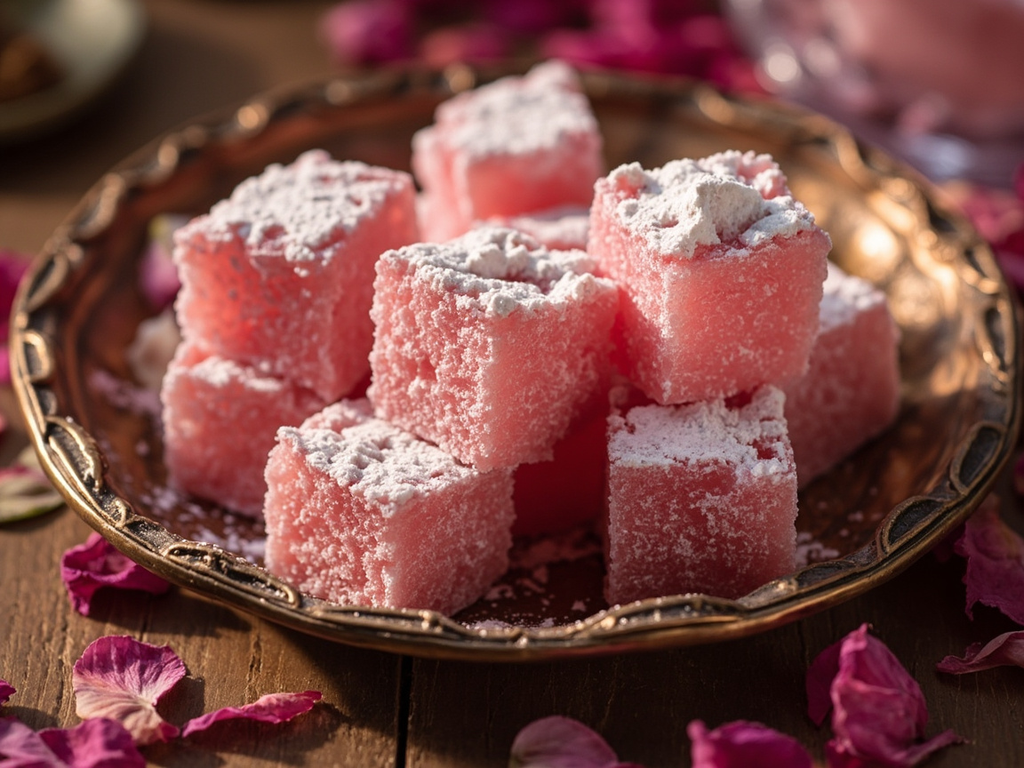
Small cubes of sugar jelly perfumed with rose water, melting and tender, rolled in sugar. The confection offered to the guest, inspired by Ottoman tradition.
In Constantinople, one is never received empty-handed: barely seated on the cushions, here they hand you the steaming coffee and, placed beside it, a little translucent marvel that the Turks call rahat-lokum, 'the repose of the throat'. It melts on the tongue like a garden perfume, all embalmed with rose, and one powders one's fingers with sugar like a child. I brought back the memory as one brings back a color or a music; for offering such a sweetness is to offer a bit of the Orient itself.
- •Sugar — abundant (base)
- •Starch (cornstarch) — as needed (gelling agent)
- •Rose water — a dash (signature flavor)
- •Water — to measure (liquid)
- •Powdered sugar — for rolling (coating)
Rose Water Turkish Delight
Small cubes of sugar jelly perfumed with rose water, melting and tender, rolled in sugar. The confection offered to the guest, inspired by Ottoman tradition.
Why this dish? In 1852, Gautier stayed in Constantinople and produced a travel book full of wonder. There he discovered the Turkish sweets offered to visitors with coffee—a gesture of hospitality that enchanted him.
In Constantinople, one is never received empty-handed: barely seated on the cushions, here they hand you the steaming coffee and, placed beside it, a little translucent marvel that the Turks call rahat-lokum, 'the repose of the throat'. It melts on the tongue like a garden perfume, all embalmed with rose, and one powders one's fingers with sugar like a child. I brought back the memory as one brings back a color or a music; for offering such a sweetness is to offer a bit of the Orient itself.
Ingredients (period version)
- Sugar — abundant (base)
- Starch (cornstarch) — as needed (gelling agent)
- Rose water — a dash (signature flavor)
- Water — to measure (liquid)
- Powdered sugar — for rolling (coating)
Ingredients
- Granulated sugar — 400 g (base)
- Cornstarch — 80 g (gelling agent)
- Cream of tartar — 1 pinch (anti-crystallization)
- Water — 55 cl (liquid)
- Rose water — 2 tbsp (signature flavor)
- Beet juice or natural food coloring (optional) — a few drops (pink color)
- Mixture of powdered sugar and cornstarch — for rolling (coating)
Method
- Cook the sugar in 25 cl of water with the cream of tartar until 115 °C (soft ball stage).
- Separately, dissolve the cornstarch in 30 cl of cold water, then cook stirring until a thick, translucent paste forms.
- Pour the hot syrup into the starch paste in a thin stream, stirring constantly.
- Cook over very low heat for 45 min to 1 h, stirring often, until a very thick, amber mass forms.
- Off the heat, add the rose water (and color), pour into an oiled mold lined with plastic wrap, smooth the top.
- Let set overnight, unmold, cut into cubes, and roll in the powdered sugar-cornstarch mixture.
How it was made : Rahat-lokum became popular in Istanbul in the 18th-19th centuries, when refined starch and sugar allowed this melting texture. It was offered with coffee to visitors as a sign of hospitality, and European travelers like Gautier spread the taste in France.
The contemporary twist : Insert a pistachio sliver in the center of each cube and present the Turkish delight on a small copper tray, next to the coffee.
Théophile Gautier · Charactorium