 flip
flipCassoulet of Toulouse
Cassoulet of Toulouse
Why this dish? Toulouse, Falguière's birthplace, claims its cassoulet against Castelnaudary and Carcassonne. The Grand Prix de Rome remained a Toulousain at heart: cassoulet, the dish of large gatherings and reunions, is what you serve when you bring together artist friends for a debate on art and the Republic.
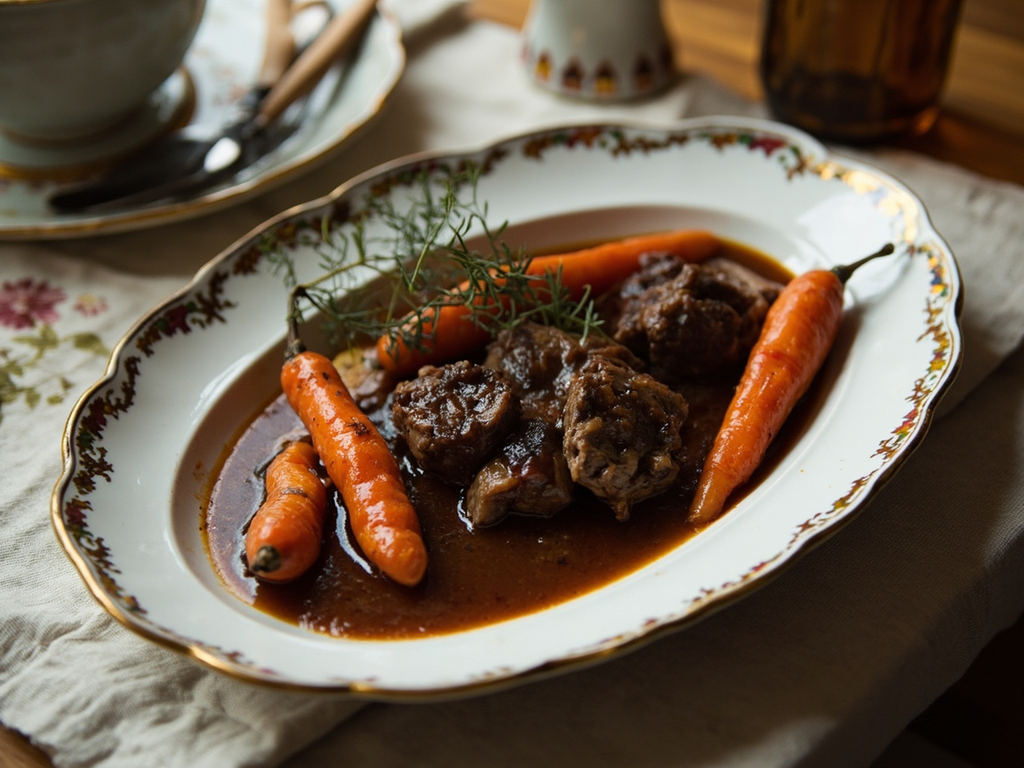
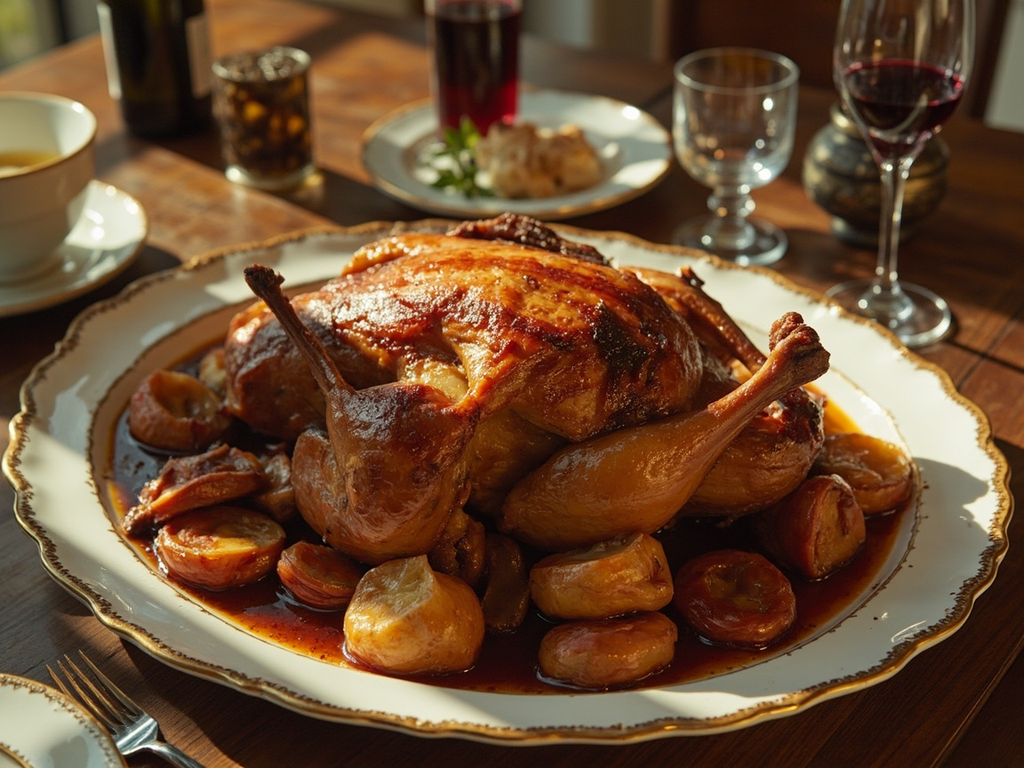
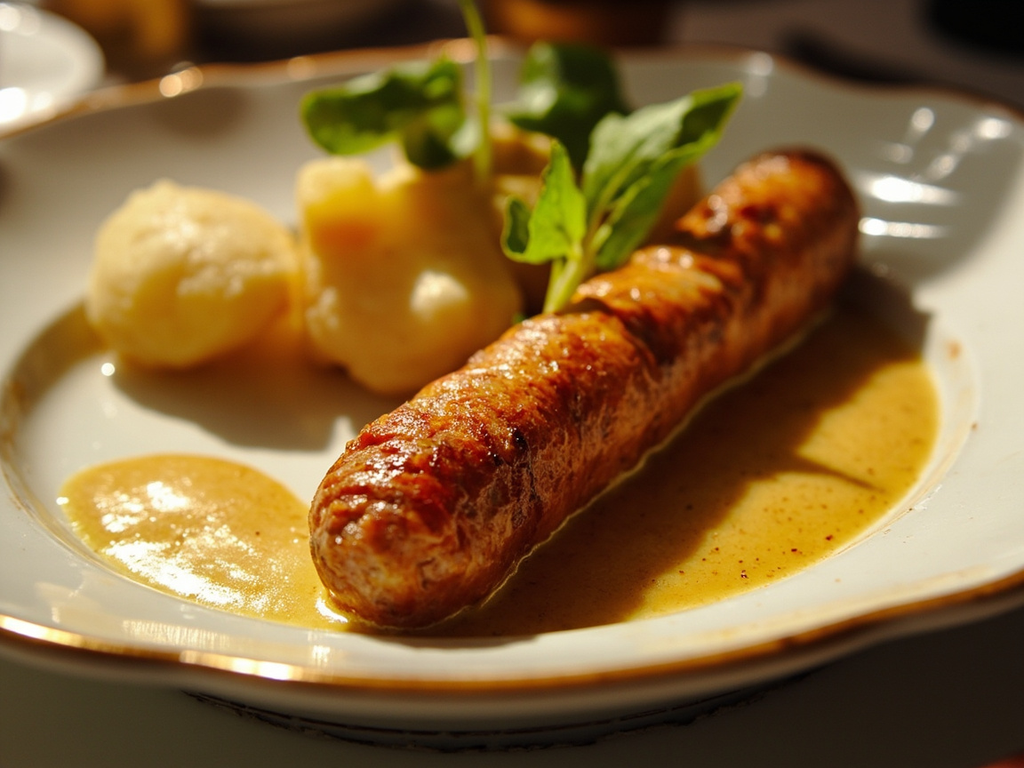
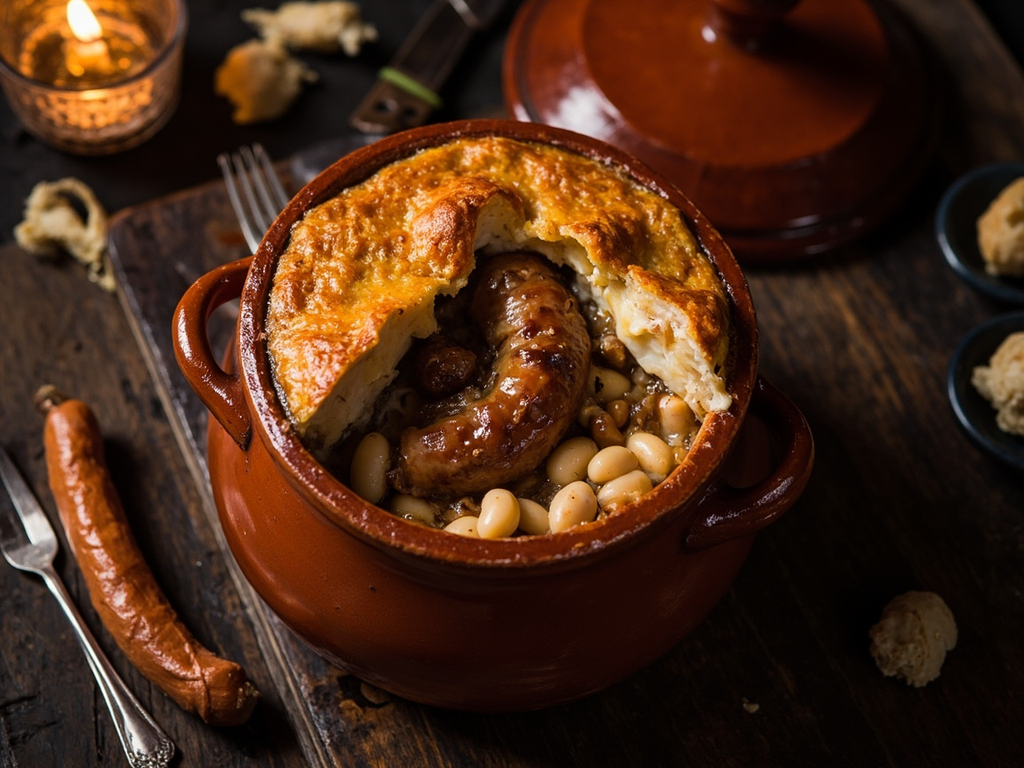
The monument of Toulouse cuisine: melting white beans, the famous Toulouse sausage, confit and pork, all slowly gratinéed under a golden crust that is broken several times.
Ah, cassoulet! It's the bronze of our cuisine, you see: it's poured slowly and commands respect. When I received colleagues from the Salon, I would have the real Toulouse sausage brought in, long and coiled like a spiral, and I would marry it with beans and confit goose. The rule, I learned as a child: seven times you break the crust that forms on top, seven times! That's the whole secret. We would talk about art and politics until midnight, and the dish stayed warm on the embers. A cassoulet is not rushed, any more than a statue.
- •Dried white beans from Lauragais — a large quantity (base)
- •Toulouse sausage — a long coil (signature meat)
- •Confit goose or duck — several pieces (fatty meat)
- •Pork loin and rind — as needed (meat and binder)
- •Garlic, onion, tomato, bouquet garni — to taste (aromatics)
- •Goose fat — as needed (cooking)
Cassoulet of Toulouse
The monument of Toulouse cuisine: melting white beans, the famous Toulouse sausage, confit and pork, all slowly gratinéed under a golden crust that is broken several times.
Why this dish? Toulouse, Falguière's birthplace, claims its cassoulet against Castelnaudary and Carcassonne. The Grand Prix de Rome remained a Toulousain at heart: cassoulet, the dish of large gatherings and reunions, is what you serve when you bring together artist friends for a debate on art and the Republic.
Ah, cassoulet! It's the bronze of our cuisine, you see: it's poured slowly and commands respect. When I received colleagues from the Salon, I would have the real Toulouse sausage brought in, long and coiled like a spiral, and I would marry it with beans and confit goose. The rule, I learned as a child: seven times you break the crust that forms on top, seven times! That's the whole secret. We would talk about art and politics until midnight, and the dish stayed warm on the embers. A cassoulet is not rushed, any more than a statue.
Ingredients (period version)
- Dried white beans from Lauragais — a large quantity (base)
- Toulouse sausage — a long coil (signature meat)
- Confit goose or duck — several pieces (fatty meat)
- Pork loin and rind — as needed (meat and binder)
- Garlic, onion, tomato, bouquet garni — to taste (aromatics)
- Goose fat — as needed (cooking)
Ingredients
- Dried white beans (tarbais or lingot) — 500 g, soaked overnight (base)
- Toulouse sausage — 400 g (signature meat)
- Confit duck legs — 2 (fatty meat)
- Pork loin — 300 g (meat)
- Pork rind — 100 g (gelatinous binder)
- Tomato — 2 (or 1 tbsp tomato paste) (aromatic)
- Garlic — 4 cloves (aromatic)
- Onion studded with cloves — 1 (aromatic)
- Bouquet garni — 1 (aromatic)
- Duck fat — 2 tbsp (signature cooking fat)
Method
- Cook the drained beans in water with the rind, studded onion, garlic, and bouquet garni, simmering for 1 h until tender but whole. Reserve the cooking liquid.
- Brown the pork loin pieces in duck fat, then the sausage cut into chunks. Add crushed tomato.
- Warm the confit legs to render some fat.
- In a cassole (earthenware dish) or wide pot, layer beans, rind, and meats. Cover with cooking liquid to just above, sprinkle with a little fat.
- Bake at 150 °C for 2 to 3 h. When a golden crust forms, gently push it down with a spoon and repeat several times.
- Serve directly in the dish, well gratinéed, with country bread.
How it was made : In the 19th century, cassoulet was cooked in the village baker's oven, in a glazed earthenware cassole from Castelnaudary that gave the dish its name. Each city defended its version: Toulouse adds sausage, Carcassonne sometimes mutton, Castelnaudary proclaims itself the cradle.
The contemporary twist : Present it in individual raw terracotta cassolettes, crust cracked like a patina, with a sprig of thyme planted straight in the center like a sculptor's signature.
Sources : Prosper Montagné (native of Carcassonne), works on Languedoc cassoulet · Académie universelle du cassoulet — history of the three rival cities
Alexandre Falguière · Charactorium