 flip
flipSole à la Normande
Sole à la Normande
Why this dish? This dish was born precisely in Paris in the 1830s, created in the great houses of the capital just as Tocqueville was hosting dinners there after his return from America. Married to Normandy through its cream, mussels, and shrimps, it unites his two worlds: the hedgerow country of his château and the Parisian dinners where democracy was debated.
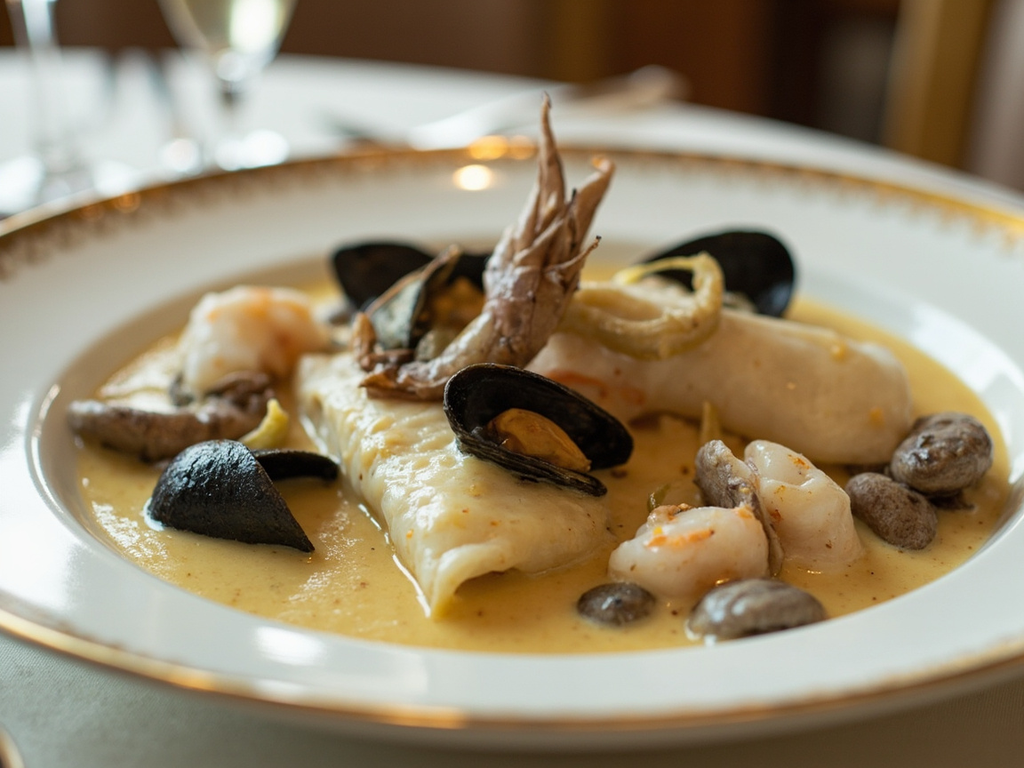
Sole fillets poached in cider and fish stock, coated in a blond butter and cream sauce, garnished with mussels, shrimps, and mushrooms. A pinnacle of bourgeois Norman cuisine adopted by refined Parisian tables.
Allow me to present this dish, which takes me back entirely to my Cotentin. See how the cream from our cows envelops this fish from the English Channel: my cook takes great care never to let the sauce boil, lest it curdle, and the mussels are added last so they stay tender. It is a dish in which I find, beneath the Parisian veneer, the frank taste of my Norman lands. I like to think that a people can be known by its table, and this one speaks plainly of the sweetness of our country.
- •Fresh soles from the English Channel — two fine ones, filleted (main fish)
- •Bouchot mussels — a good bowlful (seafood garnish)
- •Grey shrimps — a handful, shelled (seafood garnish)
- •Mushrooms — a few heads (garnish)
- •Sweet Isigny butter — a good lump (binding and flavor)
- •Thick Norman cream — a large bowl (sauce richness)
- •Dry local cider — a glass (cooking liquid)
- •Egg yolks — two (sauce binder)
Sole à la Normande
Sole fillets poached in cider and fish stock, coated in a blond butter and cream sauce, garnished with mussels, shrimps, and mushrooms. A pinnacle of bourgeois Norman cuisine adopted by refined Parisian tables.
Why this dish? This dish was born precisely in Paris in the 1830s, created in the great houses of the capital just as Tocqueville was hosting dinners there after his return from America. Married to Normandy through its cream, mussels, and shrimps, it unites his two worlds: the hedgerow country of his château and the Parisian dinners where democracy was debated.
Allow me to present this dish, which takes me back entirely to my Cotentin. See how the cream from our cows envelops this fish from the English Channel: my cook takes great care never to let the sauce boil, lest it curdle, and the mussels are added last so they stay tender. It is a dish in which I find, beneath the Parisian veneer, the frank taste of my Norman lands. I like to think that a people can be known by its table, and this one speaks plainly of the sweetness of our country.
Ingredients (period version)
- Fresh soles from the English Channel — two fine ones, filleted (main fish)
- Bouchot mussels — a good bowlful (seafood garnish)
- Grey shrimps — a handful, shelled (seafood garnish)
- Mushrooms — a few heads (garnish)
- Sweet Isigny butter — a good lump (binding and flavor)
- Thick Norman cream — a large bowl (sauce richness)
- Dry local cider — a glass (cooking liquid)
- Egg yolks — two (sauce binder)
Ingredients
- Sole fillets — 8 fillets (2 soles) (main fish)
- Mussels — 500 g (seafood garnish)
- Shelled grey shrimps — 100 g (seafood garnish)
- Button mushrooms — 150 g (garnish)
- Sweet butter — 80 g (binding and flavor)
- Thick crème fraîche — 200 ml (richness)
- Dry cider — 150 ml (cooking liquid)
- Dry white wine — 100 ml (fish stock)
- Egg yolks — 2 (binder)
- Salt, pepper — to taste (seasoning)
Method
- Open the mussels over high heat in the cider; remove from shells and strain the cooking liquid.
- Sauté sliced mushrooms in butter, set aside.
- Gently poach rolled sole fillets in a mixture of white wine and strained mussel liquid, without boiling, for 5 to 6 minutes; drain and keep warm.
- Reduce the poaching liquid by half, add cream, and let thicken.
- Off the heat, bind with beaten egg yolks, then mount with butter; adjust salt and pepper, never letting it boil.
- Plate the fillets, arrange mussels, shrimps, and mushrooms around, nap with the smooth sauce, and serve immediately.
How it was made : Attributed to Parisian restaurateur Langlais (Rocher de Cancale) around 1830-1840, sole à la normande established the alliance of Channel fish and dairy products from the hedgerow country. In noble houses, it was poached in court-bouillon and the egg-yolk binding was done in a bain-marie to prevent curdling.
The contemporary twist : Served in a shallow bowl with a cider emulsion whipped with a siphon, and a few oyster leaves to recall the iodine of the Channel.
Alexis de Tocqueville · Charactorium