 flip
flipGarbure from the South-West
Garbure from the South-West
Why this dish? Born in Toulouse, Falguière remained attached all his life to the fortifying dishes of his South-West. Garbure, a thick meal-soup of cabbage and beans, is exactly the kind of food that 'sticks to the body' needed to face a day of striking marble with chisel and mallet.
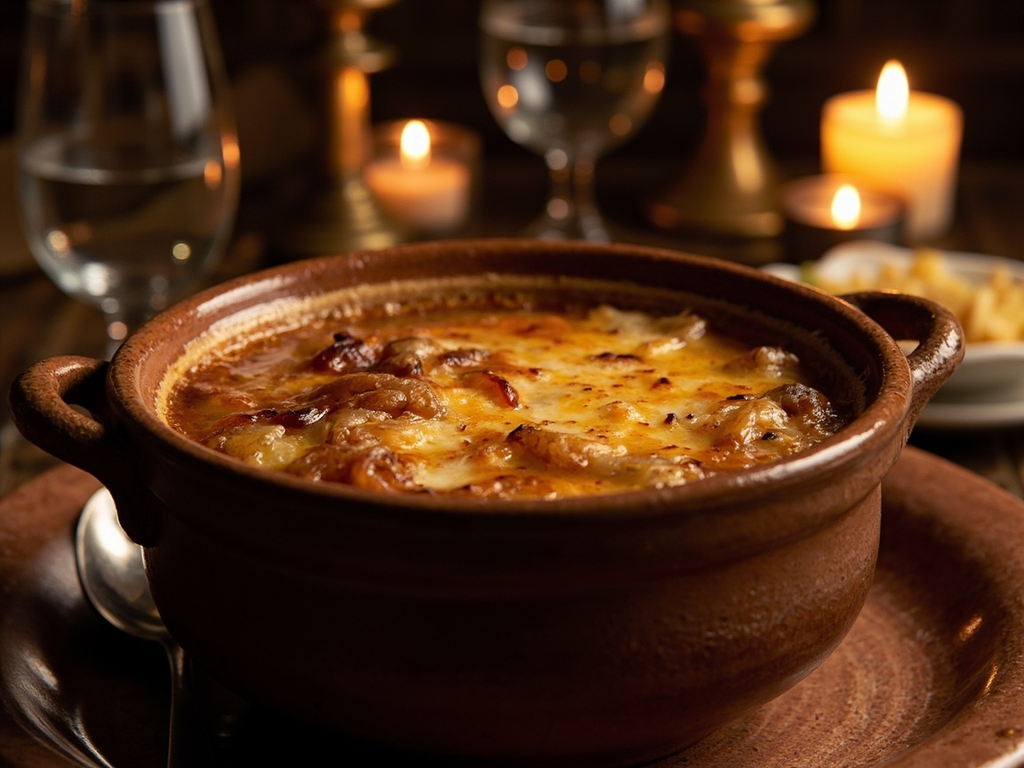
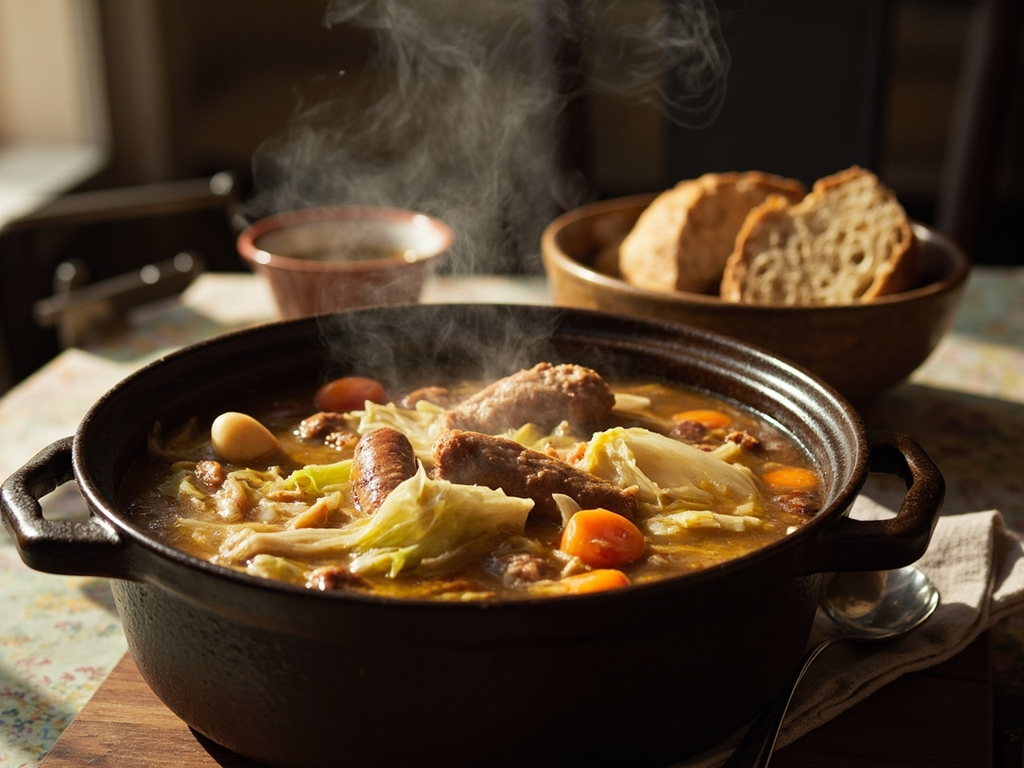
A soup so dense the spoon stands upright: cabbage, white beans, seasonal vegetables, and a piece of confit meat. A single dish that makes the whole meal, as we like it at an artisan's table.
Here, sit down, I'll tell you how we do it back home. In Toulouse, at our place, the garbure didn't wait for the guest: it had been simmering since morning. My mother would throw in the cabbage, the beans we'd soaked the night before, and always a fine piece of confit goose pulled from the fat pot. And believe me, when you've spent the day mallet in hand before a block of Carrara marble, there's nothing like it to set you right. At the end, I'd do the chabrot — a splash of red wine in the bottom of the bowl, swirled and drunk straight from the rim. That's true Gascon politeness.
- •Curly green cabbage — half a cabbage (base vegetable)
- •Dried white beans — two handfuls (filling starch)
- •Confit duck or goose leg — one piece (meat and fat)
- •Carrots, turnip, leek — as needed (garden vegetables)
- •Potato — a few (thickener)
- •Garlic, onion, thyme, bay leaf — to taste (aromatics)
- •Red wine — a glass (for the final chabrot)
Garbure from the South-West
A soup so dense the spoon stands upright: cabbage, white beans, seasonal vegetables, and a piece of confit meat. A single dish that makes the whole meal, as we like it at an artisan's table.
Why this dish? Born in Toulouse, Falguière remained attached all his life to the fortifying dishes of his South-West. Garbure, a thick meal-soup of cabbage and beans, is exactly the kind of food that 'sticks to the body' needed to face a day of striking marble with chisel and mallet.
Here, sit down, I'll tell you how we do it back home. In Toulouse, at our place, the garbure didn't wait for the guest: it had been simmering since morning. My mother would throw in the cabbage, the beans we'd soaked the night before, and always a fine piece of confit goose pulled from the fat pot. And believe me, when you've spent the day mallet in hand before a block of Carrara marble, there's nothing like it to set you right. At the end, I'd do the chabrot — a splash of red wine in the bottom of the bowl, swirled and drunk straight from the rim. That's true Gascon politeness.
Ingredients (period version)
- Curly green cabbage — half a cabbage (base vegetable)
- Dried white beans — two handfuls (filling starch)
- Confit duck or goose leg — one piece (meat and fat)
- Carrots, turnip, leek — as needed (garden vegetables)
- Potato — a few (thickener)
- Garlic, onion, thyme, bay leaf — to taste (aromatics)
- Red wine — a glass (for the final chabrot)
Ingredients
- Curly green cabbage — 300 g, shredded (base vegetable)
- White beans (tarbais or lingot type) — 200 g dried, soaked overnight (starch)
- Confit duck leg — 1 large (signature meat and fat)
- Carrots — 2 (vegetable)
- Turnip — 1 (vegetable)
- Leek — 1 (vegetable)
- Potatoes — 3 medium (thickener)
- Garlic — 3 cloves (aromatic)
- Onion — 1 (aromatic)
- Thyme, bay leaf — 1 bouquet (aromatic)
- Red wine — 1 glass (chabrot (optional))
Method
- Drain the soaked beans and place them in a large pot of cold water with the studded onion, garlic, thyme, and bay leaf. Bring to a simmer and cook for 45 min.
- Add carrots, turnip, and leek in pieces, continue for 20 min.
- Add the shredded cabbage and cubed potatoes, cook another 20 min.
- Meanwhile, gently warm the confit duck leg in a pan to render some fat; add a little of its fat to the soup.
- Shred the meat, return it to the pot, adjust salt and pepper.
- Serve piping hot in deep bowls; for chabrot, pour a splash of red wine into the remaining soup and drink straight from the bowl.
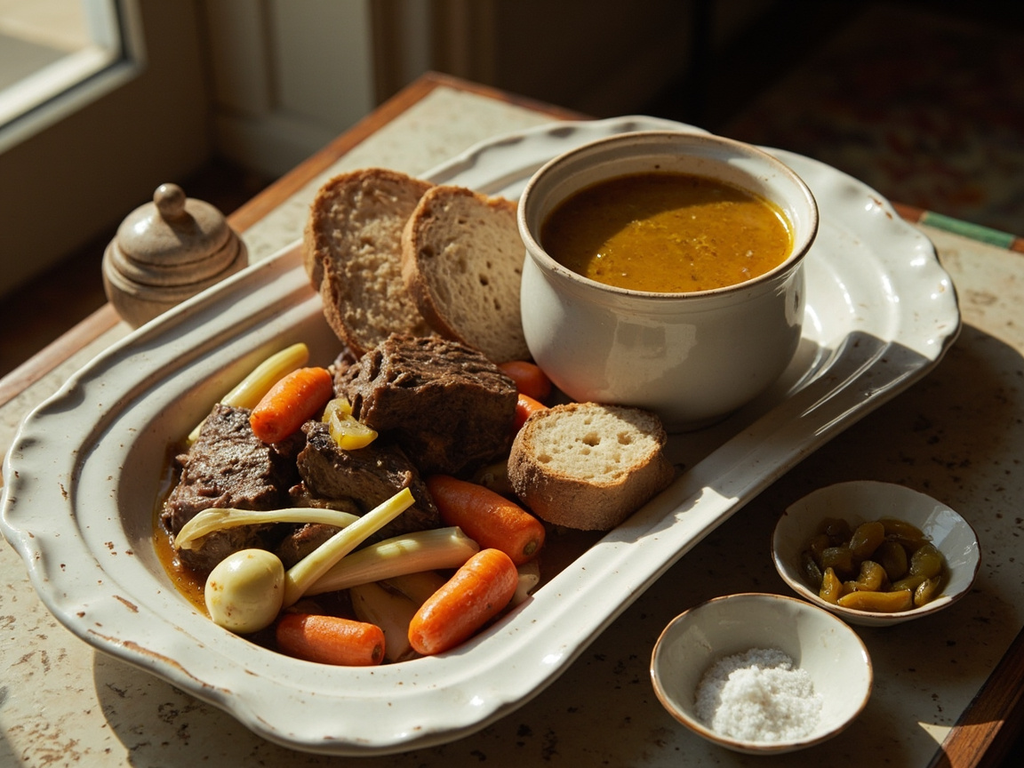
How it was made : Garbure was THE daily dish of the entire peasant South-West: it was adapted to garden vegetables and whatever was pulled from the confit pot. It simmered for hours at the corner of the hearth in a cast-iron pot, and each family swore its recipe was the only true one.
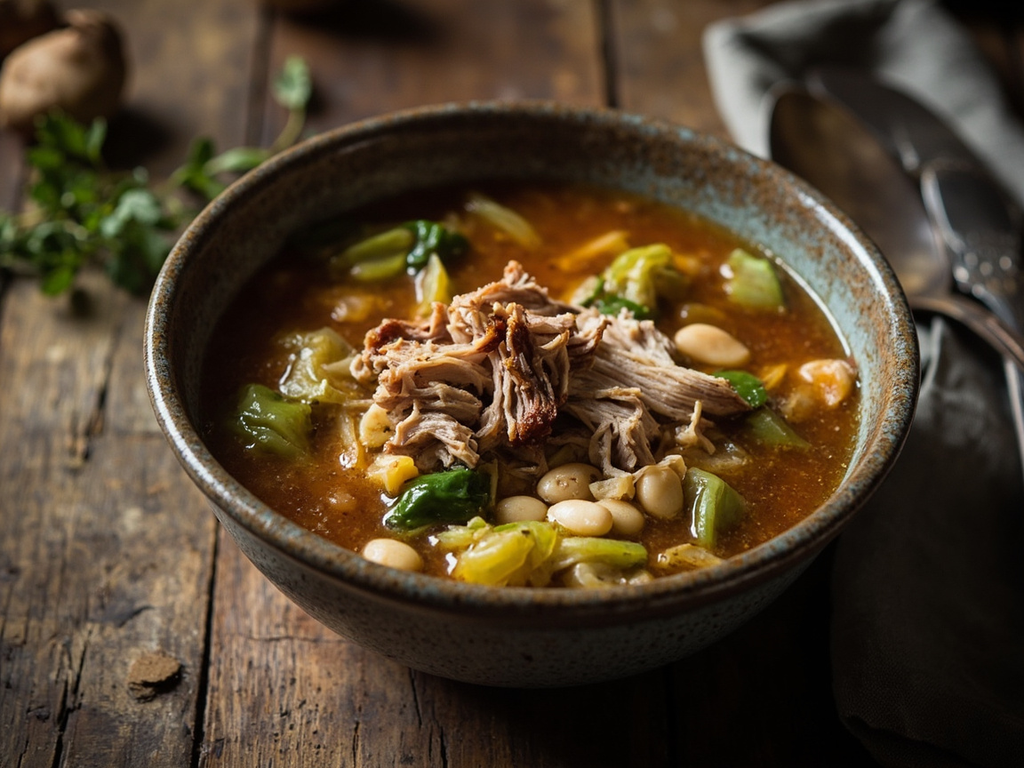
The contemporary twist : Serve it 'workshop-style' in a raw stoneware bowl, shredded meat on top and a slick of melted duck fat on the surface that shines like varnish on a bronze.
Sources : Alfred Suzanne, La Cuisine et pâtisserie anglaise et américaine (1894) — comparative mentions of French regional cuisine · Gascon oral tradition documented by gastronomic societies of the South-West in the 19th century
Alexandre Falguière · Charactorium