 flip
flipGascon Walnut Wine
Gascon Walnut Wine
Why this dish? In the South-West, every household made its own walnut wine, with green walnuts picked at Midsummer. It is the drink of meal endings and long discussions — precisely the setting for debates on art and politics that Falguière loved to lead with his artist friends around a brasserie table.
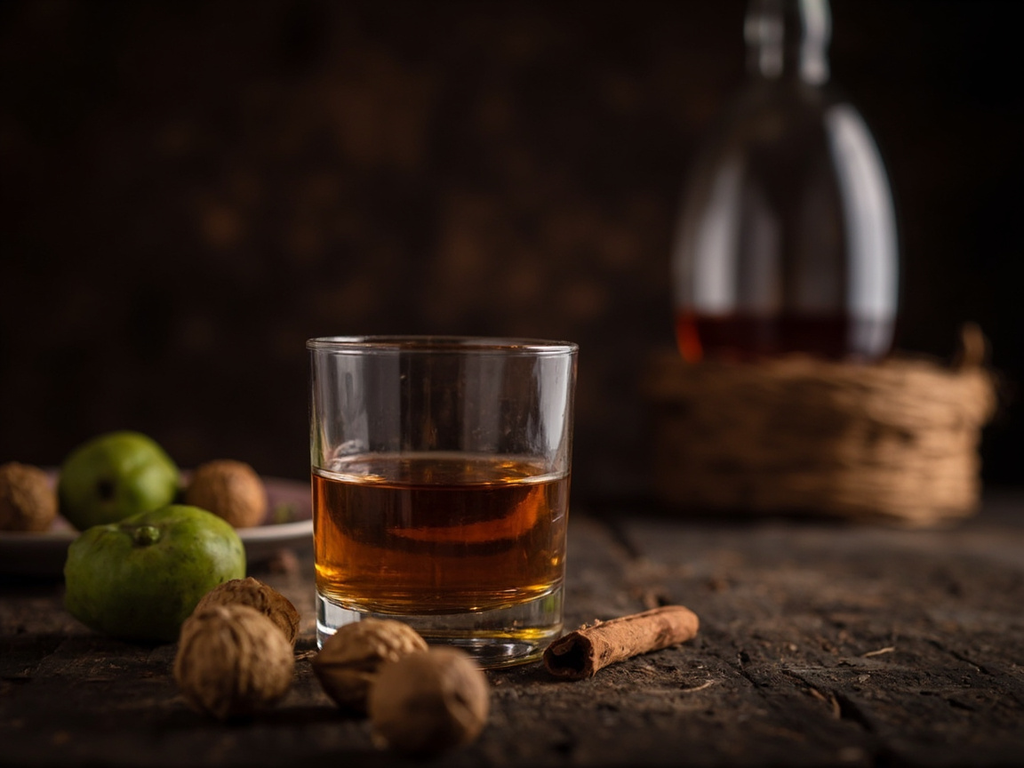
A homemade aperitif-digestif: green walnuts picked at Midsummer macerated in sweetened red wine and brandy, developing a bitter, woody, and slightly sweet aroma. (Alcoholic beverage — for adults; to be presented to younger audiences as a heritage item.)
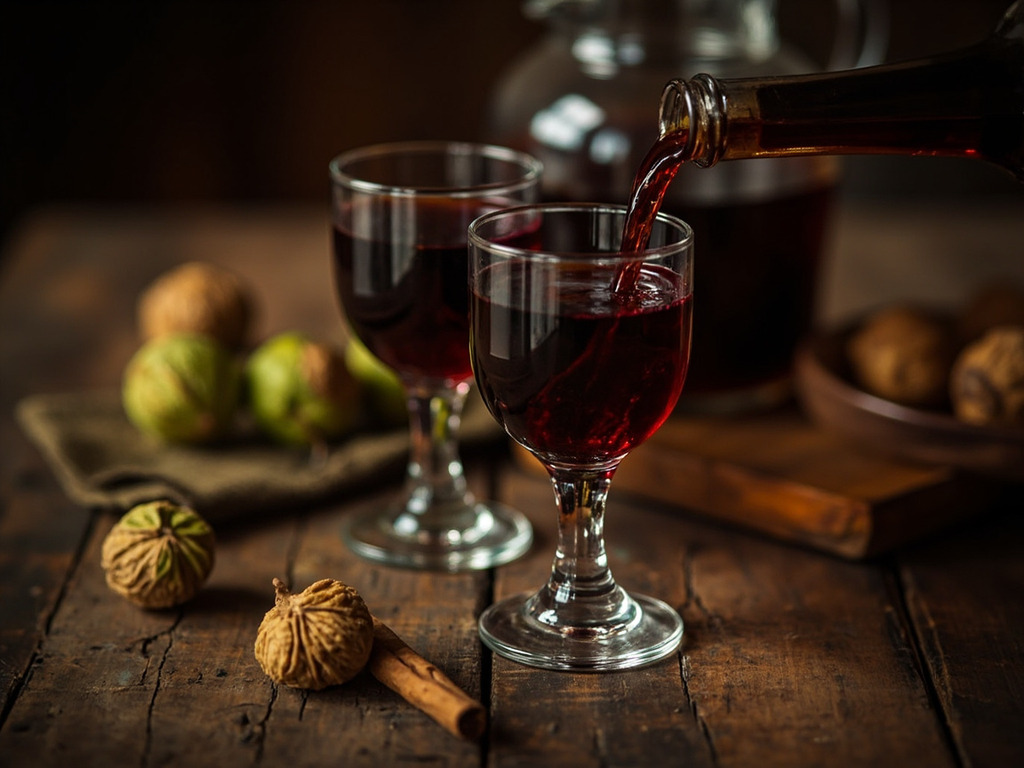
At the end of the meal, when we tackled the big subjects — the place of sculpture, the Republic, the future of art — I would bring out the walnut wine. You must pick the walnuts still green, at Midsummer, the longest day, not before: that's when they have just the right bitterness. You macerate them for weeks in wine with a little sugar and brandy, and time does the rest. It's black as ink, bitter and sweet at once, and it loosens tongues better than any speech. A small glass, no more: it's a liqueur of patience, not of thirst.
- •Green walnuts (picked at Midsummer) — about twenty (bitter aromatic)
- •Local red wine — several liters (base)
- •Brandy — a good glass (fortification and preservation)
- •Sugar — to taste (balance)
- •Orange zest, cinnamon, clove — to taste (spices)
Gascon Walnut Wine
A homemade aperitif-digestif: green walnuts picked at Midsummer macerated in sweetened red wine and brandy, developing a bitter, woody, and slightly sweet aroma. (Alcoholic beverage — for adults; to be presented to younger audiences as a heritage item.)
Why this dish? In the South-West, every household made its own walnut wine, with green walnuts picked at Midsummer. It is the drink of meal endings and long discussions — precisely the setting for debates on art and politics that Falguière loved to lead with his artist friends around a brasserie table.
At the end of the meal, when we tackled the big subjects — the place of sculpture, the Republic, the future of art — I would bring out the walnut wine. You must pick the walnuts still green, at Midsummer, the longest day, not before: that's when they have just the right bitterness. You macerate them for weeks in wine with a little sugar and brandy, and time does the rest. It's black as ink, bitter and sweet at once, and it loosens tongues better than any speech. A small glass, no more: it's a liqueur of patience, not of thirst.
Ingredients (period version)
- Green walnuts (picked at Midsummer) — about twenty (bitter aromatic)
- Local red wine — several liters (base)
- Brandy — a good glass (fortification and preservation)
- Sugar — to taste (balance)
- Orange zest, cinnamon, clove — to taste (spices)
Ingredients
- Whole green walnuts (late June) — 20 (signature bitter aromatic)
- Full-bodied red wine — 2 liters (base)
- Brandy (Armagnac or other 40° proof) — 25 cl (fortification)
- Sugar — 400 g (balance)
- Zest of untreated orange — 1 (spice)
- Cinnamon stick — 1 (spice)
- Cloves — 3 (spice)
Method
- Quarter the green walnuts (wear gloves: they stain hands heavily).
- In a large jar, combine the walnuts, wine, brandy, sugar, orange zest, and spices.
- Seal and let macerate away from light for 40 days, shaking occasionally.
- Strain carefully through a fine cloth to remove walnuts and spices.
- Bottle and let age at least 2 to 3 months before tasting: time rounds the bitterness.
- Serve chilled, in a small glass, at the end of the meal.
How it was made : Walnut wine is a peasant tradition throughout the South-West and beyond: green walnuts were picked strictly around June 24 (Midsummer), before the shell hardened. Each family kept its own recipe, more or less sweet, more or less spiced, passed down orally.
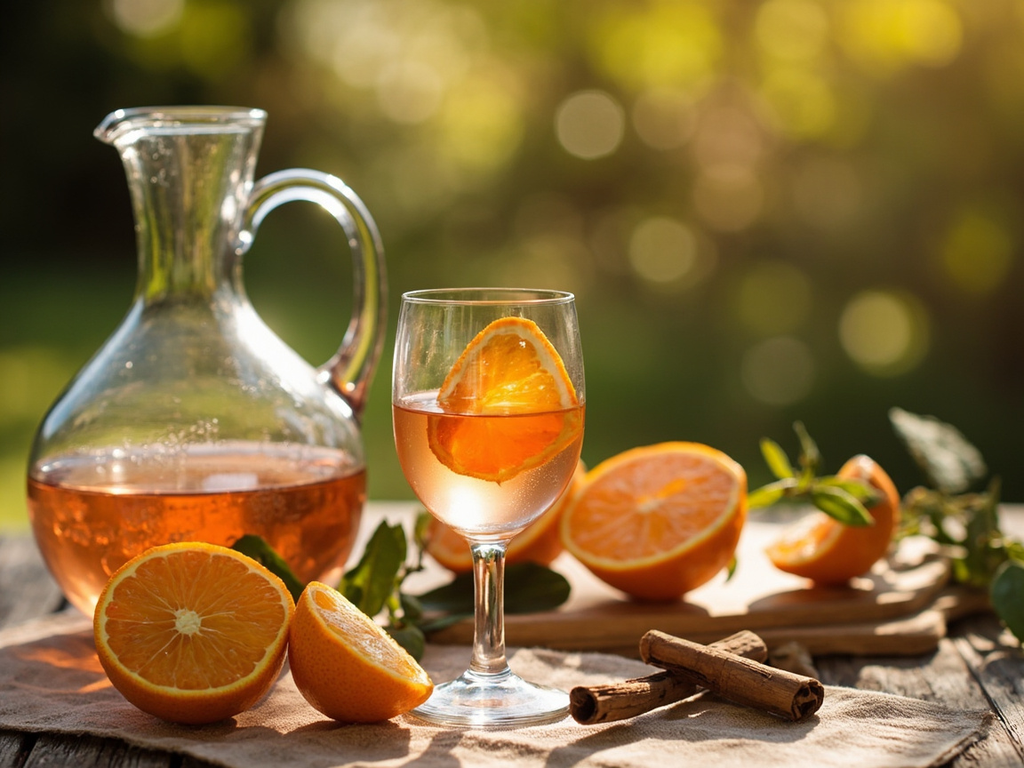
The contemporary twist : Serve it very cold in small mismatched vintage glasses, on a tray, like at the end of a studio dinner — dark and deep as a bronze patina.
Sources : Collections of domestic recipes from the South-West on household liqueurs · Occitan traditions of walnut picking at Midsummer
Alexandre Falguière · Charactorium