 flip
flipLe vin de noix de la maison
Le vin de noix de la maison
Why this dish? The walnut tree is the emblematic tree of the Figeac region, and every household in the Lot prepares its walnut wine around St. John's Day with the still-green fruits. It is the reserve drink offered to visitors and kept in the sideboard — the kind of homemade cordial gladly given to a Champollion of fragile health to "settle his stomach".
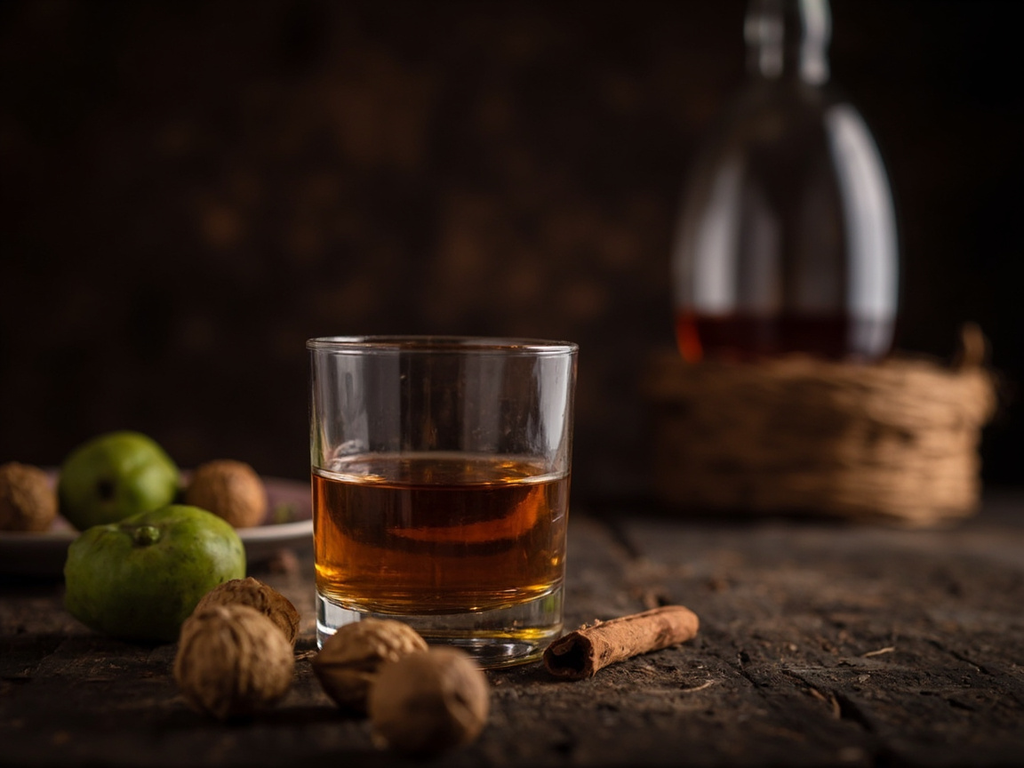
A sweet amber wine, bittersweet, where green walnuts macerate in wine, eau-de-vie, and sugar all summer long. Served in a small glass as a cordial or festive apéritif.
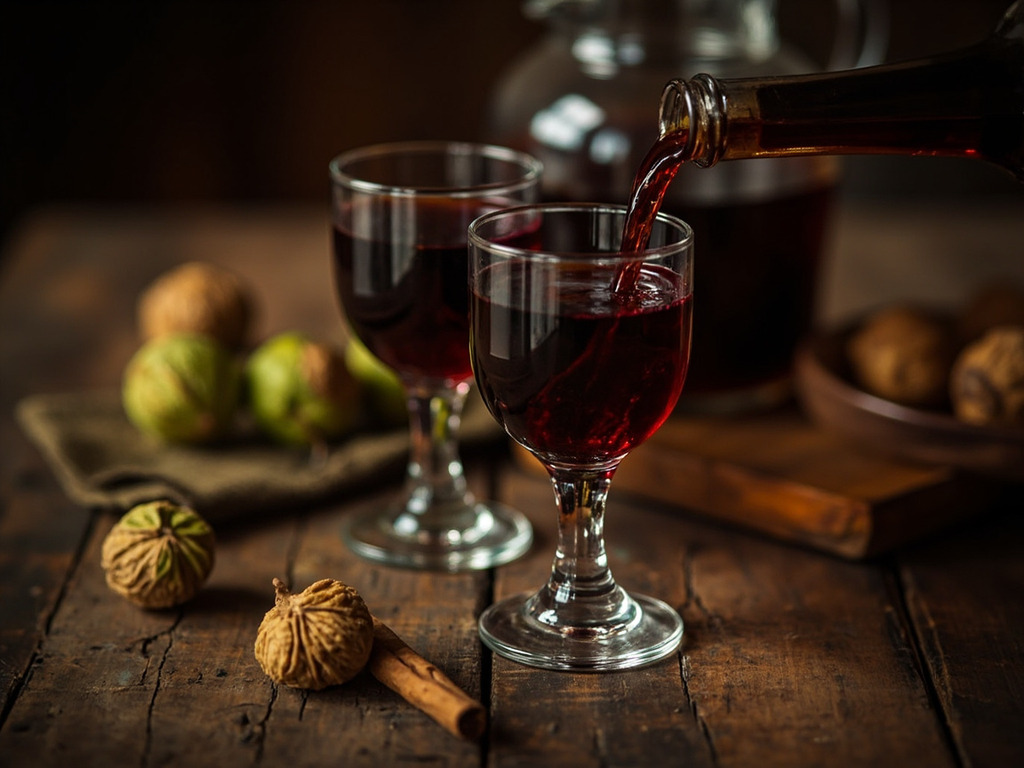
Allow me to pour you a finger — it comes from my province! At home, on St. John's Day, we pick the walnuts still green, those that a thumb can pierce with a pinprick, and set them to macerate in wine with eau-de-vie and sugar. We let it all sleep in the cellar all summer until the liqueur takes on this burnt amber color. A small glass in the evening, and one better endures fevers and long vigils. Here's to the health of the ancient scribes!
- •Green walnuts (picked around St. John's Day) — about twenty (bitterness and signature perfume)
- •Household red wine — several pints (maceration base)
- •Eau-de-vie — a good glass (fortifier and preservative)
- •Sugar — to taste (sweetness balancing bitterness)
- •Cinnamon stick, clove — a little (optional spices)
Le vin de noix de la maison
A sweet amber wine, bittersweet, where green walnuts macerate in wine, eau-de-vie, and sugar all summer long. Served in a small glass as a cordial or festive apéritif.
Why this dish? The walnut tree is the emblematic tree of the Figeac region, and every household in the Lot prepares its walnut wine around St. John's Day with the still-green fruits. It is the reserve drink offered to visitors and kept in the sideboard — the kind of homemade cordial gladly given to a Champollion of fragile health to "settle his stomach".
Allow me to pour you a finger — it comes from my province! At home, on St. John's Day, we pick the walnuts still green, those that a thumb can pierce with a pinprick, and set them to macerate in wine with eau-de-vie and sugar. We let it all sleep in the cellar all summer until the liqueur takes on this burnt amber color. A small glass in the evening, and one better endures fevers and long vigils. Here's to the health of the ancient scribes!
Ingredients (period version)
- Green walnuts (picked around St. John's Day) — about twenty (bitterness and signature perfume)
- Household red wine — several pints (maceration base)
- Eau-de-vie — a good glass (fortifier and preservative)
- Sugar — to taste (sweetness balancing bitterness)
- Cinnamon stick, clove — a little (optional spices)
Ingredients
- Green walnuts — 25 (quartered) (signature bitterness)
- Red wine — 3 liters (base)
- Eau-de-vie (40% ABV) — 500 ml (preservation)
- Sugar — 600 g (sweetness)
- Cinnamon — 1 stick (optional spice)
- Cloves — 3 (optional spice)
- Orange zest — 1 (optional perfume)
Method
- Quarter the green walnuts (wear gloves, they stain heavily).
- In a large jar, combine walnuts, wine, eau-de-vie, sugar, and spices.
- Seal and macerate in a cool, dark place for 40 to 45 days, shaking occasionally.
- Strain through a clean cloth, pressing the walnuts.
- Bottle and age at least 2 to 3 months before tasting — it improves with time.
- Serve chilled, in a small glass.
How it was made : Walnut wine (or "brou") is a living tradition of the Southwest, traditionally prepared on St. John's Day (June 24), the only time when the green walnut is tender enough to be pierced. Before the age of commercial apéritifs, these house wines — walnut, peach, orange — were the pride of the family sideboard and the cordial offered to guests. Consume in moderation.
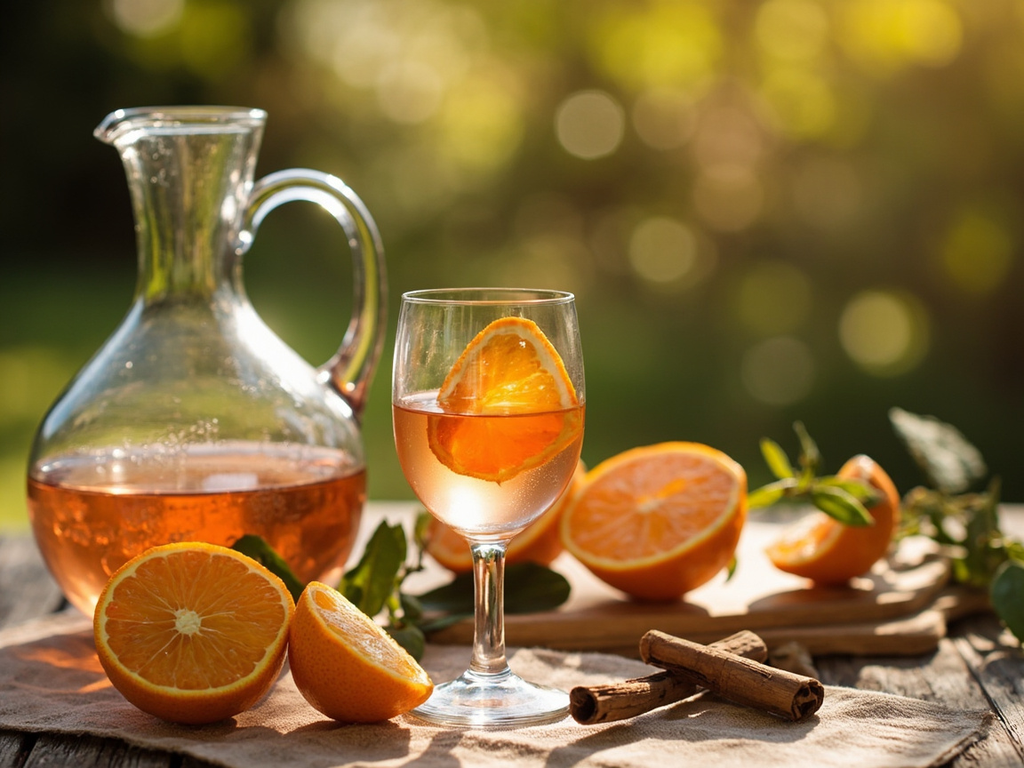
The contemporary twist : Serve very cold over ice with an orange zest, dubbed "the Rosetta" as a wink to the stone that changed Champollion's life.
Champollion · Charactorium