 flip
flipMaslenitsa Blini with Smetana
Maslenitsa Blini with Smetana
Why this dish? In Moscow, Maslenitsa (Butter Week) punctuated the year with mountains of golden blini. For a composer enamored with rites and symbols, these sun-pancakes heralding the return of light had something profoundly solar — a theme dear to his music.
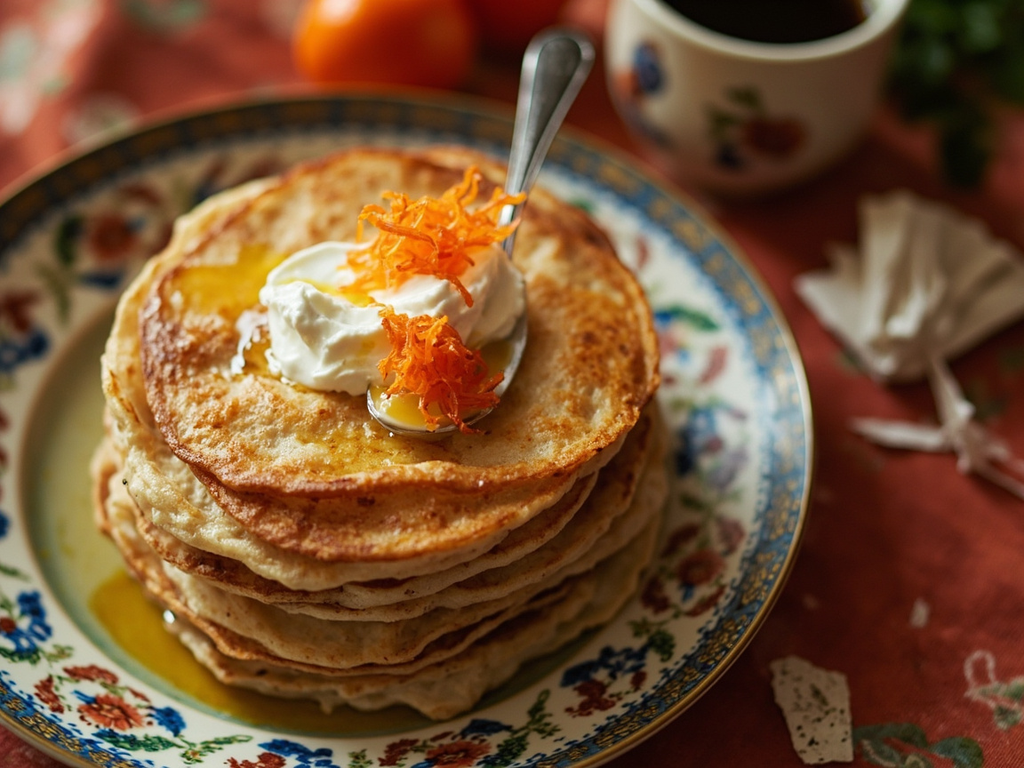
Thin wheat (and a little buckwheat) pancakes leavened with yeast, served hot with sour cream, melted butter, and on feast days, a little herring or fish roe.
Maslenitsa, you see, is the sun that you eat! Each round golden blini is a little star — and one cannot make just one, whole stacks are needed. The batter must rise, breathe, foam under the cloth like a living thing. I want them thin, almost transparent, topped with smetana and melted butter. Thus we celebrate the return of light, and believe me, I know what light is worth.
- •Wheat flour — two-thirds (base of the batter)
- •Buckwheat flour — one-third (flavor and tradition)
- •Baker's yeast — a little (leavening)
- •Warm milk — as needed (liquid)
- •Eggs — a few (binder)
- •Melted butter — generously (richness and serving)
- •Smetana (sour cream) — as desired (accompaniment)
Maslenitsa Blini with Smetana
Thin wheat (and a little buckwheat) pancakes leavened with yeast, served hot with sour cream, melted butter, and on feast days, a little herring or fish roe.
Why this dish? In Moscow, Maslenitsa (Butter Week) punctuated the year with mountains of golden blini. For a composer enamored with rites and symbols, these sun-pancakes heralding the return of light had something profoundly solar — a theme dear to his music.
Maslenitsa, you see, is the sun that you eat! Each round golden blini is a little star — and one cannot make just one, whole stacks are needed. The batter must rise, breathe, foam under the cloth like a living thing. I want them thin, almost transparent, topped with smetana and melted butter. Thus we celebrate the return of light, and believe me, I know what light is worth.
Ingredients (period version)
- Wheat flour — two-thirds (base of the batter)
- Buckwheat flour — one-third (flavor and tradition)
- Baker's yeast — a little (leavening)
- Warm milk — as needed (liquid)
- Eggs — a few (binder)
- Melted butter — generously (richness and serving)
- Smetana (sour cream) — as desired (accompaniment)
Ingredients
- Wheat flour — 150 g (base)
- Buckwheat flour — 75 g (traditional flavor)
- Active dry yeast — 5 g (leavening)
- Warm milk — 400 ml (liquid)
- Eggs — 2 (binder)
- Melted butter — 50 g (batter and topping)
- Salt and sugar — 1/2 tsp each (balance)
- Sour cream (smetana) — 1 container (serving)
Method
- Dissolve yeast in warm milk. Mix flours, salt, sugar, then incorporate milk, egg yolks, and melted butter.
- Cover and let batter rise 1.5 hours in a warm place: it should double and become bubbly.
- Whip egg whites to stiff peaks and fold in gently just before cooking.
- Cook thin blini in a buttered hot pan, 1-2 minutes per side.
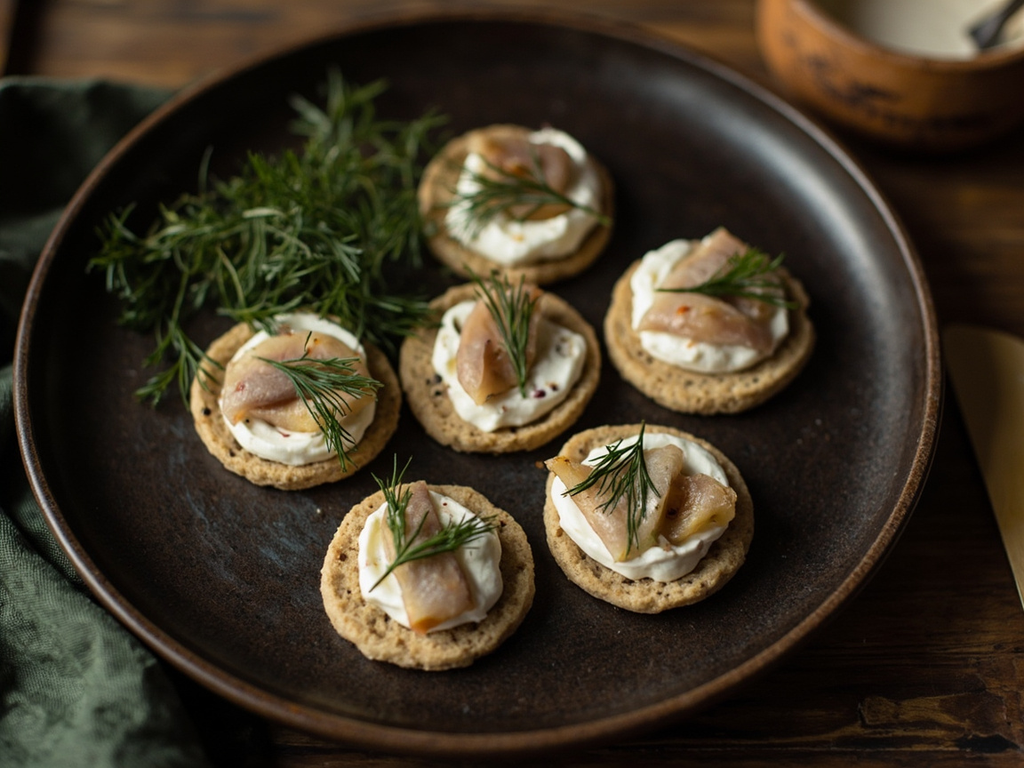
- Serve immediately, piping hot, with smetana, melted butter, and optionally pickled herring or fish roe.
How it was made : Maslenitsa, heir to Slavic sun festivals, preceded the great Orthodox Lent. For a week, blini were eaten in abundance — their round golden shape symbolized the sun. Rich and poor alike made them, the former topping them with caviar, the latter with simple butter.
The contemporary twist : Present a stack of mini-blinis with a trio of toppings (smetana-dill, trout roe, grated beet) as a festive brunch.
Alexander Scriabin · Charactorium