 flip
flipSalt Beef and Ship's Biscuit of the Crossing
Salt Beef and Ship's Biscuit of the Crossing
Why this dish? On April 2, 1831, Tocqueville embarked at Le Havre on the packet ship Le Havre for America: thirty-eight days at sea. On board, no fresh butter or Channel sole — they lived on salted meat from barrels and ship's biscuit, the standard fare for all passengers then. This dish evokes the long voyage that gave birth to *Democracy in America*.
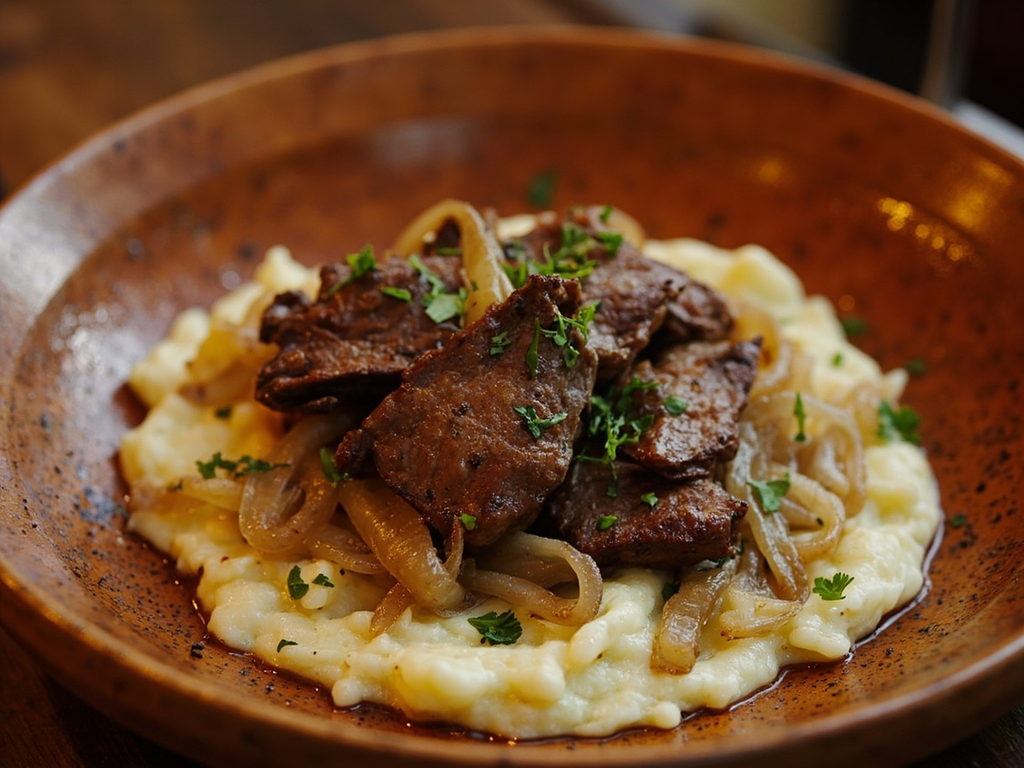
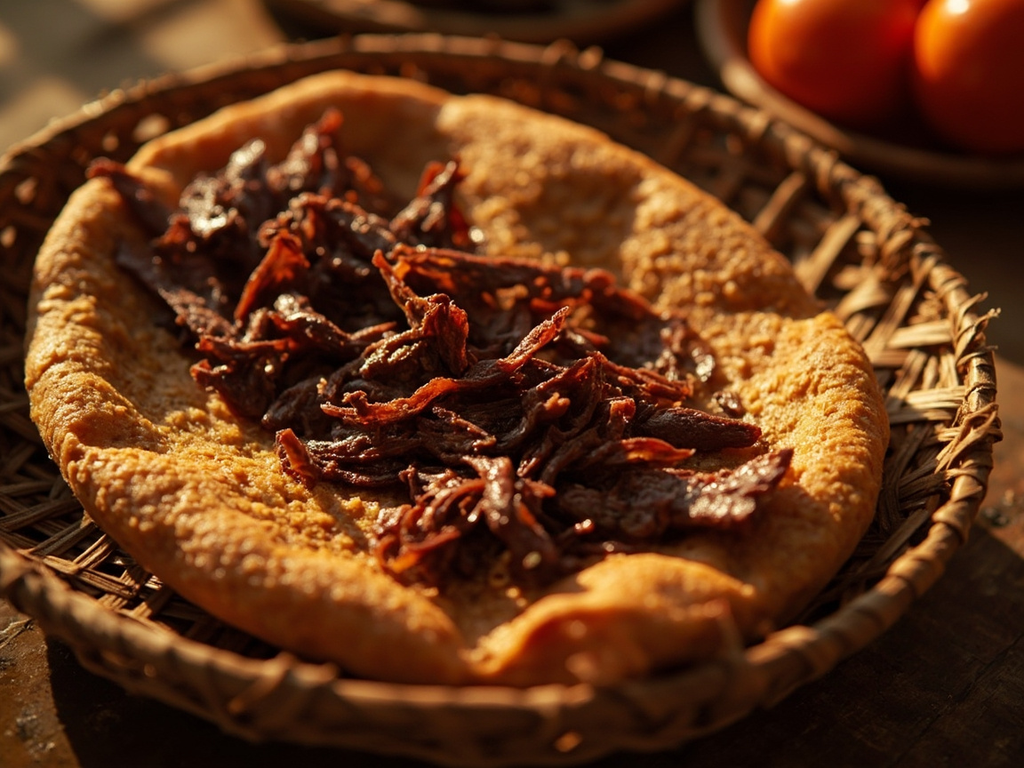
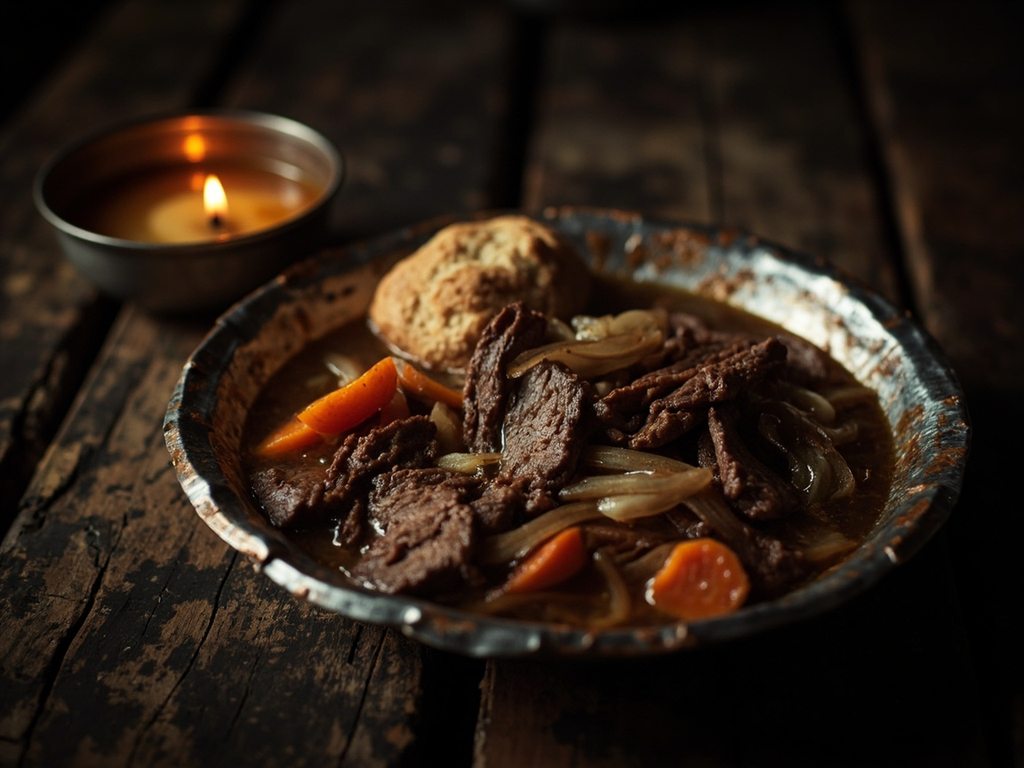
Beef long desalted then boiled, accompanied by the famous ship's biscuit soaked in broth. The preserved food that enabled 19th-century travelers to cross the Atlantic.
You who dine on land, you know nothing of a long crossing's fare. For thirty-eight days I lived on this beef taken from brine, which must be desalted in plenty of water before boiling, and on this biscuit so hard that you dip it in the broth lest you break your teeth. It was not my château's table, believe me; but when the stomach is at peace with the swell, one makes do. It is the food that carried me to the shores of the New World, and I owe it some gratitude.
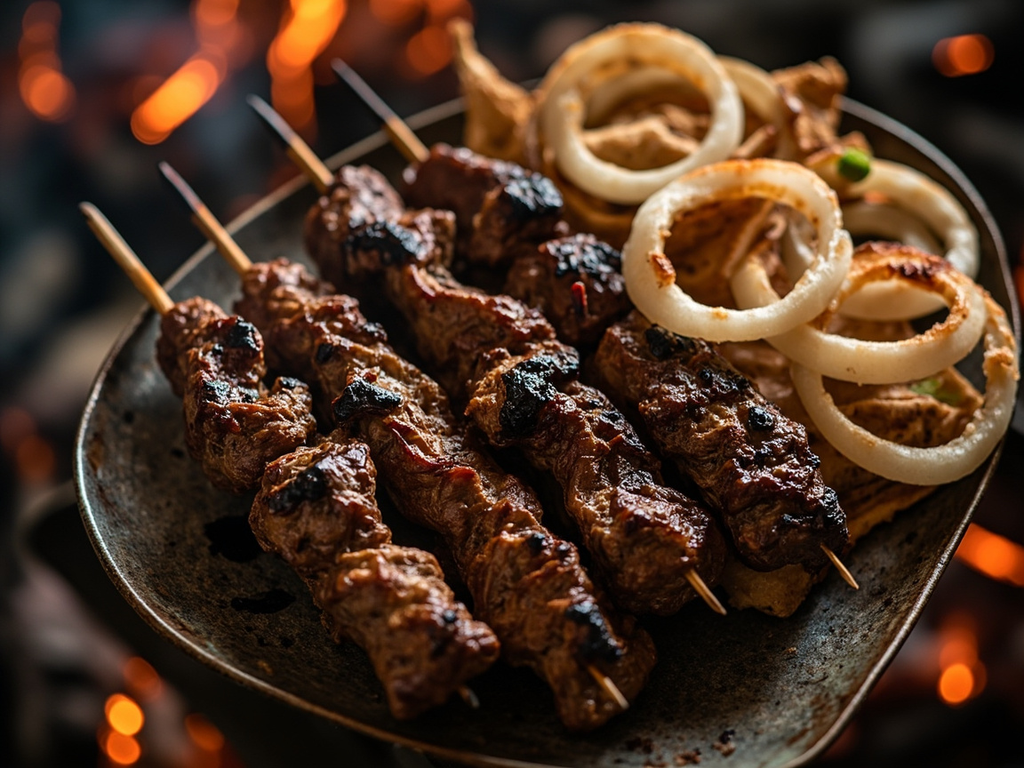
- •Beef in brine (ship's barrel) — one piece (preserved meat)
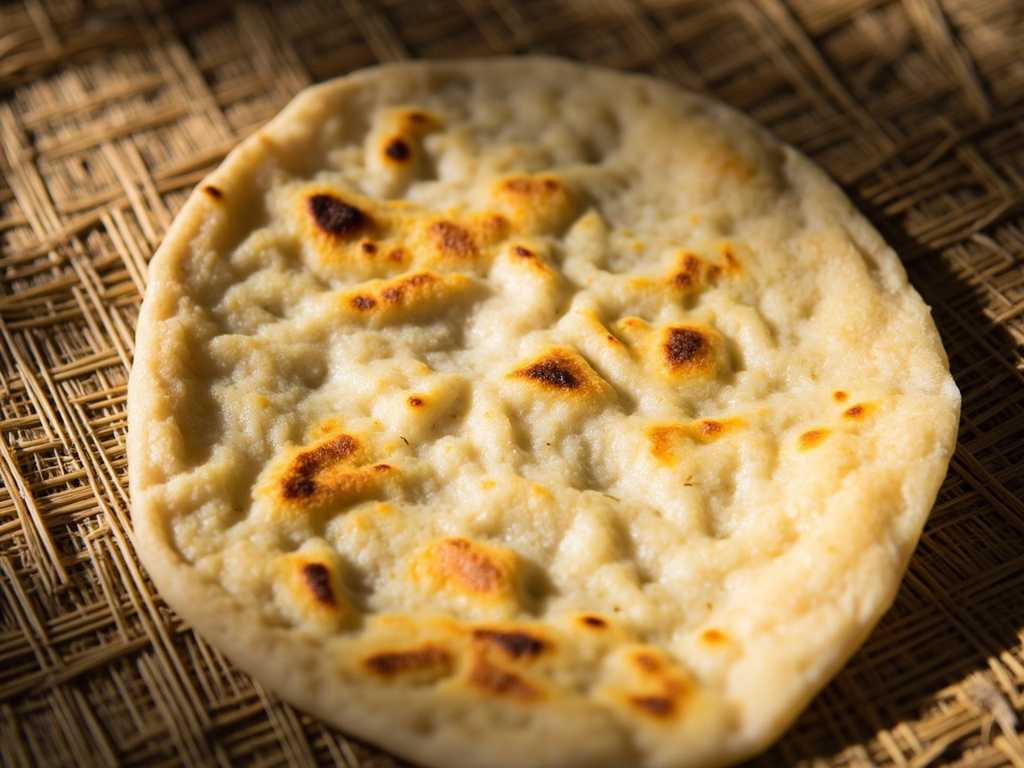
- •Ship's biscuit (flour and water flatbread, twice-baked) — as needed (ship's starch)
- •Fresh water from the reserve — plenty (desalting and broth)
- •Onions, if the reserve holds any — a few (aromatic)
- •Peppercorns — a pinch (seasoning)
Salt Beef and Ship's Biscuit of the Crossing
Beef long desalted then boiled, accompanied by the famous ship's biscuit soaked in broth. The preserved food that enabled 19th-century travelers to cross the Atlantic.
Why this dish? On April 2, 1831, Tocqueville embarked at Le Havre on the packet ship Le Havre for America: thirty-eight days at sea. On board, no fresh butter or Channel sole — they lived on salted meat from barrels and ship's biscuit, the standard fare for all passengers then. This dish evokes the long voyage that gave birth to *Democracy in America*.
You who dine on land, you know nothing of a long crossing's fare. For thirty-eight days I lived on this beef taken from brine, which must be desalted in plenty of water before boiling, and on this biscuit so hard that you dip it in the broth lest you break your teeth. It was not my château's table, believe me; but when the stomach is at peace with the swell, one makes do. It is the food that carried me to the shores of the New World, and I owe it some gratitude.
Ingredients (period version)
- Beef in brine (ship's barrel) — one piece (preserved meat)
- Ship's biscuit (flour and water flatbread, twice-baked) — as needed (ship's starch)
- Fresh water from the reserve — plenty (desalting and broth)
- Onions, if the reserve holds any — a few (aromatic)
- Peppercorns — a pinch (seasoning)
Ingredients
- Salt beef brisket or chuck (raw corned beef to desalt) — 800 g (meat)
- Hard bread or hardtack — 4 crackers (starch)
- Onions — 2 (aromatic)
- Carrots — 3 (garnish)
- Bay leaf, peppercorns — to taste (bouquet)
- Water — 2.5 litres (broth)
Method
- Desalt the meat for 12 to 24 hours in cold water, changing the water several times.
- Cover with fresh water, bring gently to a simmer, and skim.
- Add onions, carrots, bay leaf, and pepper; simmer gently for 2.5 to 3 hours until tender.
- Break the hardtack into pieces and soak in a ladleful of hot broth to soften.
- Slice the meat, serve with vegetables and the softened biscuit moistened with broth.
How it was made : On packet ships of the 1830s, beef and pork traveled in brine barrels, and ship's biscuit — flour and water baked twice to remove all moisture — kept for months. It was tapped on the table to dislodge weevils before being dipped in broth or coffee.
The contemporary twist : Serve as a 'travel pot-au-feu': the hardtack placed at the bottom of the bowl as a base, shredded beef on top, and a dash of Normandy mustard.
Alexis de Tocqueville · Charactorium