 flip
flipDuck à l'Orange for Grand Occasions
Duck à l'Orange for Grand Occasions
Why this dish? Elected to the Académie française in 1914 and then crowned with the Nobel Prize in Literature in 1927, Bergson, despite his reserve, was host and guest at prestigious dinners. Duck à l'orange, domesticated game and refined sweet-and-sour sauce, was THE reception dish of the Parisian haute bourgeoisie to honor a distinguished guest.
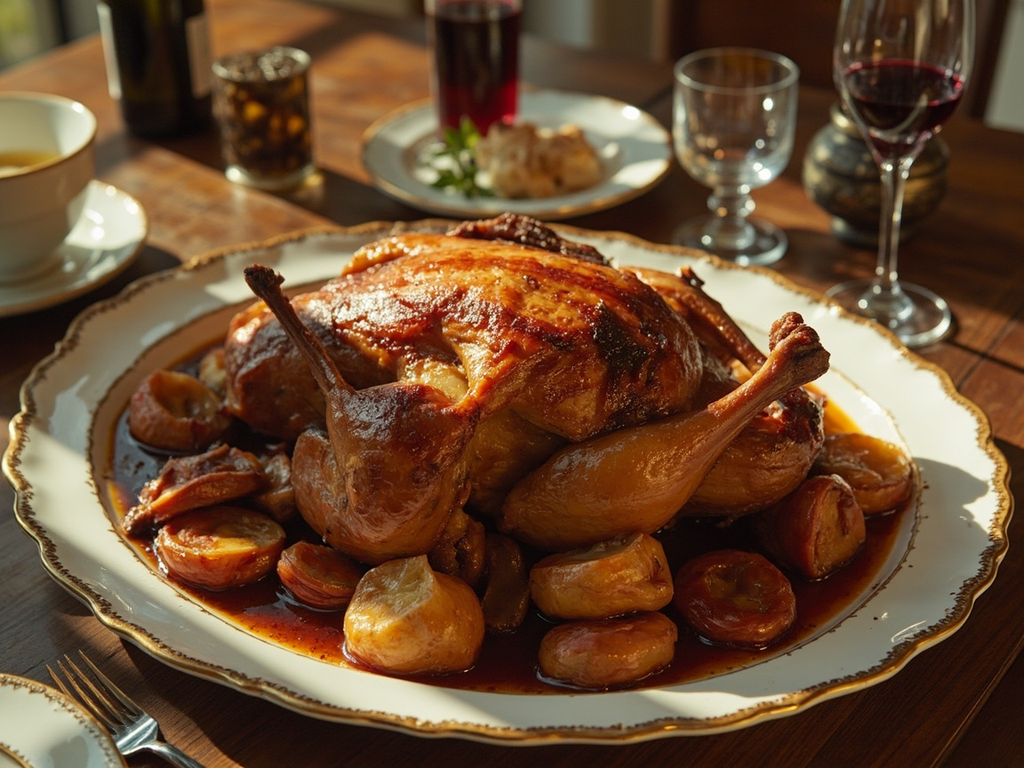
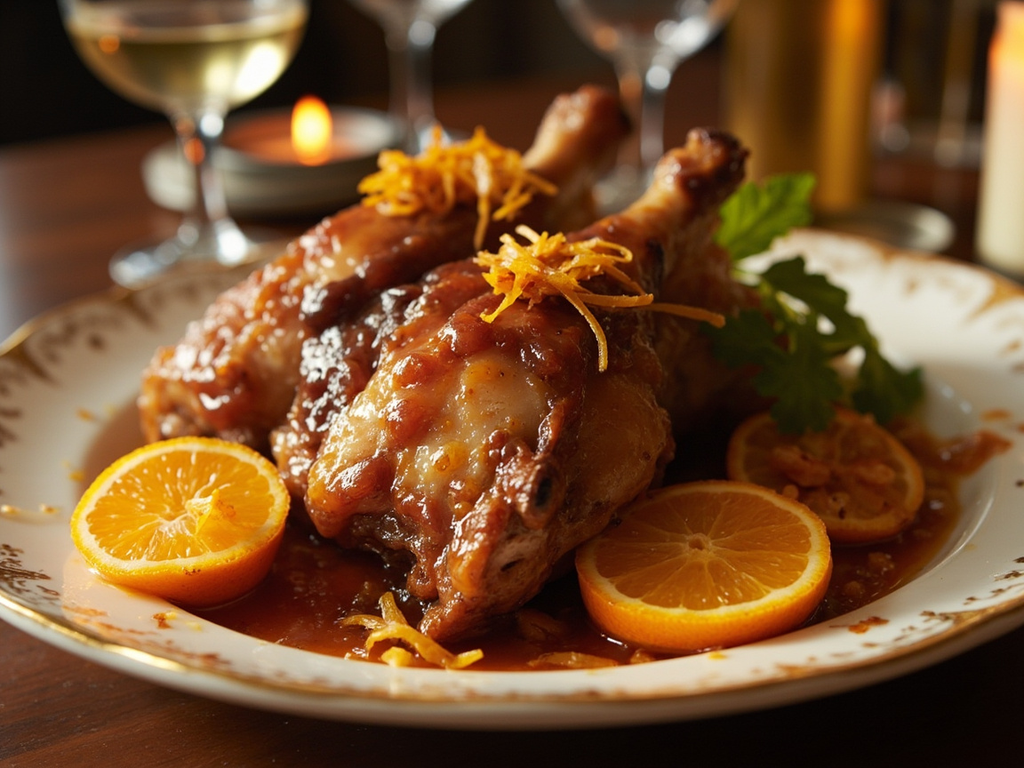
A golden roasted duck, served sliced under a glossy sauce made from bitter orange juice, deglazed with vinegar and caramelized sugar, and garnished with fine candied zest. The acidity of the citrus cuts through the richness of the meat.
When I was honored with a place at some solemn occasion, it was willingly this duck that Louise had brought to the table. You will see it appear all golden, coated in a sauce where the bitter orange vies with sugar for a victory that neither fully wins—a delicate balance, and I confess I find in it a pleasure that my philosophy in no way condemns. The trick lies in the deglazing: you scrape the caramelized juices with vinegar, and all the finesse depends on it. Eat it unhurriedly, as one must savor rare things.
- •Rouen or Barbary duck — a fine bird (centerpiece)
- •Bitter oranges (Seville oranges) — three or four (sauce and zest)
- •Loaf sugar — a little (sweet-and-sour caramel)
- •Wine vinegar — a splash (acidity)
- •Game or poultry stock — a ladleful (sauce base)
- •Fine butter — a knob (final smoothing)
Duck à l'Orange for Grand Occasions
A golden roasted duck, served sliced under a glossy sauce made from bitter orange juice, deglazed with vinegar and caramelized sugar, and garnished with fine candied zest. The acidity of the citrus cuts through the richness of the meat.
Why this dish? Elected to the Académie française in 1914 and then crowned with the Nobel Prize in Literature in 1927, Bergson, despite his reserve, was host and guest at prestigious dinners. Duck à l'orange, domesticated game and refined sweet-and-sour sauce, was THE reception dish of the Parisian haute bourgeoisie to honor a distinguished guest.
When I was honored with a place at some solemn occasion, it was willingly this duck that Louise had brought to the table. You will see it appear all golden, coated in a sauce where the bitter orange vies with sugar for a victory that neither fully wins—a delicate balance, and I confess I find in it a pleasure that my philosophy in no way condemns. The trick lies in the deglazing: you scrape the caramelized juices with vinegar, and all the finesse depends on it. Eat it unhurriedly, as one must savor rare things.
Ingredients (period version)
- Rouen or Barbary duck — a fine bird (centerpiece)
- Bitter oranges (Seville oranges) — three or four (sauce and zest)
- Loaf sugar — a little (sweet-and-sour caramel)
- Wine vinegar — a splash (acidity)
- Game or poultry stock — a ladleful (sauce base)
- Fine butter — a knob (final smoothing)
Ingredients
- Free-range duck — 1 (1.8–2 kg) (centerpiece)
- Oranges (1 bitter if possible + 2 sweet) — 3 (sauce and zest)
- Sugar — 2 tbsp (caramel)
- Wine vinegar — 2 tbsp (gastrique)
- Poultry stock — 250 ml (sauce)
- Butter — 30 g (smoothing)
- Salt, pepper — to taste (seasoning)
Method
- Season the duck with salt and pepper, roast it in the oven at 180 °C for about 1 hour 15 minutes, basting with its juices, until the skin is nicely golden.
- Prepare a gastrique: make a blond caramel with the sugar, deglaze with vinegar, then add the orange juice and stock; let reduce to a syrupy consistency.
- Blanch fine orange zest in boiling water, then add it to the sauce; whisk in cold butter to make it glossy.
- Carve the duck, arrange the pieces, coat with sauce, and sprinkle with zest; serve immediately, with peeled orange segments.
How it was made : The bigarade sauce appears as early as the 17th century in court cuisine and enters the bourgeois repertoire via the great 19th-century treatises. Seville bitter oranges were used, more fragrant and less sweet than table oranges; the duck was roasted on a spit and basted with its own drippings.
The contemporary twist : Torch a few zests just before serving for a roasted bitterness note, and name the dish "Duration, bigarade sauce" on the menu.
Sources : Auguste Escoffier, Le Guide culinaire, 1903 (canard à la bigarade) · Prosper Montagné, Larousse gastronomique, 1938
Henri Bergson · Charactorium