 flip
flipCambridge Burnt Cream (College Crème Brûlée)
Cambridge Burnt Cream (College Crème Brûlée)
Why this dish? Marshall spent most of his life at Cambridge (St John's College, then professor of political economy). "Burnt cream," a cream with a caramelized sugar crust, is a sweet traditionally associated with the tables of Cambridge colleges, served at festive dinners.
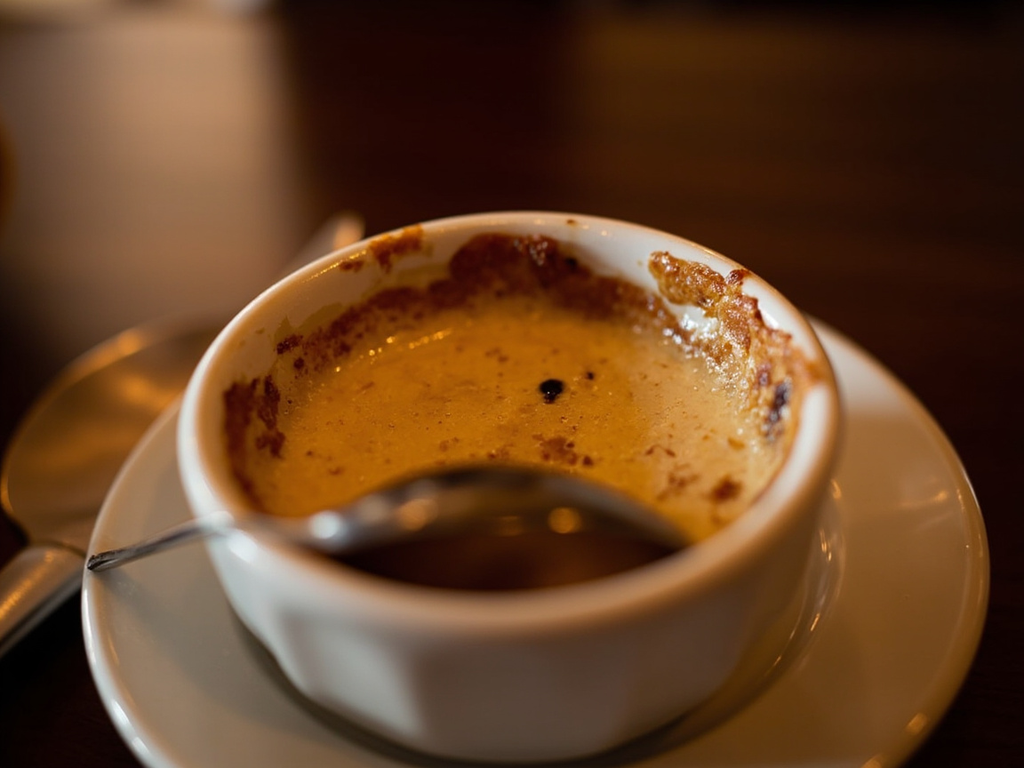
A creamy vanilla custard topped with a thin layer of sugar burnt with a hot iron, cracking under the spoon. The festive dessert of grand university tables.
At our college dinners, when conversation grows heated and wine has loosened tongues, the burnt cream is finally brought in. It is a very simple custard, set in the oven very gently, but here is the trick: its surface is covered with sugar, and a red-hot iron is applied until it browns and hardens. The pleasure, believe me, lies entirely in that first spoonful that breaks the crust. I confess that an economist, however measured, may yield to it once a year.
- •Thick fresh cream — one pint (base)
- •Egg yolks — four (thickener)
- •Sugar — to taste (sweetness + crust)
- •Vanilla pod — one (flavoring)
Cambridge Burnt Cream (College Crème Brûlée)
A creamy vanilla custard topped with a thin layer of sugar burnt with a hot iron, cracking under the spoon. The festive dessert of grand university tables.
Why this dish? Marshall spent most of his life at Cambridge (St John's College, then professor of political economy). "Burnt cream," a cream with a caramelized sugar crust, is a sweet traditionally associated with the tables of Cambridge colleges, served at festive dinners.
At our college dinners, when conversation grows heated and wine has loosened tongues, the burnt cream is finally brought in. It is a very simple custard, set in the oven very gently, but here is the trick: its surface is covered with sugar, and a red-hot iron is applied until it browns and hardens. The pleasure, believe me, lies entirely in that first spoonful that breaks the crust. I confess that an economist, however measured, may yield to it once a year.
Ingredients (period version)
- Thick fresh cream — one pint (base)
- Egg yolks — four (thickener)
- Sugar — to taste (sweetness + crust)
- Vanilla pod — one (flavoring)
Ingredients
- Heavy cream — 500 ml (base)
- Egg yolks — 5 (thickener)
- Sugar — 60 g + 4 tbsp for the crust (sweetness + caramel)
- Vanilla pod — 1 (flavoring)
Method
- Heat the cream with the split vanilla pod without boiling; let infuse 15 minutes.
- Whisk the yolks with the sugar, then pour the warm cream over them while mixing.
- Divide among ramekins and bake in a bain-marie at 150 °C for about 35–40 minutes: the custard should be set but still wobbly.
- Cool completely, ideally several hours in the fridge.
- Sprinkle with sugar and caramelize with a blowtorch (or under a hot broiler), the modern version of the red-hot iron.
- Serve immediately so the crust cracks.
How it was made : Before the blowtorch, sugar was caramelized using an iron or a "salamander"—a metal disc heated red-hot in the fire and passed over the sugar. Tradition attributes this recipe to the kitchens of Cambridge colleges, hence the name "Cambridge burnt cream."
The contemporary twist : Slide a few raspberries into the bottom of the ramekin before pouring the custard: the acidity cuts the sweetness and the crust cracks all the better.
Sources : Culinary tradition of Cambridge colleges (Trinity / St John's) · Mrs Beeton, Book of Household Management, 1861
Alfred Marshall · Charactorium