 flip
flipChristmas Plum Pudding at the Darwin Home
Christmas Plum Pudding at the Darwin Home
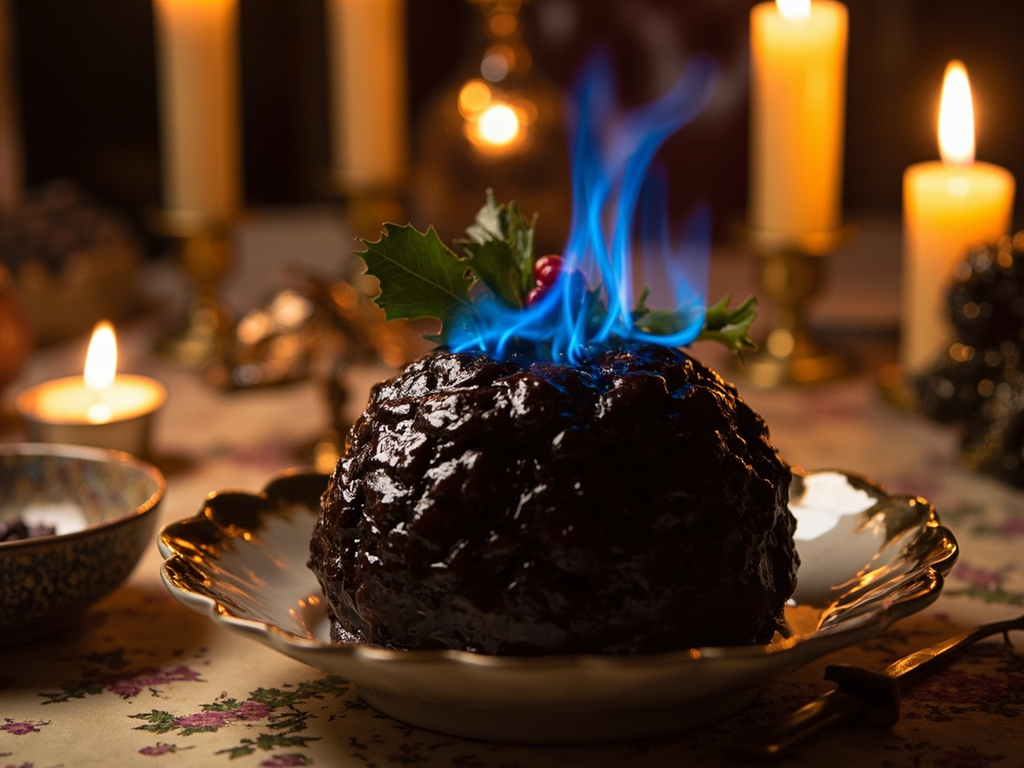
Why this dish? Darwin and his wife Emma had ten children, and Down House echoed with family celebrations. The flaming plum pudding, the highlight of the Victorian Christmas dinner, gathered all ages around the table — a tender ritual for a man deeply devoted to his household.
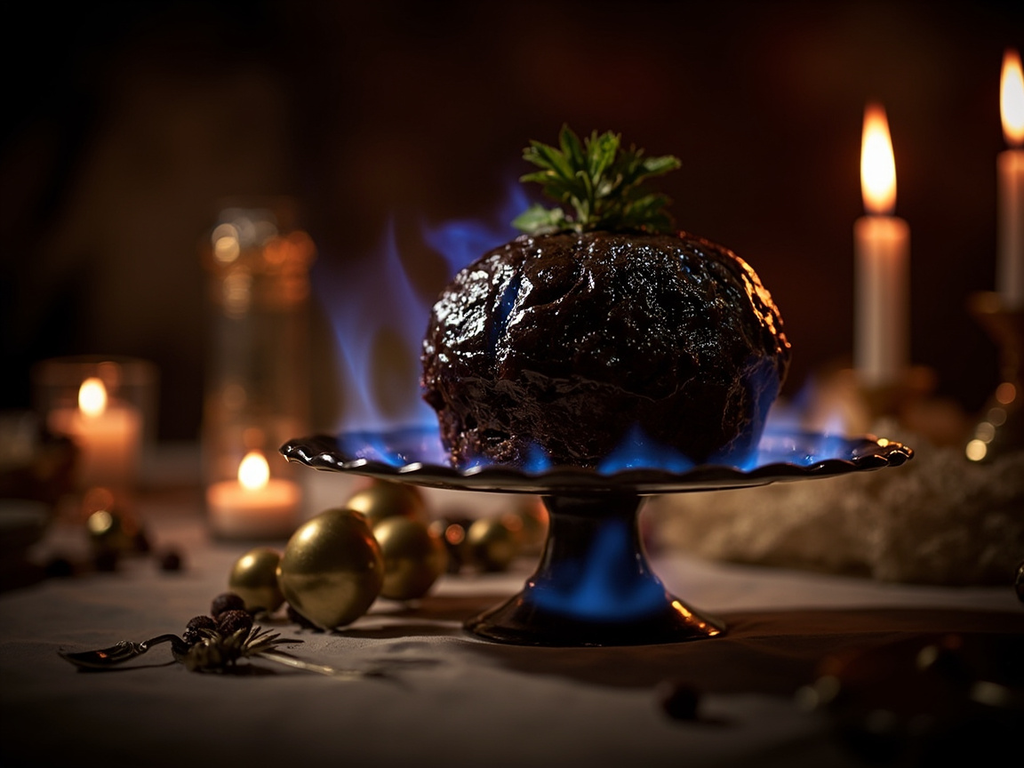
A dense, dark pudding of dried fruits, spiced and flavoured with candied zest, long steamed then flambéed with brandy. The king of desserts at Christmas in Victorian England.
If science was the work of my life, my family was its happiness — and no day delighted me more than Christmas, when my children pressed around the table. Then the pudding was brought in, dark and steaming, which Emma had cooked for hours; it was doused with brandy and set alight, and the little ones cried out to see the blue flame dance. Each had stirred the batter and made a wish, as custom demanded. I am not a superstitious man, but before such a pudding, I am willing to make an exception.
- •Beef suet — a good portion (richness and tenderness)
- •Raisins and currants — in abundance (fruit, sweetness)
- •Breadcrumbs — two handfuls (structure)
- •Candied orange and lemon peel — a little (fragrant bitterness)
- •Brown sugar — to taste (sweetness)
- •Nutmeg and cinnamon — a pinch each (signature spices)
- •Eggs — a few (binder)
- •Brandy — a glass (flavour and flambé)
Christmas Plum Pudding at the Darwin Home
A dense, dark pudding of dried fruits, spiced and flavoured with candied zest, long steamed then flambéed with brandy. The king of desserts at Christmas in Victorian England.
Why this dish? Darwin and his wife Emma had ten children, and Down House echoed with family celebrations. The flaming plum pudding, the highlight of the Victorian Christmas dinner, gathered all ages around the table — a tender ritual for a man deeply devoted to his household.
If science was the work of my life, my family was its happiness — and no day delighted me more than Christmas, when my children pressed around the table. Then the pudding was brought in, dark and steaming, which Emma had cooked for hours; it was doused with brandy and set alight, and the little ones cried out to see the blue flame dance. Each had stirred the batter and made a wish, as custom demanded. I am not a superstitious man, but before such a pudding, I am willing to make an exception.
Ingredients (period version)
- Beef suet — a good portion (richness and tenderness)
- Raisins and currants — in abundance (fruit, sweetness)
- Breadcrumbs — two handfuls (structure)
- Candied orange and lemon peel — a little (fragrant bitterness)
- Brown sugar — to taste (sweetness)
- Nutmeg and cinnamon — a pinch each (signature spices)
- Eggs — a few (binder)
- Brandy — a glass (flavour and flambé)
Ingredients
- Vegetable suet (or cold grated butter) — 120 g (tenderness)
- Raisins + currants + sultanas — 400 g total (fruit)
- Breadcrumbs — 120 g (structure)
- Flour — 60 g (structure)
- Brown sugar — 120 g (sweetness)
- Candied citrus peel — 80 g (fragrant bitterness)
- Grated nutmeg + cinnamon + allspice — 2 tsp total (spices)
- Eggs — 2 (binder)
- Brandy — 80 ml (flavour and flambé)
Method
- Mix all dry ingredients, fruit and spices in a large bowl.
- Add suet, beaten eggs and half the brandy; stir thoroughly (make a wish!).
- Pack the mixture into a buttered pudding basin, cover with pleased greaseproof paper and a tied cloth.
- Steam for 4 to 5 hours in a large covered pot, adding boiling water as needed.
- Let rest (ideally several weeks in a cool place to mature), then re-steam for 1 to 2 hours on the day.
- Unmould, heat the remaining brandy, pour over the pudding and flambé at the table.
How it was made : Victorian plum pudding was prepared weeks in advance, on 'Stir-up Sunday' in late November, when each family member stirred the batter and made a wish. Sometimes a silver coin was hidden inside for good luck. Mrs Beeton and the new wave of Dickensian Christmases (A Christmas Carol, 1843) made it the emblem of the holiday.
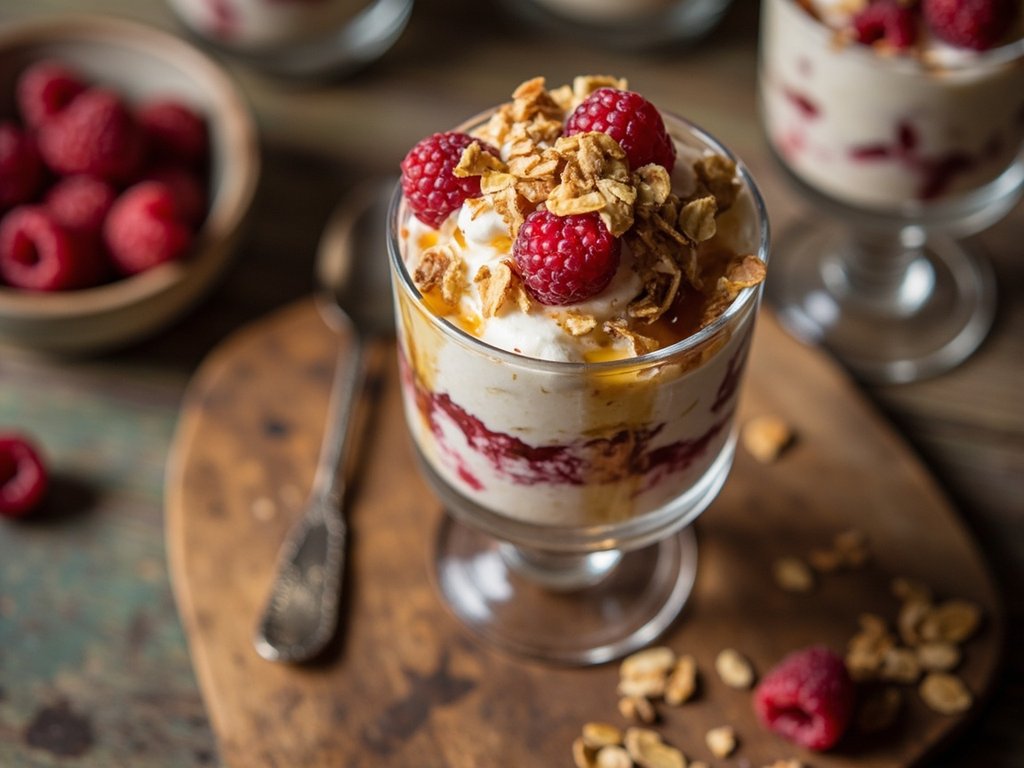
The contemporary twist : Serve it with a quenelle of lightly vanilla-scented whipped cream instead of heavy brandy butter, and turn off the lights for the flambé — the effect on young and old remains intact.
Sources : Isabella Beeton, Book of Household Management, 1861 · Charles Dickens, A Christmas Carol, 1843
Charles Darwin · Charactorium