 flip
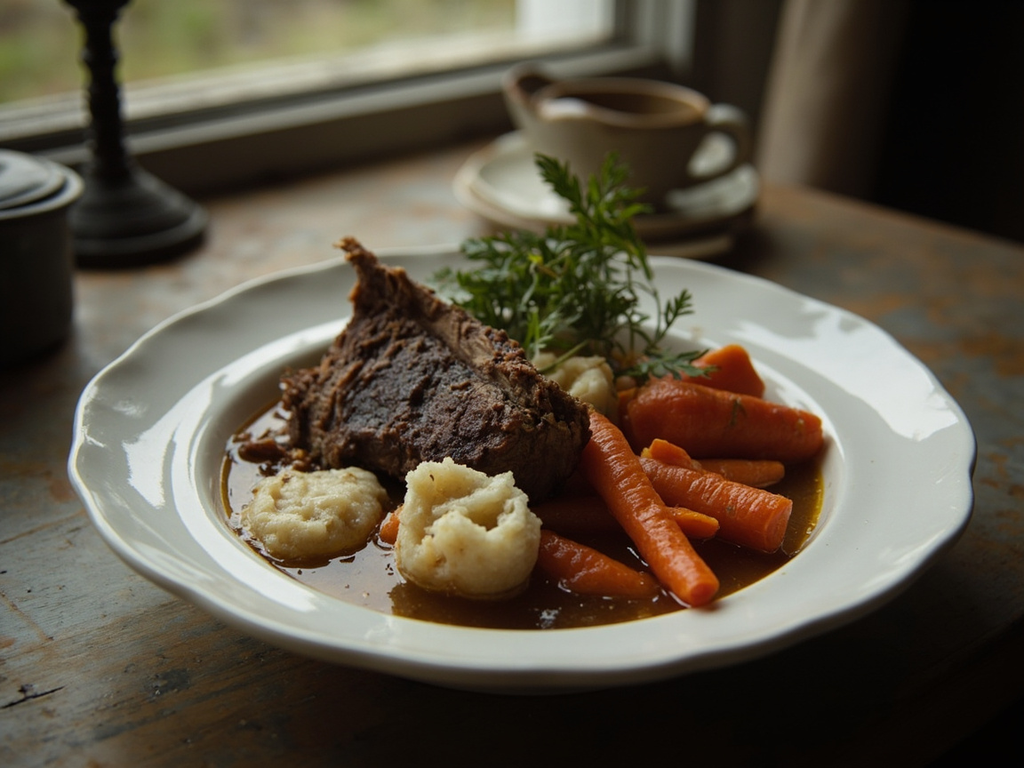
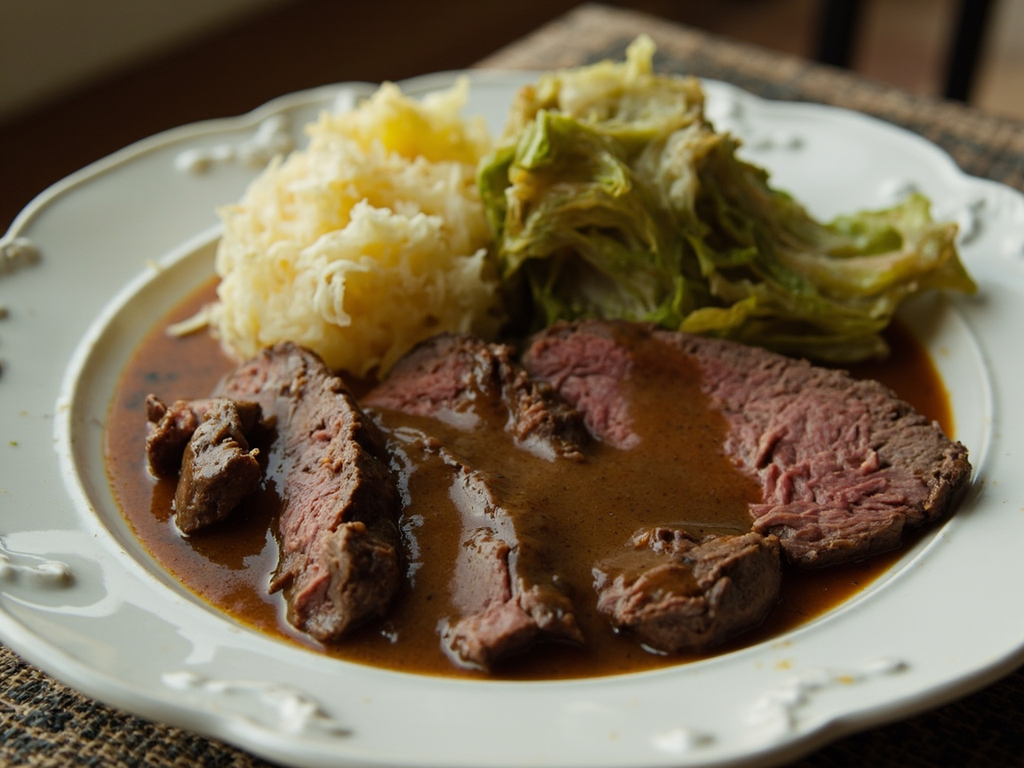
flipRoast Beef with Gravy, Boiled Potatoes and Green Cabbage
Roast Beef with Gravy, Boiled Potatoes and Green Cabbage
Why this dish? Sunday roast beef is the emblem of the English table and the heart of a prosperous Victorian academic's dinner. It is exactly the "simple English cooking: roast meats, potatoes, boiled vegetables" that made up Marshall's daily fare at Cambridge.
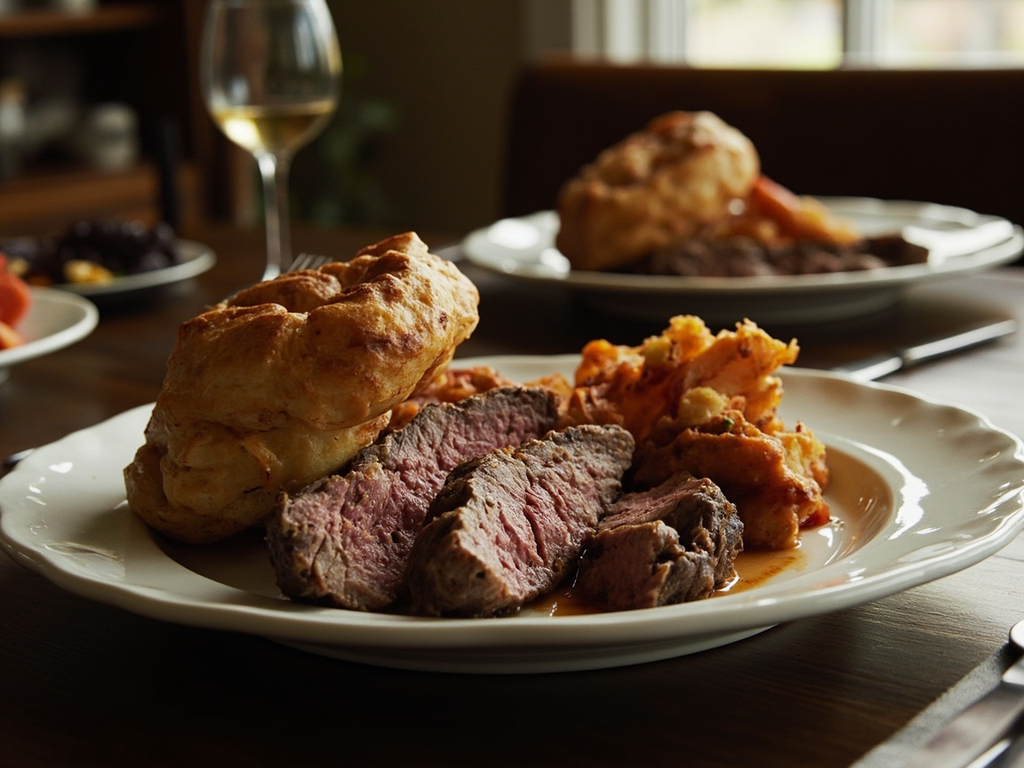
A fine joint of beef slowly roasted, served in its juices, accompanied by boiled potatoes and tender green cabbage. The quintessential Sunday dish, plain and nourishing.
You see, I never believed one should complicate what nature already offers that is good. A well-chosen quarter of beef, roasted at a moderate heat until the fat sings, and its juices carefully collected: that is the whole science. My health has always commanded temperance, so I avoid heavy sauces; a boiled potato, a cabbage from our garden, and a man dines reasonably. At Cambridge, believe me, it is this dish that reconciles body and mind after a long day of calculations.
- •Joint of beef (sirloin or rib) — a fine piece (central meat)
- •Lard or suet — a knob (cooking fat)
- •Potatoes — as needed (accompaniment)
- •Green cabbage — one head (boiled vegetable)
- •Salt, pepper — to taste (seasoning)
- •Flour — one spoonful (gravy thickener)
Roast Beef with Gravy, Boiled Potatoes and Green Cabbage
A fine joint of beef slowly roasted, served in its juices, accompanied by boiled potatoes and tender green cabbage. The quintessential Sunday dish, plain and nourishing.
Why this dish? Sunday roast beef is the emblem of the English table and the heart of a prosperous Victorian academic's dinner. It is exactly the "simple English cooking: roast meats, potatoes, boiled vegetables" that made up Marshall's daily fare at Cambridge.
You see, I never believed one should complicate what nature already offers that is good. A well-chosen quarter of beef, roasted at a moderate heat until the fat sings, and its juices carefully collected: that is the whole science. My health has always commanded temperance, so I avoid heavy sauces; a boiled potato, a cabbage from our garden, and a man dines reasonably. At Cambridge, believe me, it is this dish that reconciles body and mind after a long day of calculations.
Ingredients (period version)
- Joint of beef (sirloin or rib) — a fine piece (central meat)
- Lard or suet — a knob (cooking fat)
- Potatoes — as needed (accompaniment)
- Green cabbage — one head (boiled vegetable)
- Salt, pepper — to taste (seasoning)
- Flour — one spoonful (gravy thickener)
Ingredients
- Roast beef (rib or rump) — 1.2 kg (central meat)
- Oil or butter — 2 tbsp (fat)
- Potatoes — 800 g (accompaniment)
- Curly green cabbage — 1 small (vegetable)
- Flour — 1 tbsp (gravy thickener)
- Beef broth — 250 ml (gravy base)
- Salt, pepper — to taste (seasoning)
Method
- Take the meat out 1 hour ahead, season with salt and pepper. Preheat the oven to 220 °C.
- Sear the greased roast on all sides, then put in the oven. Reduce to 180 °C and cook for about 15 minutes per 500 g for medium-rare.
- Let the meat rest for 15 minutes under foil.
- Boil the peeled potatoes in salted water for 20 minutes; boil the shredded cabbage for 8 minutes, then drain.
- Deglaze the roasting pan: sprinkle with flour, add broth, scrape up the juices, and reduce to a thickened gravy.
- Slice the roast, spoon over the gravy, and serve with potatoes and cabbage.
How it was made : In the past, meat was roasted on a spit before the hearth, turned by hand or by a weight mechanism, with fat dripping into a pan used for basting. Gravy was the only accepted "sauce," thickened with flour. Vegetables were boiled for a long time, in the English manner.
The contemporary twist : Serve the beef rare in thin slices on a board, with cabbage quickly wilted in a pan instead of boiled—Victorian simplicity, but crunchy.
Sources : Mrs Beeton, Book of Household Management, 1861 · Eliza Acton, Modern Cookery for Private Families, 1845
Alfred Marshall · Charactorium