 flip
flipHalva-ye Ardi (Flour Halva with Saffron and Nuts)
Halva-ye Ardi (Flour Halva with Saffron and Nuts)
Why this dish? In the Muslim tradition of Khorasan, halva is prepared for religious ceremonies, funerals, and feasts. Navoi, a deeply pious man and patron of mosques and madrasas in Herat, had sweets distributed on such occasions. Saffron flour halva is the most emblematic confection of the region, inseparable from the spiritual and communal life he funded.
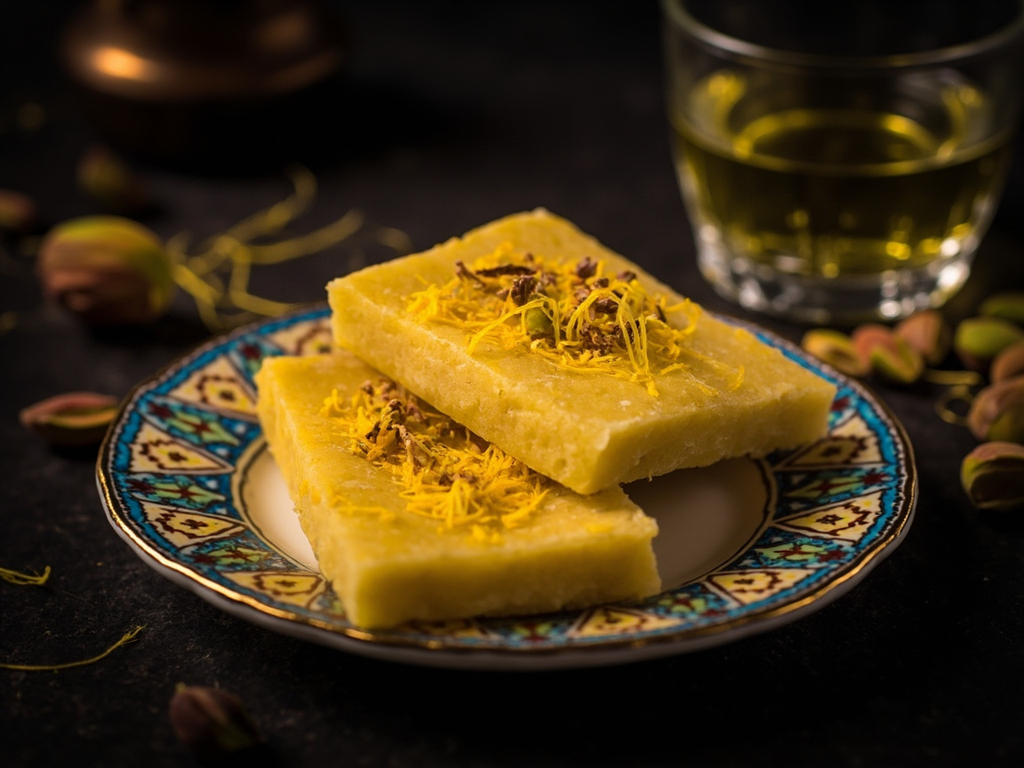
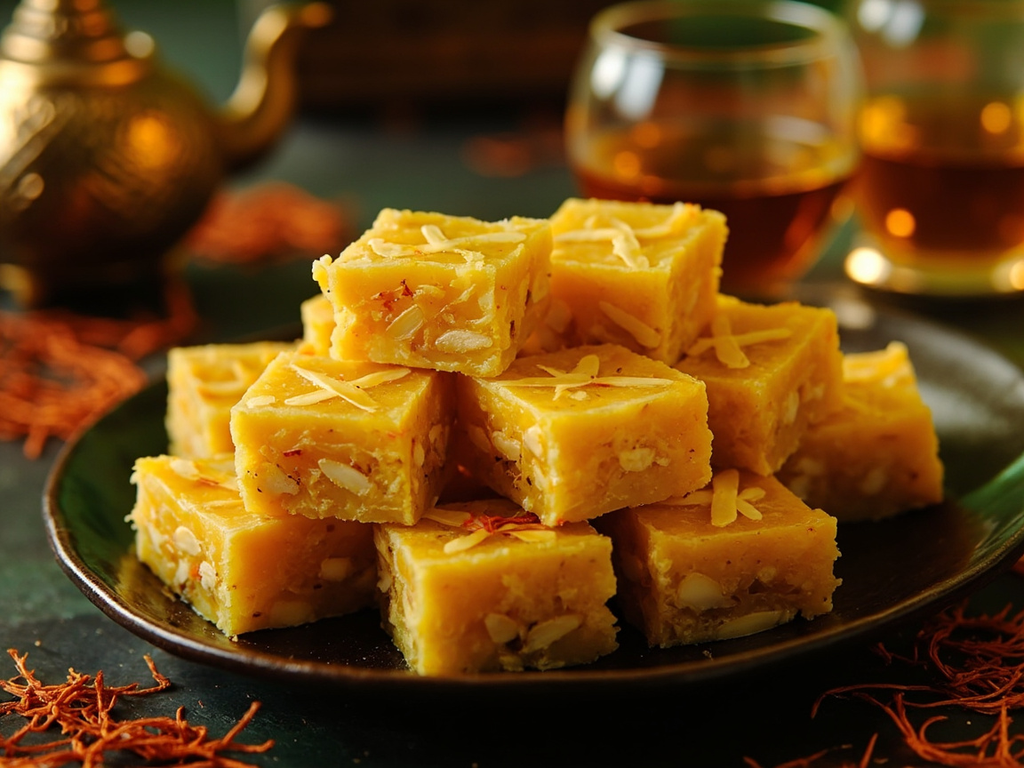
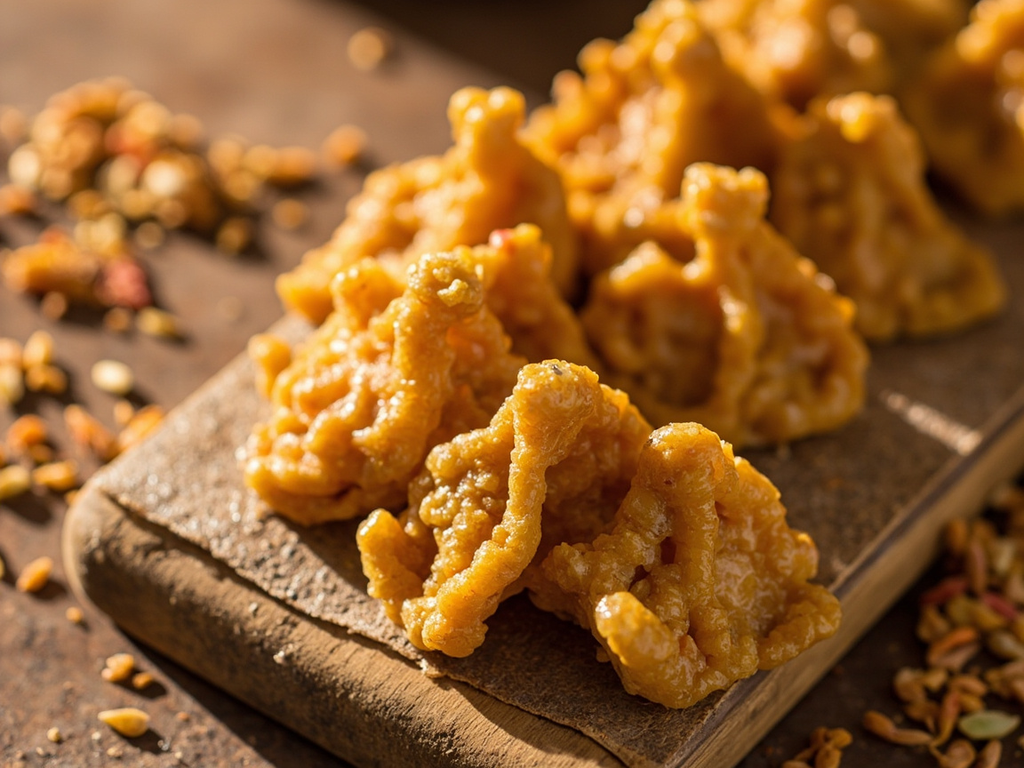
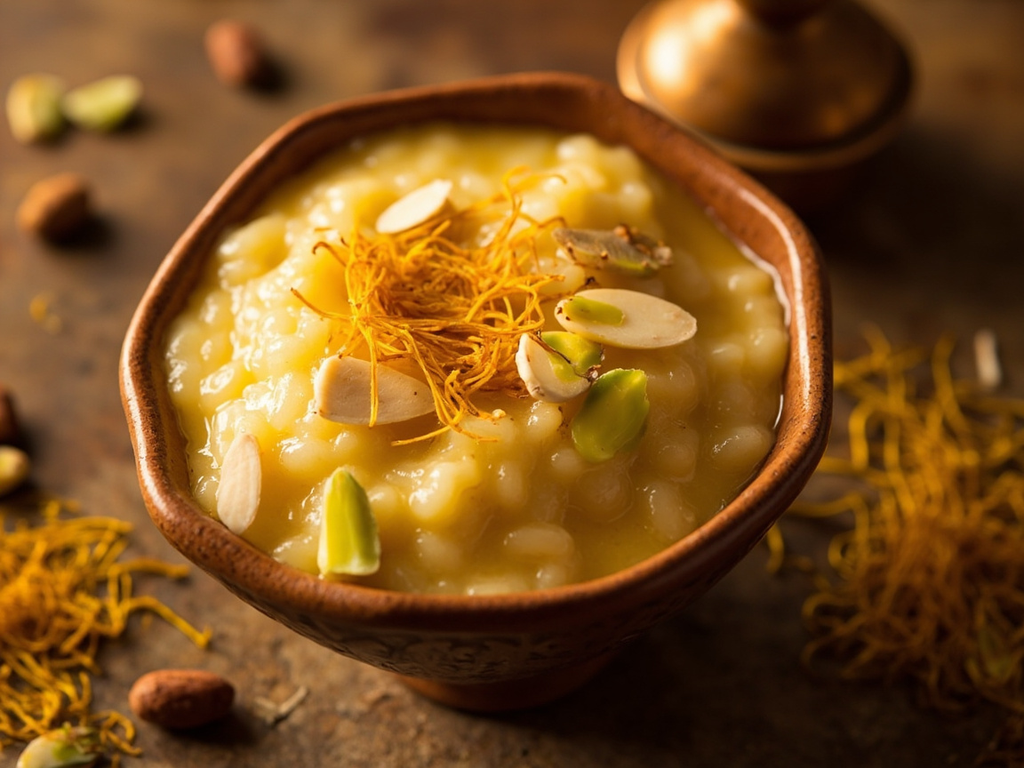
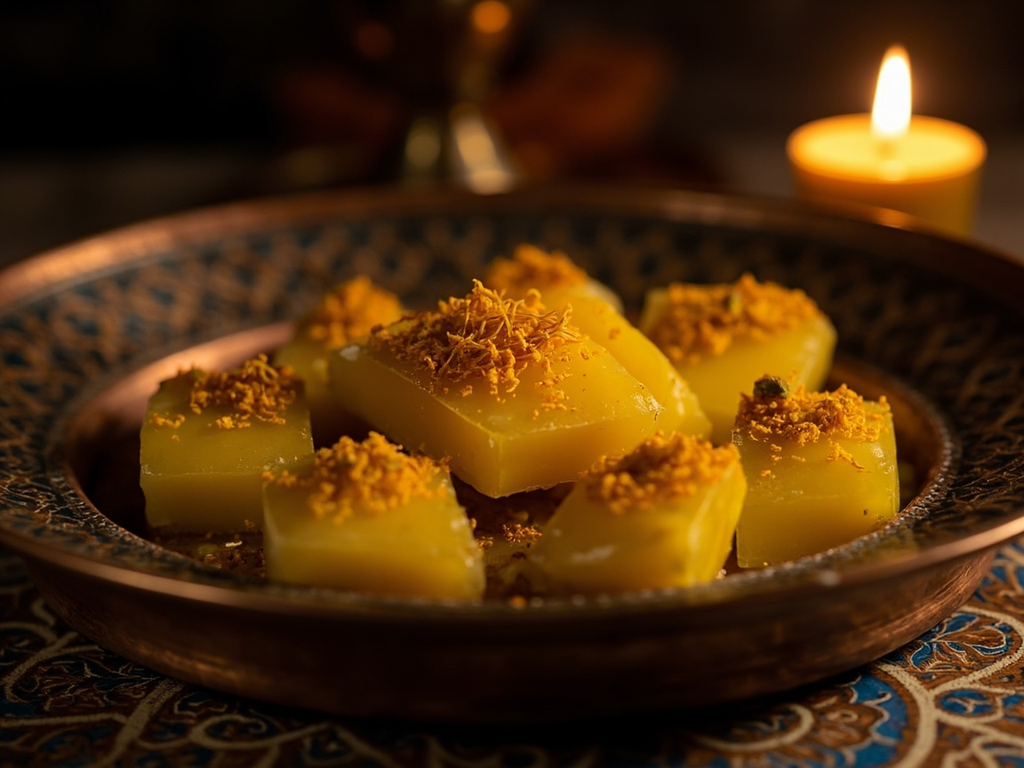
A dense, melting confection of wheat flour long-roasted in clarified butter, sweetened with a syrup scented with saffron and rosewater, sprinkled with crushed walnuts and pistachios. Cut into golden diamonds.
When I have a madrasa built or a caravanserai restored, it is halva that is offered to the workers and the faithful on the day of inauguration. The flour must roast long in the butter, and it is by the cook's patience that the quality of the dish is known — as in poetry, haste is the enemy of beauty. The saffron of our Khorasan gives it that amber color I love to see glow in the light of the oil lamps. I have this halva arranged in diamonds on a copper tray, and each receives their share — the scholar as much as the water-carrier.
- •Fine wheat flour — a measure (Roasted base)
- •Clarified butter (roghan) — almost as much as the flour (Cooking and richness)
- •Sugar or honey — to desired sweetness (Sweetener)
- •Rosewater — a few drops (Perfume)
- •Saffron — a pinch, infused (Color and aroma)
- •Walnuts and pistachios — a handful, crushed (Garnish)
- •Cardamom — a few crushed seeds (Spice)
Halva-ye Ardi (Flour Halva with Saffron and Nuts)
A dense, melting confection of wheat flour long-roasted in clarified butter, sweetened with a syrup scented with saffron and rosewater, sprinkled with crushed walnuts and pistachios. Cut into golden diamonds.
Why this dish? In the Muslim tradition of Khorasan, halva is prepared for religious ceremonies, funerals, and feasts. Navoi, a deeply pious man and patron of mosques and madrasas in Herat, had sweets distributed on such occasions. Saffron flour halva is the most emblematic confection of the region, inseparable from the spiritual and communal life he funded.
When I have a madrasa built or a caravanserai restored, it is halva that is offered to the workers and the faithful on the day of inauguration. The flour must roast long in the butter, and it is by the cook's patience that the quality of the dish is known — as in poetry, haste is the enemy of beauty. The saffron of our Khorasan gives it that amber color I love to see glow in the light of the oil lamps. I have this halva arranged in diamonds on a copper tray, and each receives their share — the scholar as much as the water-carrier.
Ingredients (period version)
- Fine wheat flour — a measure (Roasted base)
- Clarified butter (roghan) — almost as much as the flour (Cooking and richness)
- Sugar or honey — to desired sweetness (Sweetener)
- Rosewater — a few drops (Perfume)
- Saffron — a pinch, infused (Color and aroma)
- Walnuts and pistachios — a handful, crushed (Garnish)
- Cardamom — a few crushed seeds (Spice)
Ingredients
- Wheat flour — 200 g (Base)
- Clarified butter (ghee) — 150 g (Cooking)
- Sugar — 200 g (Syrup)
- Water — 250 ml (Syrup)
- Saffron — 0.3 g, steeped in 2 tbsp warm water (Color and aroma)
- Rosewater — 2 tbsp (Perfume)
- Ground cardamom — 0.5 tsp (Spice)
- Walnut halves — 50 g, chopped (Garnish)
- Unsalted pistachios — 30 g, crushed (Decoration)
Method
- Prepare the syrup: heat the water and sugar over medium heat until fully dissolved. Add the saffron infusion, rosewater, and cardamom. Keep warm.
- In a large heavy-bottomed pan, melt the ghee over medium-low heat. Add the flour in a stream, stirring constantly with a wooden spoon.
- Roast the flour in the ghee for 15 to 20 minutes, stirring without pause: it should turn golden and give off a nutty aroma. This is the crucial step — do not rush it.
- Gradually pour the hot syrup over the roasted flour, stirring vigorously. The mixture will thicken and pull away from the sides.
- Add the chopped walnuts and mix.
- Spread the halva to a thickness of 2 cm in an oiled dish. Smooth the surface and mark diamonds with a knife.
- Sprinkle with crushed pistachios. Let cool and set at room temperature (2 hours minimum).
- Cut the diamonds and serve.
How it was made : Flour halva (halva-ye ard) is one of the oldest confections of the Persian world, documented in Abbasid culinary treatises and widespread throughout Khorasan in the Timurid era. It was traditionally prepared for Norouz (Persian New Year), funeral ceremonies, and pious inaugurations. The word halva comes from the Arabic hulw (sweet).
The contemporary twist : Present the diamonds individually in gilded paper cases, like luxury chocolates, with a saffron thread placed on top.
Sources : Nawal Nasrallah, Annals of the Caliphs' Kitchens (al-Baghdadi's Kitab al-Tabikh), Brill, 2007 · Najmieh Batmanglij, Food of Life: Ancient Persian and Modern Iranian Cooking, Mage Publishers, 2011
Alisher Navoi · Charactorium