 flip
flipSamovar tea with berry preserve (varenye)
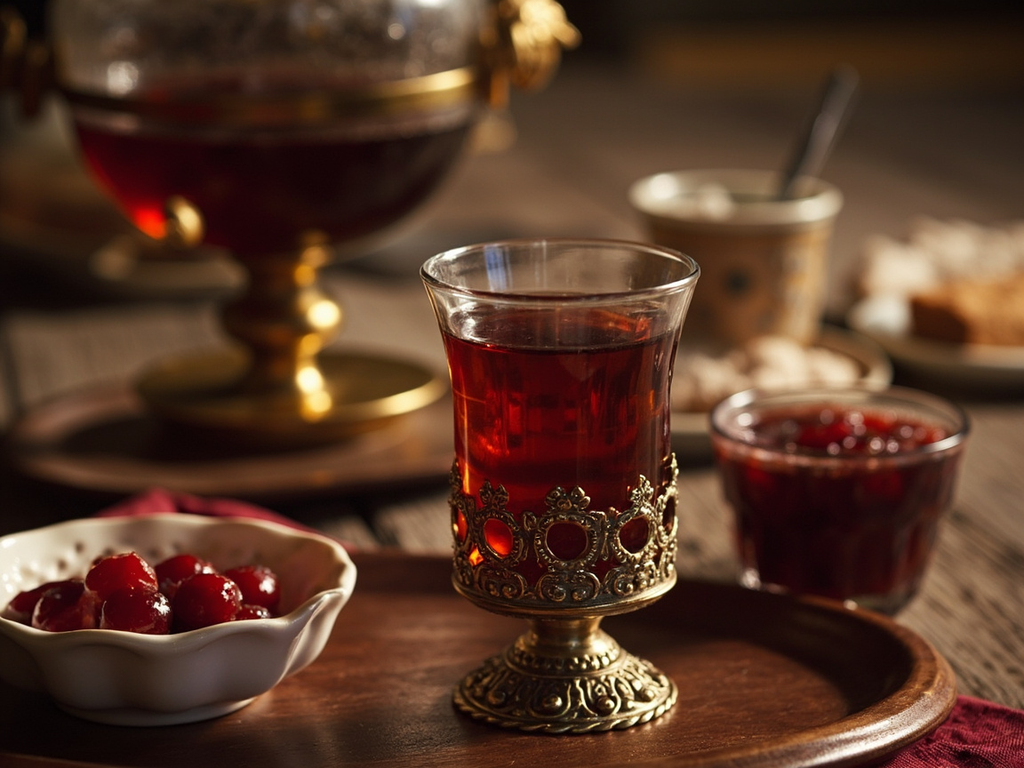
Samovar tea with berry preserve (varenye)
Why this dish? Tea from the samovar is the heart of Russian hospitality: you linger for hours around the table talking and singing. For an adored singer receiving friends and artists, it is the moment when the party extends into confidences, a spoonful of homemade jam melting in the hot glass.
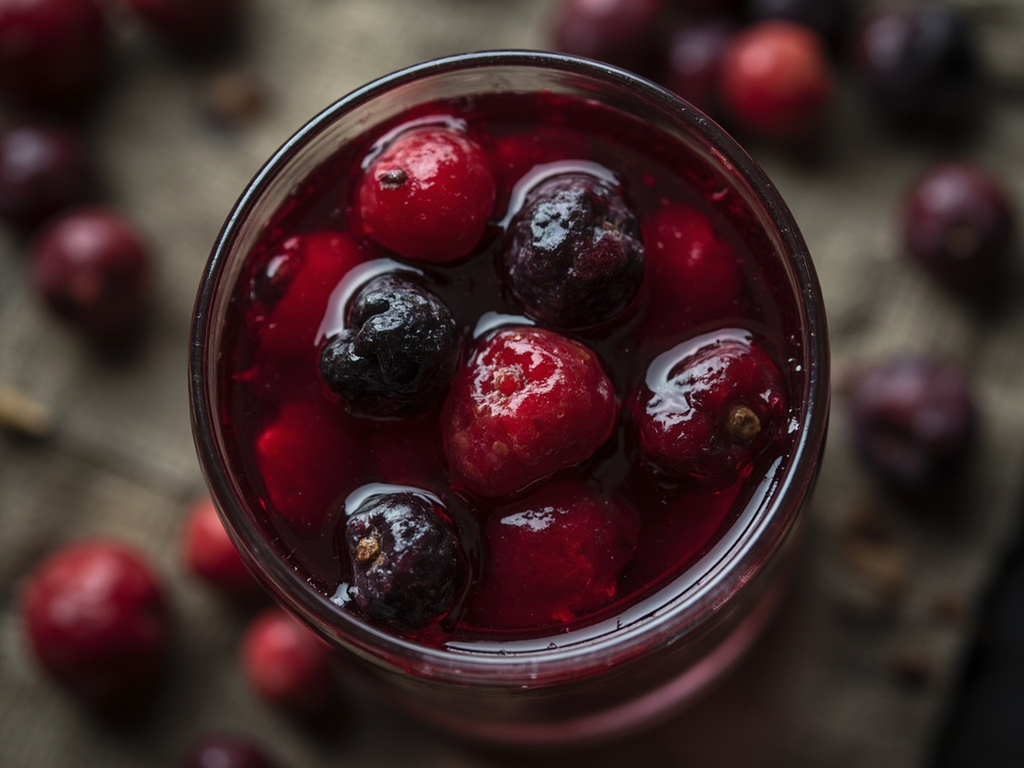
A strong black tea drawn from the samovar, sweetened not with sugar but with a spoonful of varenye, the Russian preserve that is loose and full of fruit, enjoyed on the side or melted into the glass.
When the concert is over and the night is ours, my dear, we don't just part ways — we light the samovar! The tea very black, almost ink, and each person cuts it with hot water their own way. No sugar for me: a good spoonful of varenye, my barely set currant preserve, which you let melt or suck off the spoon between sips. That's where, around the samovar, we sang our most beautiful songs, the ones no one ever recorded.
- •Black leaf tea — for a zavarka (concentrate) (tea base)
- •Samovar water — as desired (dilution)
- •Currants, raspberries, or cherries — a foraged amount (preserve)
- •Sugar — in measured parts with fruit (preservation, sweetness)
- •Lemon slice — optional (acidity (tea 'Russian style'))
Samovar tea with berry preserve (varenye)
A strong black tea drawn from the samovar, sweetened not with sugar but with a spoonful of varenye, the Russian preserve that is loose and full of fruit, enjoyed on the side or melted into the glass.
Why this dish? Tea from the samovar is the heart of Russian hospitality: you linger for hours around the table talking and singing. For an adored singer receiving friends and artists, it is the moment when the party extends into confidences, a spoonful of homemade jam melting in the hot glass.
When the concert is over and the night is ours, my dear, we don't just part ways — we light the samovar! The tea very black, almost ink, and each person cuts it with hot water their own way. No sugar for me: a good spoonful of varenye, my barely set currant preserve, which you let melt or suck off the spoon between sips. That's where, around the samovar, we sang our most beautiful songs, the ones no one ever recorded.
Ingredients (period version)
- Black leaf tea — for a zavarka (concentrate) (tea base)
- Samovar water — as desired (dilution)
- Currants, raspberries, or cherries — a foraged amount (preserve)
- Sugar — in measured parts with fruit (preservation, sweetness)
- Lemon slice — optional (acidity (tea 'Russian style'))
Ingredients
- Loose black tea — 2 tsp per cup of zavarka (concentrate)
- Simmering water — to taste (dilution)
- Red berries (currants, raspberries, or cherries) — 500 g (preserve)
- Sugar — 350 g (varenye)
- Lemon juice — 1 tbsp (balance and light set)
Method
- Prepare varenye: gently cook berries with sugar and lemon juice for 20 to 30 minutes, without breaking them down too much — varenye should remain syrupy and fruity, less set than classic jam. Jar it.
- Prepare zavarka: steep a large amount of black tea in little water to get a very dark concentrate.
- In each glass (ideally in a podstakannik holder), pour a little zavarka then top up with very hot water to the desired strength.
- Serve varenye separately in a small dish: put a spoonful in the tea or eat it off the spoon between sips.
- Extend the evening: refill, add more hot water, stay at the table.
How it was made : The samovar, heated by charcoal then electricity, kept water boiling for hours. Tea was never drunk straight from the teapot but as a concentrate (zavarka) diluted with samovar water, each person adjusting their strength. Varenye, less sweet and less set than Western jam, was traditionally eaten by the spoonful 'with' tea rather than in it.
The contemporary twist : Present the varenye in a small chilled glass alongside the steaming tea: the hot-cold contrast of an elegant dinner finale.
Alla Pugacheva · Charactorium