 flip
flipSweet Emmer Beer (heqet)
Sweet Emmer Beer (heqet)
Why this dish? Bread and beer (ta and heqet) formed the sacred pair of every offering: the funerary formula itself invokes "a thousand of bread, a thousand of beer" for the ka of the deceased. Brewed everywhere, even in the workshops of Thebes, beer was both a daily drink and a libation presented to the gods of the Duat to appease the judgment.
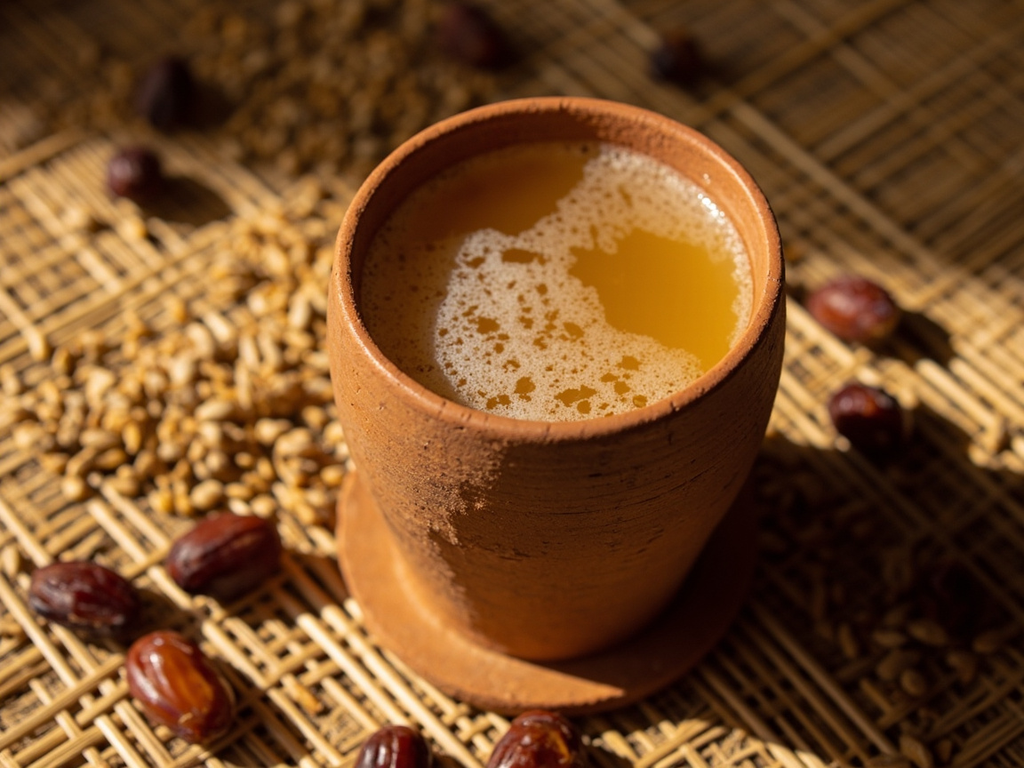
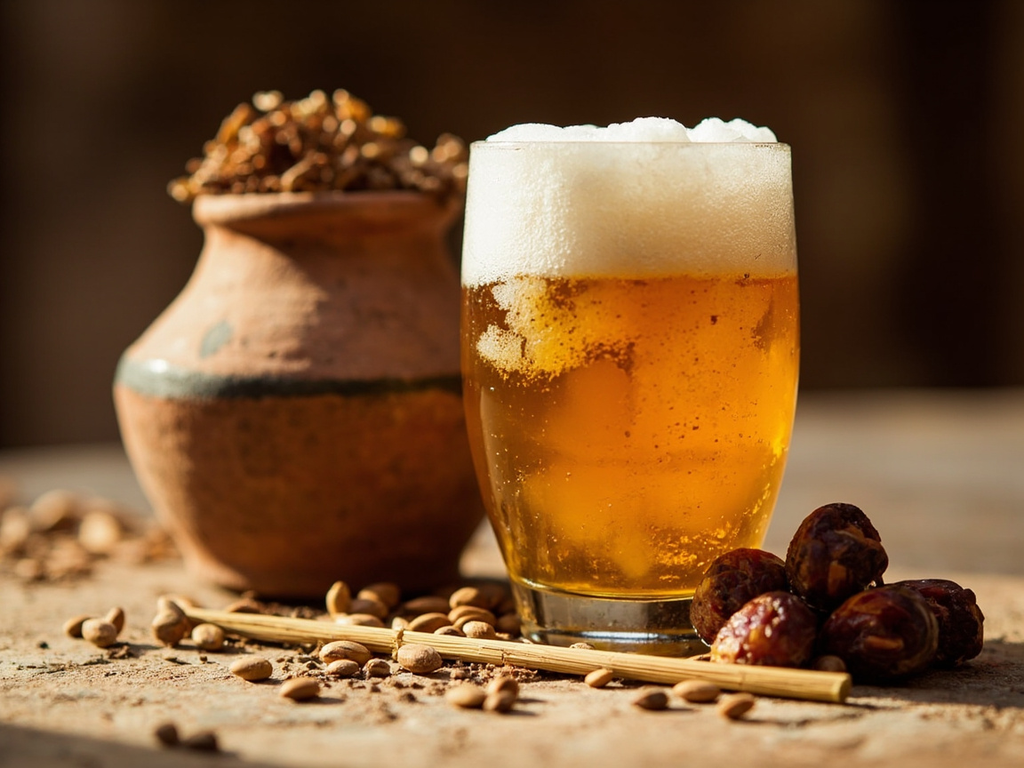
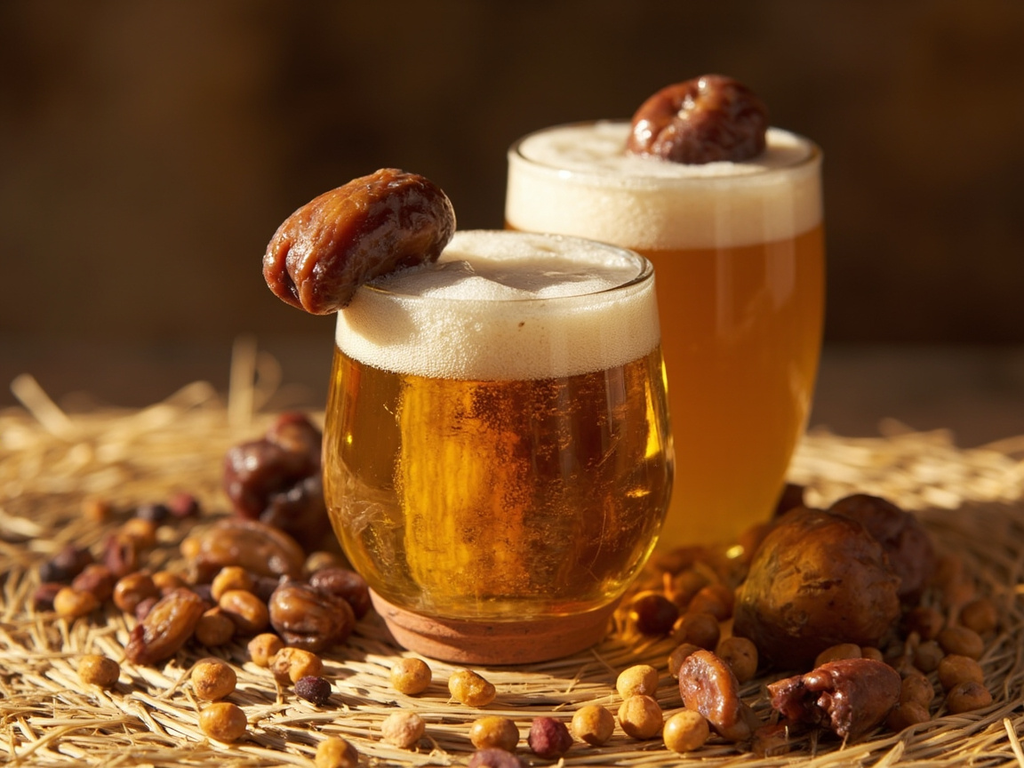
A thick, sweet, and slightly tangy beer brewed from emmer bread and dates — less bitter and more nourishing than modern beers. The most Egyptian of drinks.
A thousand loaves, a thousand jars of beer: that is the murmur I hear rising from the tombs since the dawn of time. This cloudy beer, sweet with dates, was brewed in every house and every temple, and a cup was poured for me so that I would turn my gaze away. Drink it thick, through a straw, as your fathers did. A sincere libation is worth more than a hollow prayer — and you know what I do with hollow hearts.
- •Half-baked emmer bread — several loaves (source of sugars and yeasts)
- •Dates — a good portion (fermentable sugar)
- •Nile water — to cover (liquid base)
- •Wild starter — natural (fermentation)
Sweet Emmer Beer (heqet)
A thick, sweet, and slightly tangy beer brewed from emmer bread and dates — less bitter and more nourishing than modern beers. The most Egyptian of drinks.
Why this dish? Bread and beer (ta and heqet) formed the sacred pair of every offering: the funerary formula itself invokes "a thousand of bread, a thousand of beer" for the ka of the deceased. Brewed everywhere, even in the workshops of Thebes, beer was both a daily drink and a libation presented to the gods of the Duat to appease the judgment.
A thousand loaves, a thousand jars of beer: that is the murmur I hear rising from the tombs since the dawn of time. This cloudy beer, sweet with dates, was brewed in every house and every temple, and a cup was poured for me so that I would turn my gaze away. Drink it thick, through a straw, as your fathers did. A sincere libation is worth more than a hollow prayer — and you know what I do with hollow hearts.
Ingredients (period version)
- Half-baked emmer bread — several loaves (source of sugars and yeasts)
- Dates — a good portion (fermentable sugar)
- Nile water — to cover (liquid base)
- Wild starter — natural (fermentation)
Ingredients
- Whole wheat bread (spelt/emmer) — 500 g (starches and yeasts)
- Pitted dates — 150 g (fermentable sugar)
- Warm water — 2 liters (base)
- Baker's yeast (or some starter) — 1 packet (7 g) (fermentation)
Method
- Crumble the bread into a large container; add mashed dates.
- Pour in warm water, mix well to form a thick porridge.
- Dissolve yeast in a little warm water and stir in. Cover with a cloth.
- Let ferment for 2-3 days at room temperature (about 20-25°C), stirring once a day: it should foam and smell sweet-sour.
- Strain through a sieve or cloth to remove pulp, pressing well.
- Serve chilled, cloudy and slightly fizzy. Consume within two days (a low-alcohol, living beverage).
How it was made : The work of archaeobotanist Delwen Samuel showed that Egyptian beer was brewed from malted and heated cereals (emmer, barley), not simply from soaked bread as once thought. Thick and nourishing, often sweetened with dates, it was sometimes drunk through a straw to avoid sediment. Its production was inseparable from bread-making.
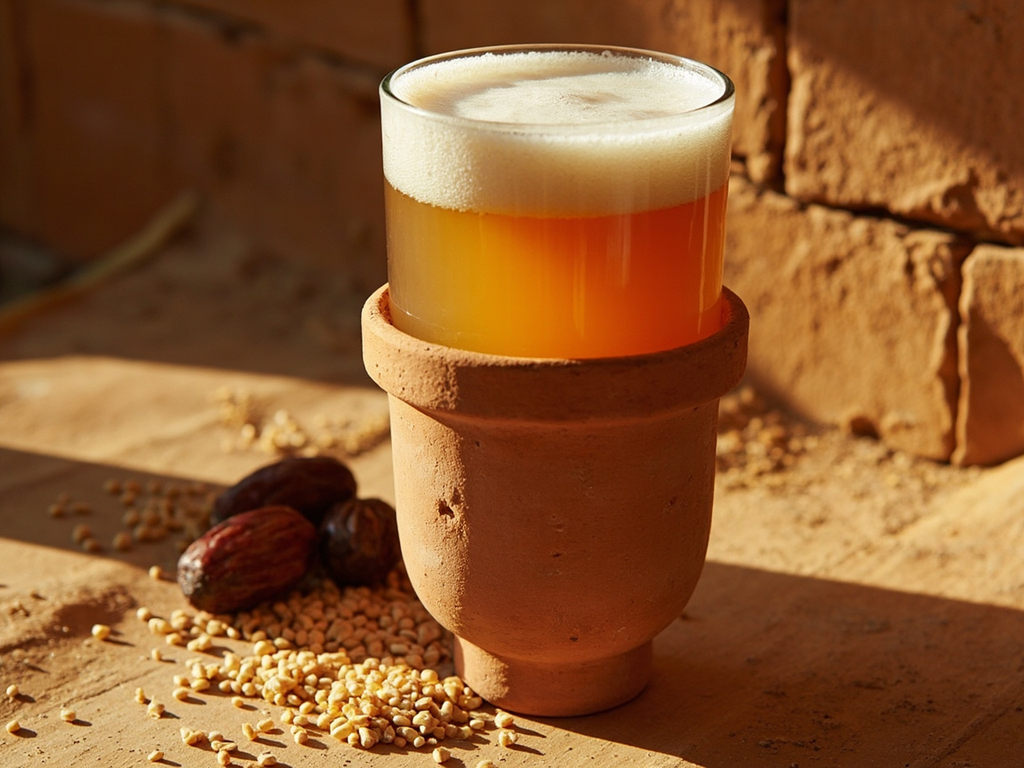
The contemporary twist : Serve in a terracotta cup with a reed "straw," and name the drink "A Thousand Jars" after the offering formula.
Sources : Delwen Samuel, « Investigation of Ancient Egyptian Baking and Brewing Methods », Science, 1996 · Pierre Tallet, Histoire de la cuisine et de la gastronomie égyptiennes, Khéops, 2003
Ammit · Charactorium